Why Is My Bathtub Water Brown

So, you turn on the tap for a relaxing bath, and out comes what looks like iced tea. Or maybe muddy river water. You blink, rub your eyes, and wonder: Is my plumbing haunted?...

So, you turn on the tap for a relaxing bath, and out comes what looks like iced tea. Or maybe muddy river water. You blink, rub your eyes, and wonder: Is my plumbing haunted?
The Short Answer: It’s Probably Not Your Fault
Brown bathtub water is almost always just sediment getting stirred up. Think of it like shaking a snow globe—only the “snow” is rust, sand, or mineral bits.
Your water company does this for you, in a way. They flush the main pipes, or a fire hydrant gets opened nearby. That sudden rush of pressure knocks loose all the gunk that’s been quietly building up for years.
Must Read
And it’s not just dirt. It could be iron, manganese, or even tiny particles of copper from old pipes. Sounds gross, but it’s usually harmless.
Is It Safe to Soak In?
Technically? Yes. You don’t want to drink it, but a splash-about in brown water is not a health crisis. Your skin is a pretty good filter.
That said, it might dry you out a bit. And your bathtub ring will look like a crime scene. So maybe wait until it clears.
The Cool Part: Your Water Has a Memory
Think of your pipes like a tiny, hidden ecosystem. The brown color is literally the history of your water system flowing past your toes. It’s like a geological timeline—each mineral layer a snapshot of time.
If the water is reddish-brown, that’s usually iron. If it’s yellowish, it’s often organic matter like decaying leaves. A dark, coffee-color? That’s manganese, a mineral also found in deep-sea nodules. Fancy, right?
And here’s the wildest bit: some ancient Roman water pipes were built with lead, but the thin layer of mineral scale inside actually protected the water. Your brown water is doing the opposite—it’s revealing the pipes, not poisoning you.
 My bath today. The water is brown from passing through layers of peat
Why Does It Happen After Company?
Ever notice brown water shows up right after a big storm or a nearby construction project? That’s because water pressure changes jostle the system.
It’s like when you bump the table and your coffee sloshes. The slosh exposes the grounds. Same idea—a pressure bump stirs up the bottom of the pipe.
Even your own water heater can cause this. If you haven’t flushed it in a while, a layer of rusty sediment builds up like a muddy lake bed. Turn up the heat, and boom—brown water.
What Should You Do (Besides Freak Out)?
First, run the cold tap for a few minutes. Cold water comes from the street, which is usually cleaner. If it runs clear, the problem is inside your house, not the city supply.
If the brown water only hits when you use hot water, give your water heater a gentle flush. It’s basically a giant tea kettle—and yours might need a rinse.
Still brown after 20 minutes? Call your water company. They can tell you if they flushed the mains. It’s like checking if your neighbor’s party caused the noise—usually a quick “yep, that was us” fixes everything.
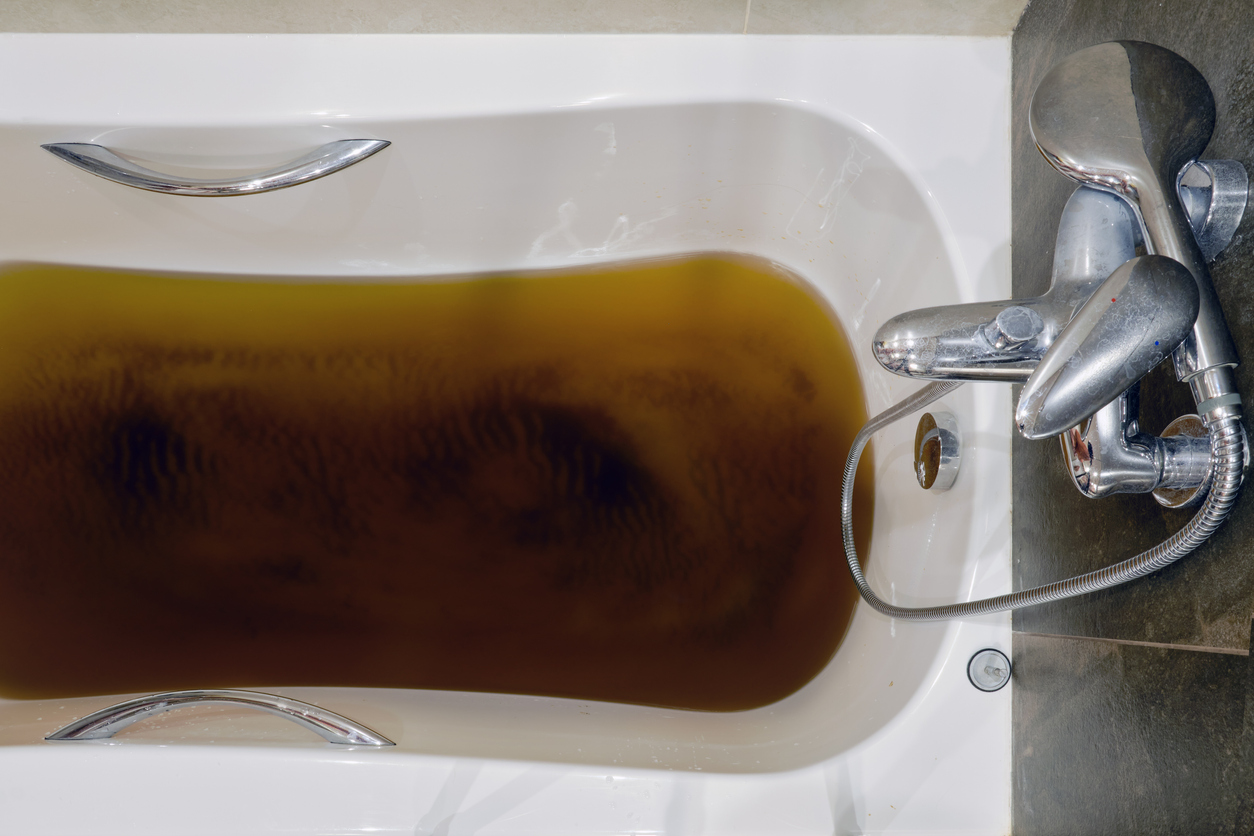 Brown Water? These are the Reasons This Could be Happening - Space
The Fun Comparison: It’s Like a Smoothie
Think of your water pipes as a giant, invisible straw. Over time, mineral bits settle at the bottom, like pulp in a smoothie.
When the straw gets bumped, you get a mouthful of pulp. You wouldn’t call the smoothie “bad”—it’s just not stirred up. Same deal with your bathwater. It’s just a rust mineral smoothie. Not delicious, but not dangerous.
And just like a smoothie, it’ll settle if you give it a minute. The particles are heavier than water, so they sink. That’s why the water in your tub might look clearer after it sits for an hour.
The Bottom Line
Brown bathtub water is a nuisance, not a nightmare. It’s your plumbing’s way of showing its age, a temporary message from deep underground.
So next time you see that muddy stream, don’t panic. Pour yourself a clear glass of water from the fridge, wait an hour, and then run the tap again. Chances are, it’ll be back to crystal clear—and you’ll have a cool science story to tell your friends.
And seriously, check your water heater. It’s probably just having a little rust party.
