Why Do Ro Systems Waste Water

So you finally did it. You bought that sleek reverse osmosis system, the one with the shiny faucet and the promise of water so pure it’s practically holy. Then you peer under...
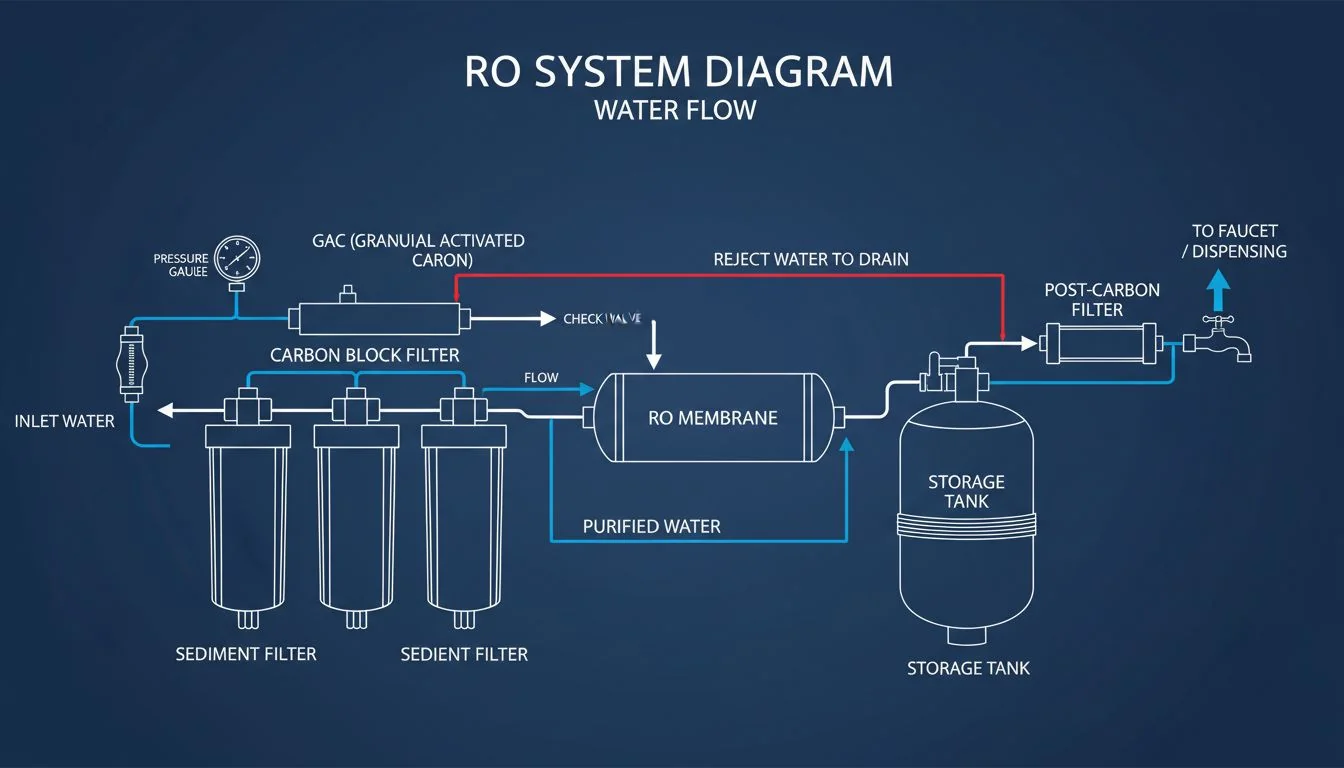
So you finally did it. You bought that sleek reverse osmosis system, the one with the shiny faucet and the promise of water so pure it’s practically holy. Then you peer under the sink and spot a little tube dribbling water into the drain. Wait—what? You’re paying for water that’s just going… down. It feels like your wallet is taking a permanent bath.
Here’s the deal: RO systems are thirsty little beasts. For every gallon of clean water you get, they might toss two, three, or even four gallons down the pipes. Yeah, it hurts. But before you start drafting an angry letter to the water gods, let’s talk about why this happens in a way that makes you nod—and maybe even chuckle.
The Party Analogy (Because Everything Relates to Parties)
Imagine you’re hosting a barbecue, and you’ve got a bouncer at the door. The bouncer’s job is to only let the pure, well-behaved H2O molecules into your backyard. But the bouncer is a real tough guy. He’s not just checking IDs; he’s body-slamming every mineral, chemical, and stray particle out of the way. The result? A lot of shoving, a few spills, and a huge mess on the sidewalk. That spill—that’s your waste water.
Must Read
Your RO membrane is that bouncer. It physically blocks contaminants by squeezing water through microscopic pores. To keep those pores clean and prevent them from getting clogged with gunk, the system constantly flushes the leftover salty, dirty water away. Think of it as the bouncer spraying a hose at the crowd. It’s not polite, but it keeps the party going.
Why Not Just Recycle That Waste Water?
You might be thinking, “Can’t I just save that waste water and water my plants?” Bless your heart. That water isn’t just “a little extra”; it’s a concentrated brine. Pour that on your ferns, and you’ll have a miniature botanical funeral. The waste water is the stuff the system worked so hard to get rid of—salts, minerals, and even a hint of whatever’s in your tap. It’s like the leftover pickle juice after you’ve eaten the pickles. Would you use that to refresh a wilting rose? Probably not.
Some clever folks run the waste line to their washing machine or toilet tank. That works because those appliances don’t care about high mineral levels. But let’s be real: most of us just let it go down the drain because, well, we’re too lazy to reroute pipes under the sink. Or we just want our pure water fix without building a plumbing empire.
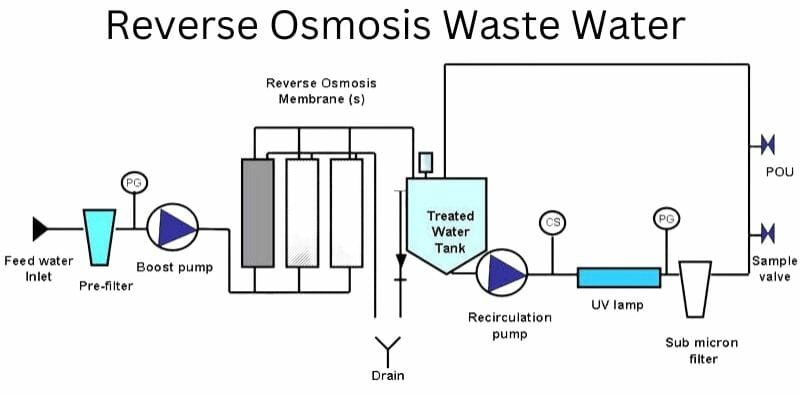 Reverse Osmosis Waste Water: The Facts!
The Real Reason It’s So Thirsty
Here’s the technical bit, served without the science lecture. An RO system needs a certain amount of water pressure to shove water through that membrane. The waste water is actually the engine that creates that pressure. Without that constant flush, the membrane would get caked with calcium and magnesium gum, like a coffee grinder after a thousand espressos. Then your system stops producing pure water and you’re stuck drinking tap—gasp.
Older systems waste a lot more—like, a 1:4 or 1:3 ratio of clean to waste. Newer, more efficient models can get down to 1:1, but they cost more and still waste a cup or two. It’s a trade-off: you pay for waste water, or you pay for a new membrane every six months. Pick your poison.
The Silver Lining (Yes, There Is One)
You’re not wasting as much as you think. Your toilet flushes many more gallons a day than your RO system wastes. A ten-minute shower? That’s about twenty gallons. Your RO system might waste a few gallons a day, max. It’s a drop in the bucket. So don’t spiral into eco-guilt.
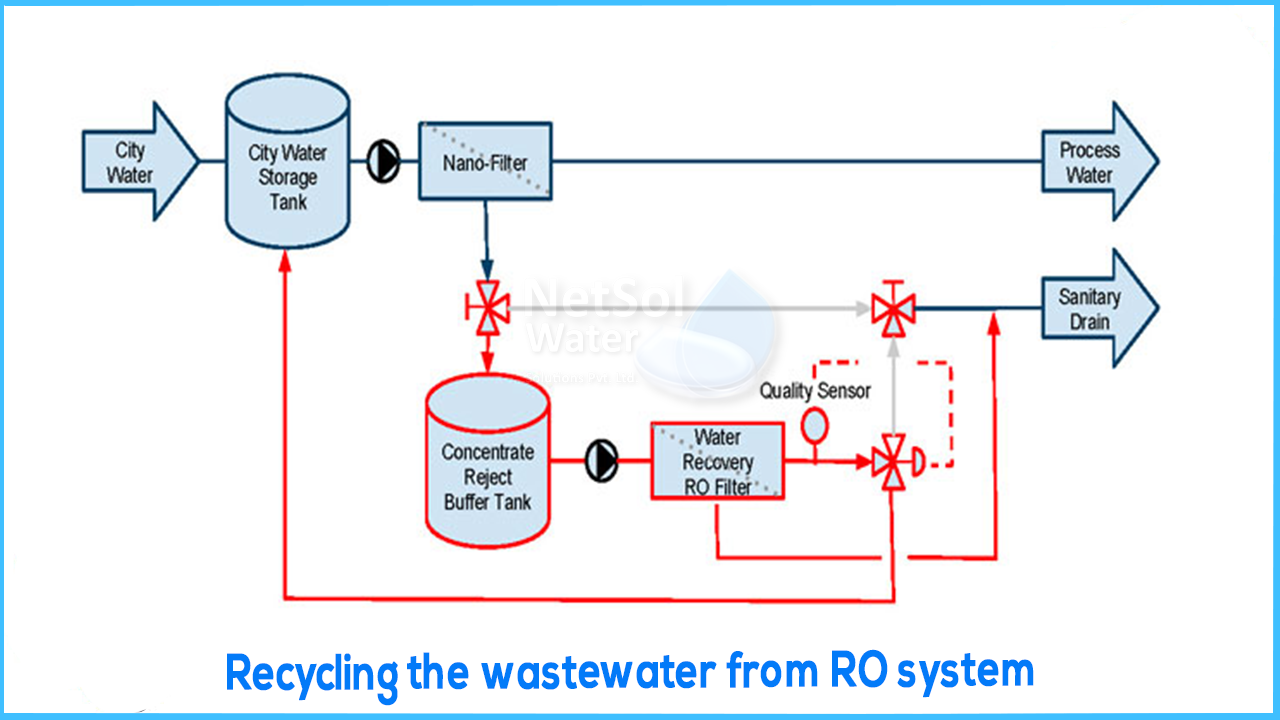 Wastewater Recycling Methods Water Recycling (MNR) – Biopolus
Plus, think of what you’re getting: water that tastes like a mountain spring, not like a swimming pool. No weird aftertaste from chlorine or copper pipes. You’re basically paying a small “stupid tax” for luxury. And honestly? When you pour that crystal-clear glass of RO water on a hot day, you’ll smile and forget about the little drain tube gurgling away. Your coffee will thank you.
What Can You Actually Do?
First, check your system’s ratio. If it’s old and wasting 5:1, consider upgrading to a permeate pump model. It’s like getting a fuel-efficient car. Second, plumb the waste line to your garden (if you have salt-tolerant plants—like cactus) or to an outdoor spigot for washing your car. Third, just accept that nothing in life is perfect, and pure water comes with a tiny price tag attached to a tube.
So next time you hear that gentle trickle under your sink, give it a nod. That’s the sound of your bouncer doing his job—messy, wasteful, but undeniably effective. Cheers to clean water, with a side of irony.
