Why Is Salt Water Homogeneous

You know that moment when you’re making pasta and you dump a handful of salt into a pot of water? You stir it once, and poof—it’s gone. It’s like a magic trick, but way more b...
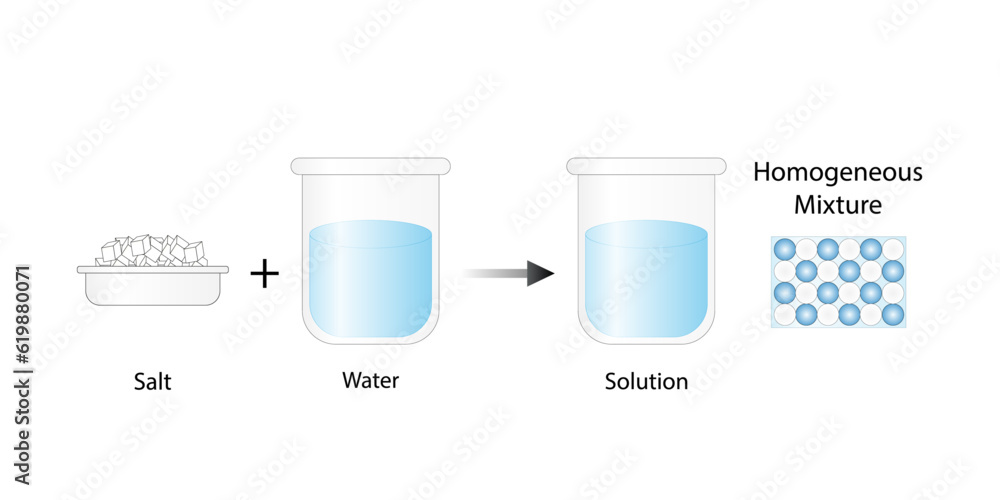
You know that moment when you’re making pasta and you dump a handful of salt into a pot of water? You stir it once, and poof—it’s gone. It’s like a magic trick, but way more boring and way more delicious. That disappearing act is why we call salt water a homogeneous mixture. It’s not magic; it’s just chemistry being super chill.
Think of it this way: a homogeneous mixture is like a perfectly blended smoothie. You don’t get a lump of banana in one sip and a chunk of ice in the next. Salt water is the same—every single drop tastes exactly as salty as the next. That’s the whole point of “homogeneous”: it’s uniform all the way through.
Now, if you’ve ever accidentally swallowed ocean water while bodysurfing, you know that saltiness hits you everywhere at once. It’s not like there’s a pocket of fresh water and then a salty wave—nope, your whole mouth gets the same rude awakening. That’s homogeneity in action, and it’s why you can’t just “drink around” the salt.
Must Read
The secret is in the tiny particles
Here’s the nerdy part, but I’ll keep it light. Salt is made of sodium and chloride ions—tiny little charged particles. When you dump them into water, the water molecules—which are also tiny and very social—break apart the salt crystals and surround each ion.
It’s like a party where the water molecules are super friendly and hold hands with every single salt ion. They don’t leave anyone out. Once that happens, the salt is dissolved, and you can’t see it anymore—not even with a microscope. That’s why the mixture looks clear and uniform.
Compare that to a heterogeneous mixture, like a bowl of chunky salsa. One chip might get a big piece of onion, and another gets all tomato. There’s no consistency. Salt water is the opposite: it’s the smooth operator of the kitchen.
Why your pasta water doesn’t have salty floaters
Ever notice how when you sprinkle salt into water, it doesn’t just sit on the surface like little white islands? That’s because water is polar—it has a positive side and a negative side, kind of like a tiny magnet. The positive side of water grabs the negative chloride ions, and the negative side grabs the positive sodium ions.
 Homogeneous Mixture Keys
It’s a molecular tango, and they’re all dancing together. Once the dance starts, there’s no going back to separate partners. That’s why you can’t just strain out the salt with a colander—it’s too busy being part of the crowd.
I remember my first time trying to “unsalt” soup by adding more water. I thought, “If I dilute it, the salt will just sit at the bottom, right?” Nope. The salt was already homogeneously spread out, so I just made a larger batch of less-salty soup. Rookie mistake.
Everyday examples that’ll make you nod
Think about making lemonade from powder. You stir it, and the powder disappears. That’s a homogeneous solution. If you don’t stir enough, you get a clump of sugary powder at the bottom—that’s heterogeneous chaos. Nobody wants a surprise mouthful of powder.
Same with coffee. Black coffee is a homogeneous mixture of water and dissolved coffee compounds. That last sip? Tastes just like the first. But add sugar and don’t stir—you’ve got a heterogeneous nightmare. First sip bitter, last sip syrupy. Crime against beverages.
Even your morning sea salt spray for hair? Shake it first—it’s a suspension, not a solution. Let it sit, and the salt falls to the bottom. But real salt water? Never settles. It’s a ride-or-die mixture through and through.
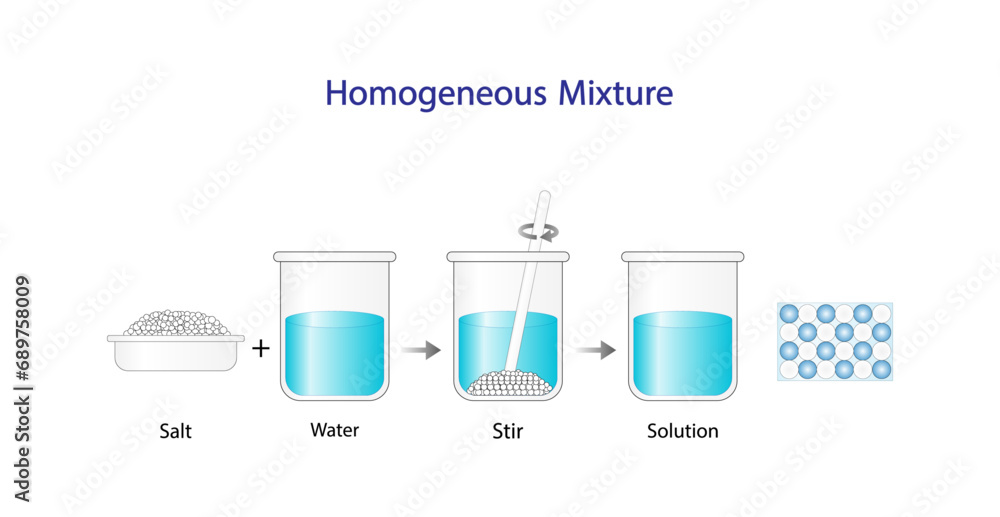 Homogeneous mixture, uniform composition, salt and water. Chemistry
The ocean: the ultimate homogeneous boss
The ocean is basically the world’s biggest pot of unsalted butter... wait, no—it’s the world’s biggest pot of salted water. And it’s homogeneous on a global scale. Scientists say the salt concentration in the open ocean varies only slightly—like 3.5% on average. That’s crazy consistent for a bathtub that big.
If you took a glass from the Atlantic and a glass from the Pacific, they’d taste nearly identical. Same salinity, same vibe. That’s the power of homogeneity over millions of years of mixing by currents and waves. Mother Nature doesn’t mess around.
So the next time you’re at the beach, floating on your back, realize you’re floating in a perfectly uniform soup. It’s a little gross when you think about fish peeing in it, but hey—it’s evenly distributed grossness. That’s comfort in chaos.
Quick final thought
Homogeneous mixtures don’t just happen by accident. They happen because of physics and chemistry doing their job so well that you don’t even notice them. Kind of like a good friend who makes everything feel smooth.
So next time you’re seasoning your pasta water, take a moment to appreciate the invisible teamwork. The salt dissolves, the water welcomes it, and you get a perfect, uniform broth. It’s the most reliable relationship in your kitchen—no drama, no lumps, just salty harmony.
