Does Brita Filter Remove Pfas

Alright, let’s be real—you’re probably standing in your kitchen, holding a Brita pitcher, and wondering if you’ve been sipping chemical soup. I’ve been there. It’s that moment...
Alright, let’s be real—you’re probably standing in your kitchen, holding a Brita pitcher, and wondering if you’ve been sipping chemical soup. I’ve been there. It’s that moment when you hear “PFAS” and immediately picture tiny, invisible goblins floating in your tap water.
So, does a Brita filter remove PFAS? The short answer is: kinda, but not really. And by “kinda,” I mean about as effective as using a colander to catch mosquitoes. Sorry to burst your bubble.
What’s PFAS Anyway? (And Why Should You Care?)
PFAS stands for per- and polyfluoroalkyl substances—basically, a fancy name for “forever chemicals.” They’re in non-stick pans, rain jackets, and even fast-food wrappers.
Must Read
These little buggers don’t break down in nature. They just hang out in your blood forever, like that one friend who crashes on your couch and never leaves. Studies link them to all sorts of health issues—thyroid problems, cancer, you name it. Lovely, right?
The Brita Reality Check
Your standard Brita pitcher uses activated carbon filters. These are great for making your water taste less like a swimming pool—bye-bye, chlorine! But when it comes to PFAS? The science says: meh.
Most Brita filters are not certified to remove PFAS. They might grab a tiny bit if the water sits long enough, but let’s be honest—you’re not waiting 20 minutes for a glass of water. You’re impatient. I’m impatient. We’re all impatient.
One study found that standard Brita filters removed less than 50% of certain PFAS compounds. That’s like saying you “kind of” dodged a bullet. No thanks.
But Wait—There’s a Twist!
Here’s where it gets sneaky. Brita does make a filter that removes PFAS: the Brita Elite or Longlast+ filter. These are the ones that look slightly beefier, like a filter that actually hits the gym.
These fancy filters are certified to reduce some PFAS—usually around 90% or so. But not all PFAS. It’s like saying you’ll only fight half the ninjas in the room. Still, better than nothing, right?
Before you sprint to the store, check the box. If it doesn’t say “certified to reduce PFAS” in big letters, you’re basically buying a very expensive water-tasting device.
 Do Brita Filters Remove PFAS - YouTube
But Does It Really Work? (The Honest Scoop)
Let’s get real for a second. Even the Brita Elite filter has limitations. PFAS are a family of over 5,000 different chemicals. No single filter catches all of them.
If your water has high levels of PFAS—like from industrial pollution or a military base nearby—a Brita is like bringing a water gun to a forest fire. You need something heavier, like a reverse osmosis system or a carbon block filter with a tight pore size (think 0.5 microns or smaller).
But for most people? The Brita Elite is a solid “better than nothing” choice. It’s not perfect, but it’s also not a total scam. You’ll drink less chemical goo than before. Progress!
The Coffee Chat Reality
Here’s the thing: if you’re just worried about tap water tasting like a chemistry lab, stick with your Brita. It fixes chlorine, lead, and bad vibes. But if you’re obsessing over PFAS like I do on Tuesday afternoons, consider upgrading.
Other options? ZeroWater filters claim to remove 99% of PFAS—they use a five-stage filter that’s basically a tiny water treatment plant. But they’re slower than a sleepy snail, and the filters cost more than your coffee habit.
Or you could install a tap-mounted carbon filter with NSF certification for PFAS. Yes, it’s a project. Yes, you’ll need a wrench. But you’ll feel like a water wizard.
But Honestly, Don’t Panic
Look, I’m not here to scare you into buying a $500 filtration system. Most municipal water in the US has PFAS levels that are below the current health advisory limits. Emphasis on “current”—because those limits keep dropping, like my patience when I can’t find my keys.
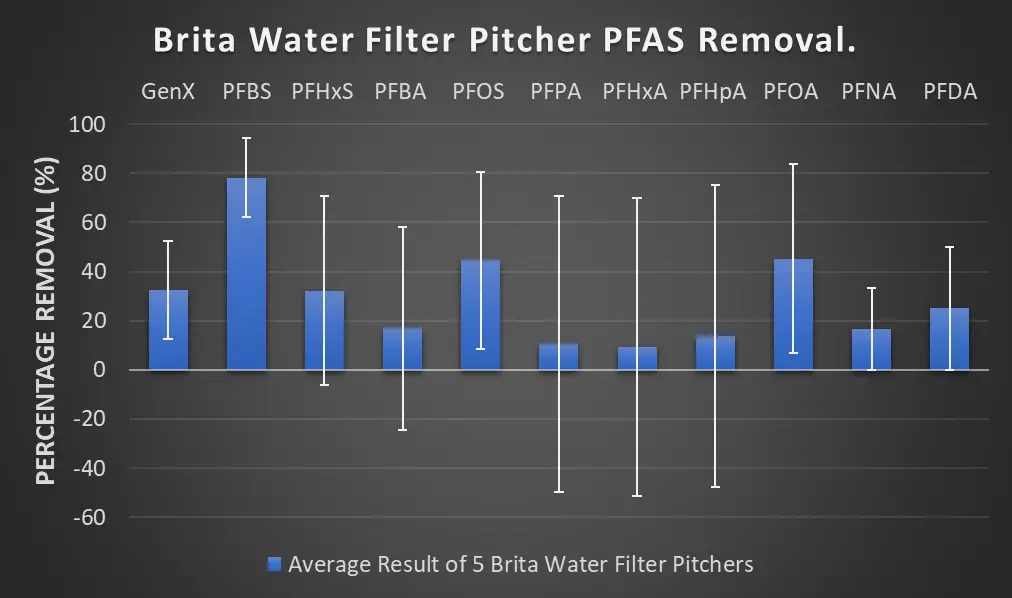 Brita Filters And PFAS Removal - With Laboratory Testing - Water
If you’re pregnant, nursing, or have a little one at home, you might want to be extra cautious. Kids are basically tiny water-balloons, and they soak up chemicals faster than adults. But for most of us? A Brita Elite is a decent insurance policy.
And let’s be real: hydration is still better than dehydration. Even if your Brita doesn’t remove every PFAS molecule, drinking tap water is still safer than chugging soda or letting your brain shrink from thirst. Priorities, people!
So, What’s the Verdict?
Does a regular Brita filter remove PFAS? No. Not really. Not in a way that would make a chemist cheer.
Does the Brita Elite filter remove some PFAS? Yeah, up to a point. It’s like having a friend who’s “kind of” reliable—you wouldn’t trust them with your life savings, but they’ll pick you up from the airport. Eventually.
If you’re hardcore about PFAS, skip the Brita and go for a system specifically tested for those chemicals. NSF/ANSI 53 and NSF/ANSI 401 certifications are your new best friends. Look for those on the box.
But if you’re just a normal, slightly stressed-out person who wants to drink decent water without selling a kidney? A Brita Elite is fine. Fine. Not perfect, but fine.
One Last Thing
Remember: no single water filter is a magic bullet. PFAS are everywhere—in the air, in your raincoat, in the popcorn bag you microwaved last Tuesday. So don’t stress too much. Do what you can, and then move on with your life.
Now go pour yourself a glass of water—Brita-filtered or not. And if it tastes a little weird? Eh, life’s too short. Cheers!
