Does Copper Dissolve In Water

So, you’re standing in your kitchen, staring at a shiny penny, and a bizarre thought pops into your head: “Could this thing just… melt away in my glass of water?” It’s the kin...
So, you’re standing in your kitchen, staring at a shiny penny, and a bizarre thought pops into your head: “Could this thing just… melt away in my glass of water?” It’s the kind of question you’d ask at 2 AM after too much coffee, but I love it. Let’s get the dramatic answer out of the way first: No, a copper penny isn’t going to vanish like a sugar cube in a hot cup of tea. If it did, our spare change would be a national disaster, and the plumbing in every old house would have dissolved centuries ago.
But here’s where it gets deliciously weird. Copper does dissolve in water—just not the way you think. It’s a lazy, grumpy dissolver that needs special conditions to get off its metallic butt. Think of copper as that friend who refuses to get in the pool unless the water is chemically perfect and you bribe them with oxygen. Pure water? Copper laughs at pure water. You need something acidic, like lemon juice, rainwater, or—hold your breath—your own sweat.
Fun fact alert: The Statue of Liberty didn’t turn green because she was sad or because New York air is toxic (okay, partly that). She turned green because copper slowly dissolves in rainwater, forming a protective layer of patina. That green crust is actually the copper “dissolving” into a new compound. It’s like copper melted into a permanent, gorgeous sunscreen.
Must Read
The Chemistry of Being a Drama Queen
Let’s get just a little nerdy—but I promise to make it fun. Copper atoms love hanging out together in a solid block. To dissolve, they need to break free and become ions (charged particles). Water alone is too polite to break up the party. However, if you add oxygen and an acid, water becomes a rude bouncer that shoves copper atoms apart.
Here’s the joke: Your tap water is a mild acid because it has dissolved carbon dioxide, forming a tiny bit of carbonic acid. That’s why old copper pipes slowly, glacially, leach tiny amounts of copper into your drinking water. It’s not enough to hurt you—in fact, some water systems deliberately add copper to pipes for its antimicrobial properties. But leave a penny in a glass of tap water for a year, and you might see a faint blue-green stain.
If you want to see real copper dissolution, try an experiment your high school teacher never let you do. Drop a penny into a glass of cola (phosphoric acid) or vinegar (acetic acid). Wait a day. That penny will emerge shiny and copper-colored because the acid stripped off the oxide layer. But the true dissolving happens when you add salt to the vinegar: the copper will start turning into a blue-green slime. It’s like a metal zombie apocalypse in a jar.
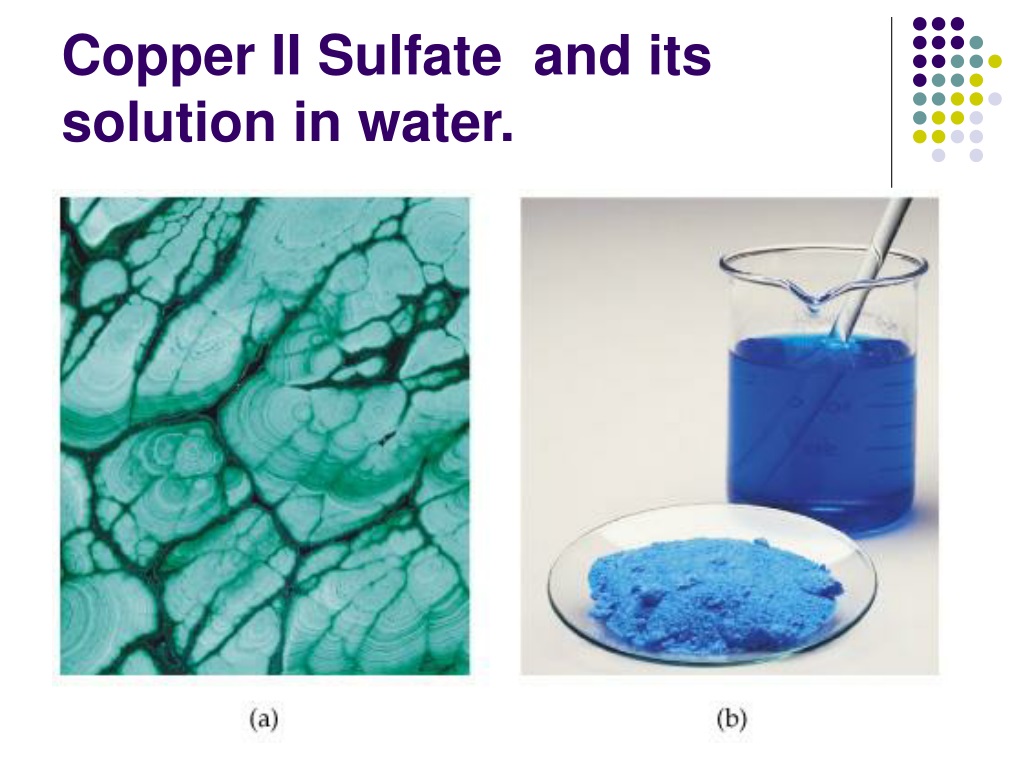
 Copper Ii Chloride In Water at Joann Dewitt blog
Wait, Does That Mean My Water Pipes Are Melting?
Relax. I’m not here to panic you about your old house. Copper pipes are like Teflon-coated celebrities—they’re tough and resistant. The amount of copper that dissolves into your drinking water is measured in parts per billion, not parts per glass. The U.S. EPA says the maximum safe level in drinking water is 1.3 milligrams per liter. That’s less than a grain of sand.
But there’s a catch: Really acidic water (like from a peat bog or a leaky battery) can eat through copper pipes like candy. If your water tastes metallic and leaves blue stains in your sink, you might have a problem. That’s when you call a plumber, not a chemist. But for 99% of us, your copper pipes are fine—they’re just playing hard to get with your H2O.
The Surprising Party Trick
Here’s a jaw-dropper: Copper can dissolve in your own sweat. Which is why door handles in gyms get grody over time. Your sweat contains salts and acids that react with copper, forming compounds that rub off on your skin. That’s why old coins smell weird after you hold them—that smell is your hand literally eating the coin.
And get this: Copper dissolves differently in the ocean. Seawater has so much salt and oxygen that copper will slowly vanish into the brine. Sailors used to wrap the hulls of their ships in copper sheets to prevent barnacles, but they had to replace them every few years because the seawater just… ate them. R.I.P., copper cladding, you did your time.
 Copper Corrosion In Water
But my favorite weird fact: You can “dissolve” copper without any liquid at all. Just heat a copper wire in a flame until it glows red, then quickly put it in alcohol vapor. The copper will “dissolve” into the vapor, turning it green, then reappear on the wire when the alcohol burns off. It’s like a magic trick for metalheads.
So, Should You Drink Copper Water?
People on TikTok are drinking from “copper water bottles” for health—a practice dating back to ancient Ayurveda. Spoiler alert: It works, but barely. Storing water in a copper vessel for 8 hours allows a microscopic amount of copper to dissolve, which might kill some bacteria. But if you think that tiny amount will cure your hangover, I have a copper bridge to sell you.
The bottom line? Copper dissolves in water like a cat gets in a bathtub—reluctantly, angrily, and only under duress. It takes acid, oxygen, and time. Your water is safe, your pennies are safe, and the Statue of Liberty is still green. So drink up, relax, and maybe don’t put a penny in your fish tank (it can kill the fish, for real). Copper is a show-off, not a pushover.
Now if you’ll excuse me, I’m going to drop a penny in my coffee and pretend I’m a scientist. Results may vary.
