Water Cooler How Does It Work

Let’s be honest. The water cooler is the true star of the office. It’s more than just a machine; it’s a social hub, a gossip mill, and a hydration hero. But have you ever stop...
:max_bytes(150000):strip_icc()/parts-of-a-swamp-cooler-2718628-a477e6f0787b4f8bb62ddf2def31d495.png)
Let’s be honest. The water cooler is the true star of the office. It’s more than just a machine; it’s a social hub, a gossip mill, and a hydration hero. But have you ever stopped to wonder how this magical box actually works? Let’s crack it open (metaphorically, of course).
The Great Water Debate: Bottle vs. Bottleless
First, you have two main types: the bottle cooler and the bottleless cooler. The bottle one is the classic. It’s the giant, upside-down jug that looks like a fishbowl for giants. The bottleless one is a ninja—hidden behind a wall, connected directly to your plumbing.
Most people only know the bottle type. They see the big blue jug and think, “That’s where the water lives.” But the real action is underneath. That’s where the magic happens.
Must Read
Inside the Box: A Tiny Science Lab
Open up a standard cooler, and you’ll find a surprisingly simple setup. There’s a cold tank and a hot tank. Yes, it’s a two-tank system. It’s like a miniature water park with two separate pools.
When you press the cold button, gravity pulls water from the jug into a stainless-steel reservoir. This reservoir is wrapped in a refrigeration coil. It’s the same coil your fridge uses, just smaller and more focused.
The coil sucks heat out of the water. The water gets chilly, around 40-50°F. Then, it sits there, waiting for you. That’s why the first cup is always the coldest.
The Hot Side: Instant Fire
Now for the hot water. This is the unsung hero for tea and instant soup. The hot tank is sealed and heavily insulated. Inside, a heating element similar to a giant toaster coil glows red.
It heats the water to a blistering 190°F. That’s just below boiling. Why not boil it? Because boiling creates steam, which creates pressure, which creates explosions. Nobody wants an exploding water cooler. So, the machine keeps it just below the boil.
Fun fact: That hot tank is why the cooler is so heavy. It’s full of hot, dense water, wrapped in foam like a bear in a winter coat.
The Pressure Factor: The Gentle Push
Ever notice how the water flows smoothly? That’s not luck. That’s air pressure. In a bottle cooler, air enters the bottle through a small vent. As water leaves, air replaces it. This keeps a constant pressure.
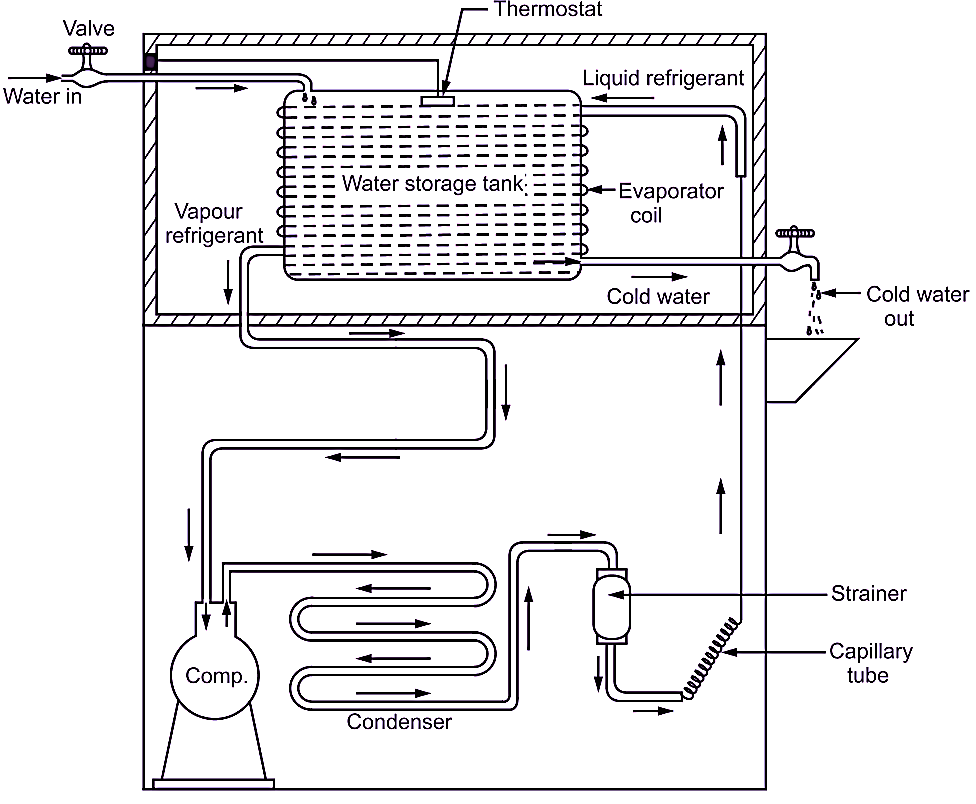 Water Cooler Schematic How To Design Piping Systems For Data Centers
If the vent gets clogged, the water glugs. You know that classic “glug-glug-glug” sound? That’s the machine gasping for air. It’s the cooler’s way of saying, “Hey, clean my vent!”
Bottleless coolers skip this drama. They use a pump. A tiny electric motor pushes water from your pipes into the hot or cold tank. No glugs. Just quiet, efficient service.
Quirky Facts to Drop at Your Next Water Cooler Chat
Here’s the weird stuff. Most water coolers have a spit valve. Yes, a spit valve. It’s the little drip tray you see underneath the spigots. It catches all the splashback and dribbles. Without it, your floor would be a puddle.
Also, the cold water reservoir is often made of stainless steel. Why? Because plastic holds onto bacteria like a toddler holding candy. Steel is non-porous and easy to clean. It’s the VIP lounge for your drinking water.
Did you know that the world’s largest water cooler is in Japan? It holds over 500 gallons and dispenses hot tea. That’s not an office cooler—that’s a community fountain.
Why It’s Actually a Social Engine
The water cooler is the only place in an office where you can talk without being rude. You’re not interrupting anyone. You’re just getting a drink. That’s why it’s the birthplace of office gossip, spontaneous jokes, and terrible birthday party planning.
It’s also a silent judge. The person who refills the jug? They’re a hero. The person who leaves the empty jug? They’re a villain. The cooler sees everything.
 How Do Office Water Coolers Work
Psychologists call this the “Water Cooler Effect.” It’s a real thing. It builds social cohesion. That’s a fancy way of saying it makes you less likely to hate your coworker, Bob, who steals your lunch.
The Hidden Cost: The Energy Vampire
Your water cooler is an energy vampire. It runs 24/7, even at night. The heating element cycles on and off, keeping that water hot even when the office is empty. The fridge does the same.
Some newer models have a sleep mode. They turn off the heat and cold when no one is around. Yours probably doesn’t. That’s why your electric bill is slightly higher than it should be.
But don’t hate on it. That warm water is ready for your 3 PM instant ramen. That cold water is ready for your 10 AM hydration. It’s a servant that never sleeps.
One More Thing: The Ice Dispenser Myth
Not all water coolers make ice. You’d think they would, right? But no. An ice maker is a completely separate machine. It’s a freezer with a water line. Most office coolers skip it because it’s expensive and breaks.
If your office cooler does have ice, cherish it. That machine is a unicorn. It’s a luxury item. It means you work at a company that respects your need for crunch in your soda.
And finally, the next time you take a sip, remember: you’re drinking water that was gently heated or chilled by a tiny robot. It’s a miniature science experiment sitting in the break room. And it’s ready to listen to your complaints about Karen in accounting.
:max_bytes(150000):strip_icc()/parts-of-a-swamp-cooler-2718628-a477e6f0787b4f8bb62ddf2def31d495.png&description=Water+Cooler+How+Does+It+Work)