How Does Reverse Osmosis Work

Your Tap Water’s Secret Ninja Move Let’s get one thing straight: water is a lazy blob. It just wants to sit there, full of salt and dirt. But Reverse Osmosis (RO) is like a pe...
Your Tap Water’s Secret Ninja Move
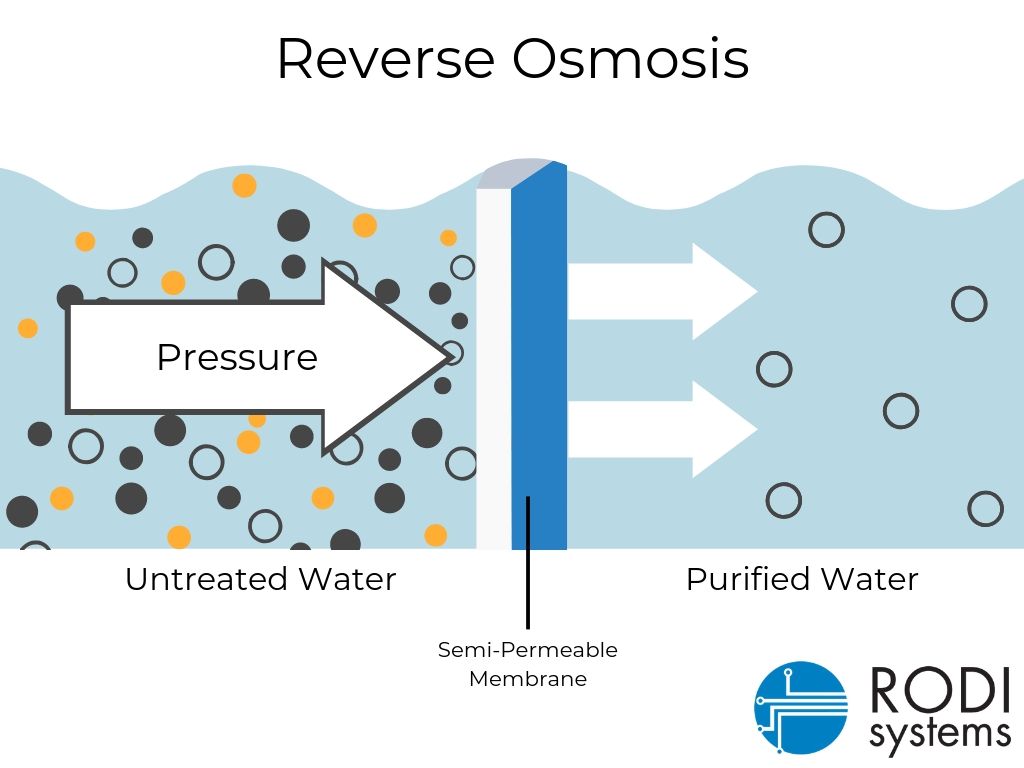
Let’s get one thing straight: water is a lazy blob. It just wants to sit there, full of salt and dirt. But Reverse Osmosis (RO) is like a personal trainer that forces it to get clean.
Imagine pushing a water balloon through a cheese grater. That’s basically what’s happening here. We’re not talking magic; we’re talking extreme pressure.
The Physics Party Trick
First, you need to know one thing: nature loves balance. If you have salty water and fresh water next to each other, the fresh water will rush to the salty side to dilute it. This is called osmosis, and it’s lazy.
Must Read
Reverse Osmosis is the rebel. It uses a pump to force the salty water the other way. It’s like telling a river to flow uphill. The river cries, but you get clean water.
That’s the punchline: pressure beats nature. Your home’s water pressure (40-60 psi) is the muscle. It shoves water through a membrane that’s tighter than a gnat’s pocket.
The Magic Membrane (It’s Not Magic, It’s a Jerk)
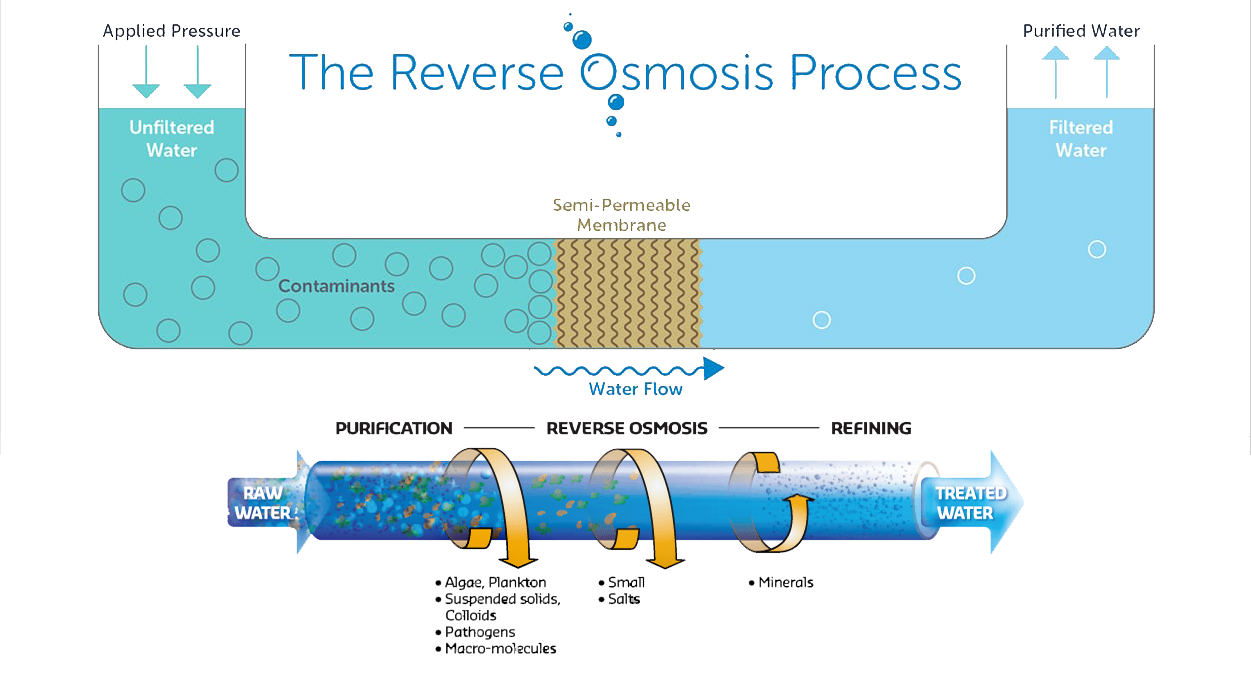
The star of the show is a semi-permeable membrane. This isn’t a piece of cloth. It’s a microscopic sheet of plastic with holes so tiny, only water molecules can squeeze through.
Salt? Blocked. Bacteria? Blocked. That weird taste from your pipes? Blocked. The membrane is a bouncer at the world’s strictest nightclub, and your contaminants are not on the list.
Here’s a quirky fact: you need four cups of dirty water to make one cup of clean water. The other three cups get flushed away as brine. It’s wasteful, but it’s also the price of purity.
Quirky Detour: The Astronaut Connection
Water is heavy in space. It costs thousands of dollars per pound to launch. So, astronauts don’t pack gallons of water.
They drink their own pee. Yes, really. International Space Station uses Reverse Osmosis to turn urine into drinking water. It’s cleaner than any tap on Earth.
 What Is Reverse Osmosis And How Does It Work
So, next time you sip RO water, remember: you’re drinking technology that was designed to recycle astronaut sweat. Gross? Maybe. Cool? Absolutely.
The Three-Step Secret Handshake
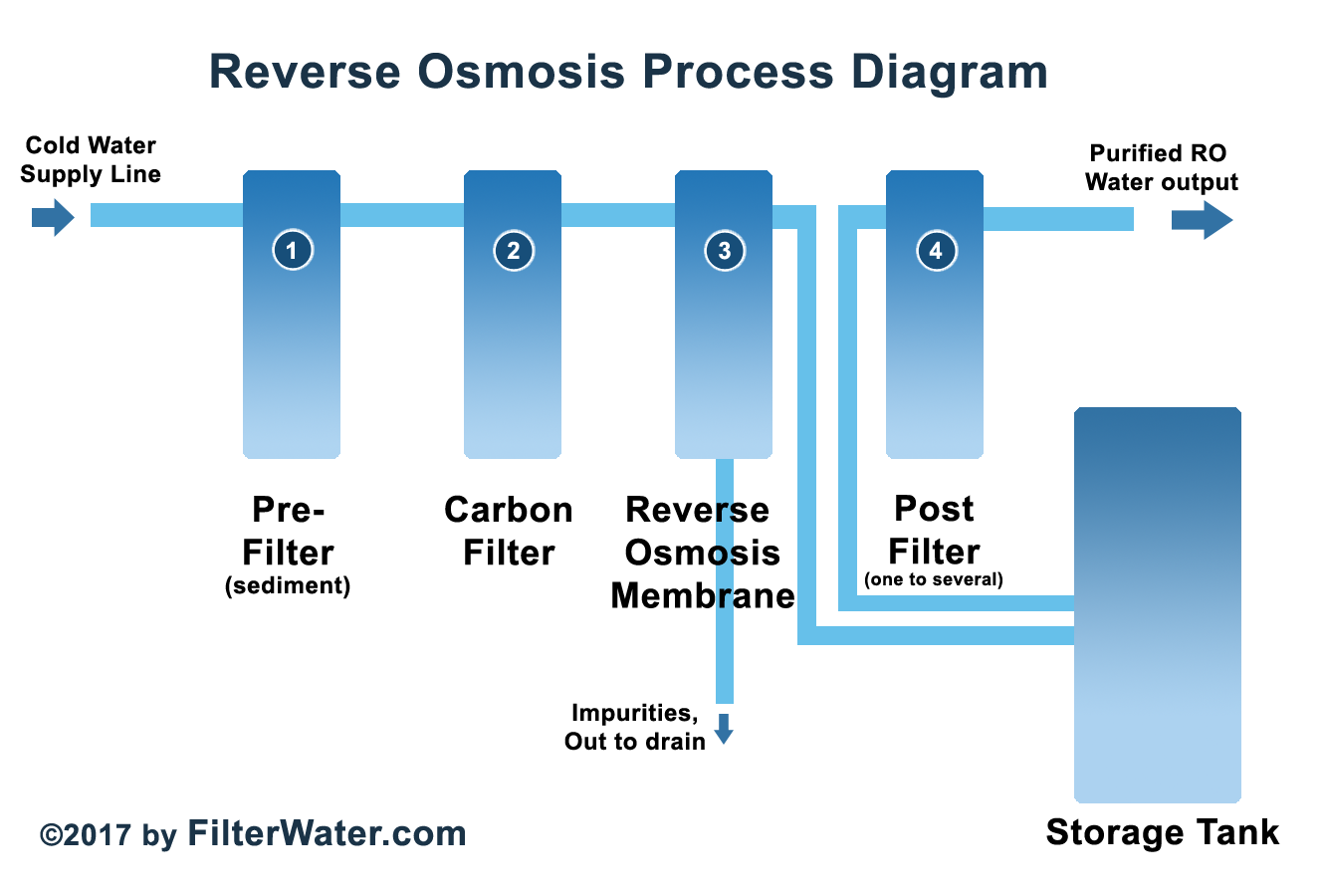
RO isn’t one step; it’s a process. Think of it as a water purification assembly line.
Step 1: Pre-Filtration. The water first hits a sediment filter. This catches sand, rust, and gross floating junk. It’s like a doorman who checks for mud on your boots.
Step 2: The Main Event. The pre-cleaned water hits the RO membrane. Here, the magic (science) happens. The water gets split: beautiful clean water goes one way, and the concentrated “bad water” goes down the drain.
Step 3: The Polish. After the membrane, the water passes through a carbon filter. This removes any leftover weird taste or smell. Now it’s so pure, it’s almost boring.
That “Whoosh” Sound? That’s the Flush
You know that gurgle sound under your sink? That’s the auto flush valve. Every few minutes, it sends a blast of water across the membrane to clean it.
It prevents the membrane from getting clogged with salt slime. Without it, your RO system would die in a week. It’s like a tiny janitor with a pressure washer.
Why Should You Care? (The Fun Part)
RO water tastes crisp. It’s the water that makes your coffee taste better and your ice cubes crystal clear. It removes 98% of total dissolved solids.
 Does Reverse Osmosis Filter Bacteria at Kai Wieck blog
But here’s the kicker: RO water is so pure, it’s technically empty. It has no minerals. Some people say it’s “dead” water. Others say that’s nonsense.
Here’s the truth: your body gets minerals from food, not water. Drinking RO water is like eating a blank canvas. You can add flavors back if you want.
The Quirky “Gotchas”
Did you know RO systems are slow? They don’t produce a river. They produce a trickle. A typical under-sink unit makes about 50 gallons per day. That’s about two gallons per hour.
That’s why you have a storage tank. It fills up slowly, like a turtle building a fortress. Then, when you open the tap, the tank dumps all its glory at once.
Another weird fact: temperature matters. RO systems love cold water. If your water is hot (70°F and up), the membrane works faster but lets more contamiants through. Cold water is slower but cleaner.
Is It a Magic Bullet? Nah.
Reverse Osmosis is not a superhero. It can’t remove everything. It struggles with chlorine (that’s why you need the carbon filter). It also can’t remove some tiny viruses unless you have a special membrane.
And it’s not perfect for everyone. The waste water (the brine) is a real bummer. But for people with hard water, well water, or just a fear of tap water, it’s a game changer.
The simplest way to think about it: It’s a bully for bad water. It pushes, it shoves, and it leaves you with a sip of perfection. Try it. Your taste buds will throw a party.
