How Does A Coffee Brewer Work

Let’s be honest—your morning coffee is basically a miracle in a mug. But have you ever paused mid-sip and wondered, how does this glorious machine actually work? Don’t worry,...
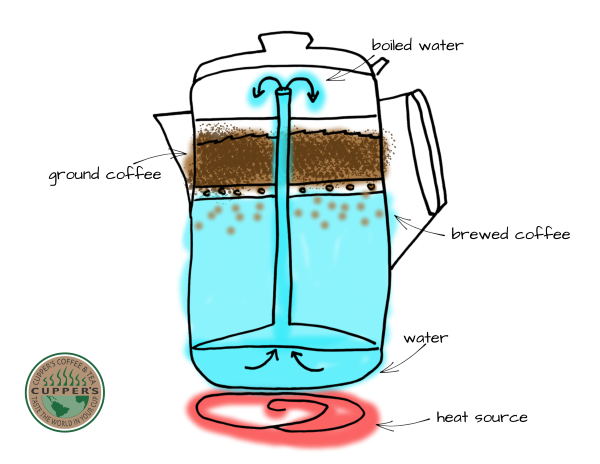
Let’s be honest—your morning coffee is basically a miracle in a mug. But have you ever paused mid-sip and wondered, how does this glorious machine actually work? Don’t worry, this isn’t a physics exam. It’s a celebration of engineering that makes your life more delicious and your mornings a little less grumpy.
The Magic Begins with a Simple Idea
At its core, a coffee brewer is just a water heater with a mission. It takes cold water from a tank, heats it to the perfect temperature (usually around 195°F to 205°F), and then sends it on a journey through your coffee grounds. The result? A liquid that transforms you from a zombie into a human. Pretty neat, right?
Here’s the fun part: the water doesn’t just crash into the grounds like a clumsy guest. It’s carefully distributed to extract all those lovely flavors—oils, acids, and aromatic compounds—without burning them. Think of it as a gentle hug for your coffee beans.
Must Read
Let’s Follow the Water’s Wild Ride
First, the water flows from the reservoir into a heating tube. This tube is like a tiny, high-speed sauna. As the water heats, it expands and creates pressure—this is what pushes it upward through a one-way valve. Science! (Yes, you can say that with a smug smile.)
Then the hot water arrives at the spray head, which looks like a little shower nozzle. It showers the coffee grounds evenly, ensuring every bit of coffee gets a fair chance to shine. If it just dumped water in one spot, you’d get weak, sad coffee. Nobody wants that.
Now comes the gravity party. The brewed coffee drips through a filter (paper or metal) and into your carafe. The filter catches the grounds, leaving you with a clean, dark liquid that smells like pure ambition in a cup. And that, my friend, is how you get from beans to bliss in under ten minutes.
 Visualizing the Function Structure of a Coffee Maker
Why This Should Make You Smile Every Morning
Think about it: your coffee brewer is a silent hero that works on autopilot. It doesn’t complain, doesn’t ask for a raise, and never forgets your birthday. It just sits there, ready to turn water and grounds into liquid joy. What’s not to love?
And here’s a little secret: the process is practically identical whether you use a $20 drip machine or a fancy espresso maker. They both rely on heat, water, and timing. The main difference is pressure—espresso machines use high pressure to force water through fine grounds, while drip brewers let gravity do the work. Either way, you’re a scientist in pajamas.
Pro Tip: You Already Know More Than You Think
Next time you brew a pot, watch the water hit the grounds. Notice the bloom—those little bubbles that form as carbon dioxide escapes from fresh coffee. That’s a sign your coffee is alive! You can now casually say, “Ah yes, the degassing phase. Excellent.” Your friends will be impressed. Or confused. Either way, you win.
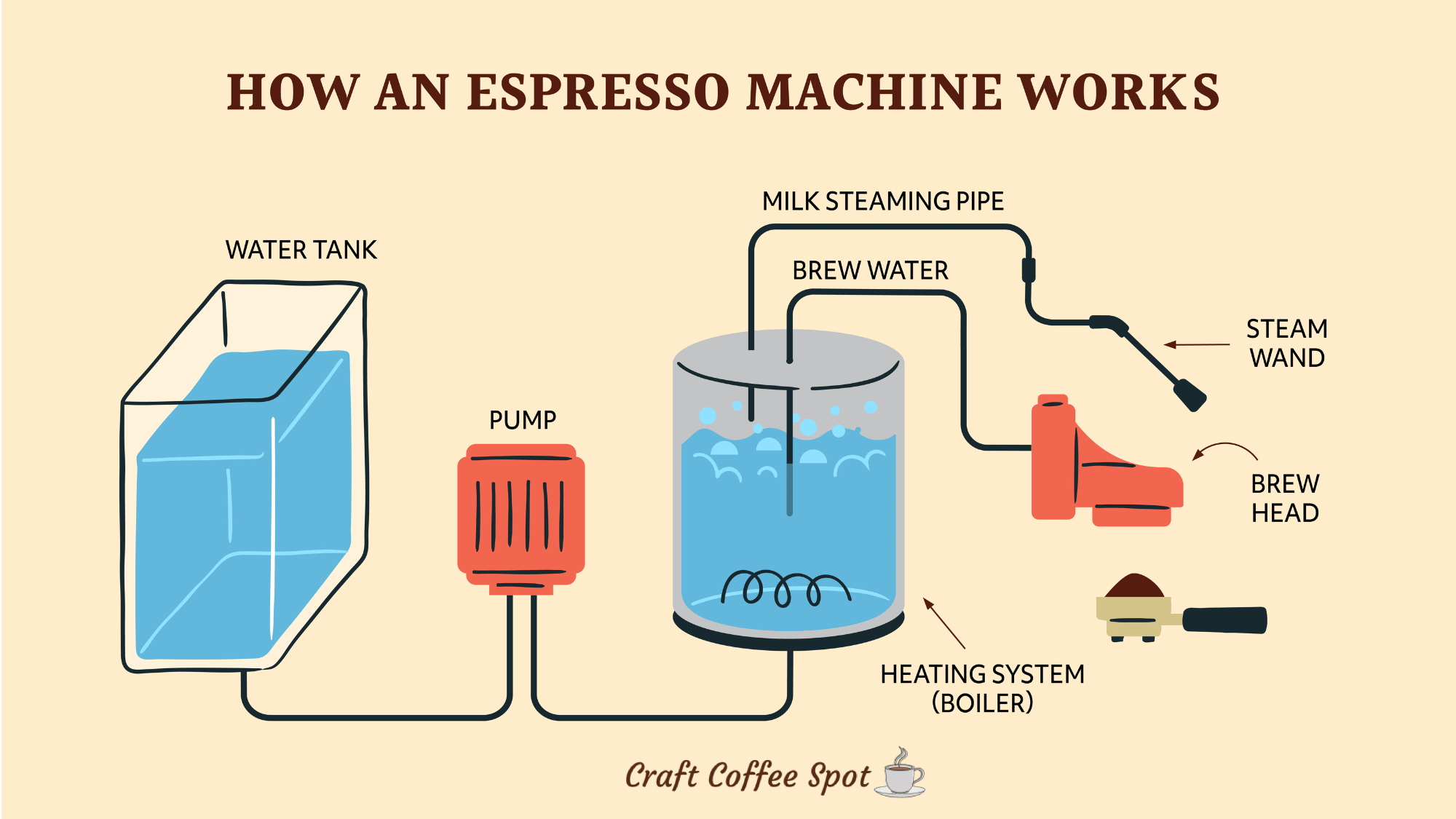 How An Espresso Machine Works: A Detailed Guide
You can even experiment with grind size and water temperature to tweak your brew. Too bitter? Your water might be too hot. Too weak? Grind finer or use more coffee. Suddenly, you’re not just a coffee drinker—you’re a master of your own morning ritual.
An Uplifting Finale (With a Wink)
So the next time your coffee brewer gurgles to life, take a moment to appreciate the tiny engineering marvel sitting on your counter. It’s not just a machine; it’s a reliable friend that turns potential into reality, one cup at a time. That’s a pretty good metaphor for life, isn’t it?
You have everything you need to start your day with intention—and a hot cup of joe. Go ahead, learn more about your brewer, tweak your technique, and make every morning a little more delightful. Because if a simple machine can transform water and beans into happiness, imagine what you can do with your whole day. Now go brew something wonderful.
