How To Filter Pfas From Water

So, you’ve heard about PFAS. The “forever chemicals.” They’re in your non-stick pans, your rain jacket, and yes, probably your tap water. It sounds a little sci-fi, right? But...

So, you’ve heard about PFAS. The “forever chemicals.” They’re in your non-stick pans, your rain jacket, and yes, probably your tap water. It sounds a little sci-fi, right? But don’t panic—let’s get curious instead.
What’s the Big Deal with PFAS, Anyway?
Imagine a chemical that just refuses to break down. That’s PFAS. They’re like the glitter of the industrial world—tiny, stubborn, and once they’re in your water, they hang around. Scientists are still figuring out how much is too much.
But here’s the cool part: you can actually filter them out. It’s not magic, just smart science. Let’s talk about how, without getting lost in a chemistry textbook.
Must Read
Not All Filters Are Created Equal
First, a hard truth: your basic Brita pitcher? It won’t cut it. Those cheap activated carbon filters are great for taste and chlorine, but PFAS are smaller and sneakier. They laugh at standard charcoal.
You need the heavy lifters. Think of it like this: if PFAS are a ninja, you need a titanium cage, not a cardboard box.
The Two Main Contenders
Two types of filters actually work: granular activated carbon (GAC) and reverse osmosis (RO). GAC is like a super-sponge; it traps PFAS as water flows through. It’s a solid choice, especially for whole-house systems.
Reverse osmosis, though? That’s the overachiever. It pushes water through a membrane so tight, even salt molecules get rejected. PFAS don’t stand a chance. You’ll get water that’s almost too clean—like spring water from a fantasy world.
What About Those Fancy Pitchers?
You’ve seen ads for “PFAS-filtering” pitchers. Some do work if they have a certified GAC filter. Look for labels that say NSF/ANSI 53 or 401. That’s the certification that proves they’ve been tested.
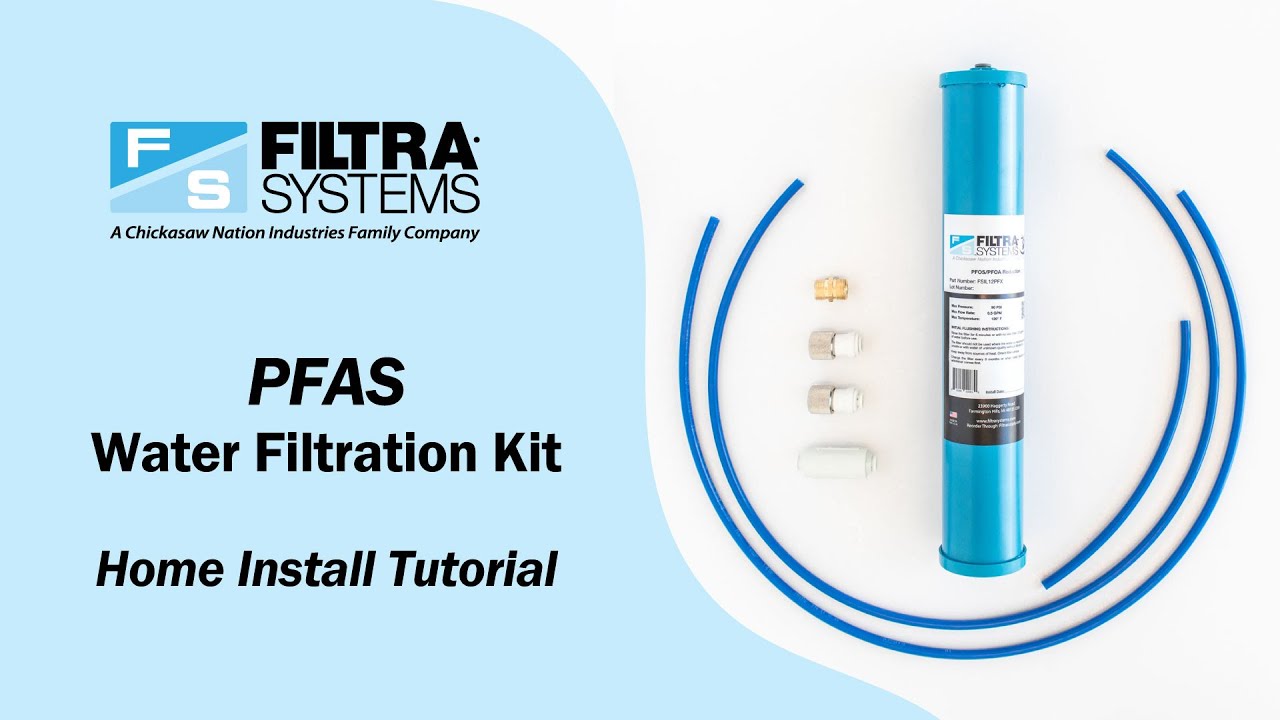 PFAS Water Filtration Kit - Home Installation Tutorial
But be honest: do you want to refill a tiny pitcher every time you’re thirsty? For a whole household, under-sink RO systems are the real MVP. They’re like a mini water treatment plant under your kitchen sink.
The Trap: “Removes 99%” Claims
You’ll see that number everywhere. “Removes 99% of PFAS!” Cool, but 99% of which PFAS? There are thousands of varieties. A filter might zap one type but ignore another.
Look for independent lab testing—like from EWG or NSF. If they don’t show the test results, assume it’s marketing fluff. Would you buy a car without a crash test video? Exactly.
DIY Filters? Hold Up.
I get it—the urge to make a DIY filter with sand and charcoal is real. It’s fun, like a science fair project. Don’t do it. Homebrew systems rarely have the precision to catch PFAS reliably. You’ll just get fancy sand in your glass.
Spend the money on a certified system. It’s cheaper than a doctor’s visit later. Plus, you’ll look like a water wizard when friends visit.
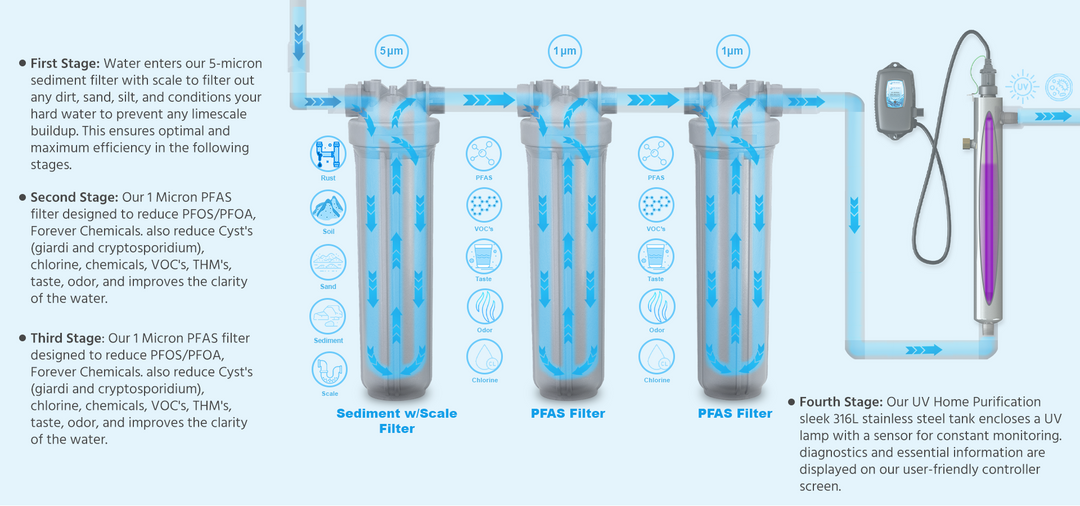 Ultimate PFAS Filtration System With UV – REN Water
The Coolest Part: What Happens to the PFAS?
So you filter it out. Great. But where do those chemicals go? They’re trapped in your filter cartridge. They don’t vanish. That cartridge is now a tiny toxic waste dump.
You can’t just toss it in the trash. Some companies recycle them. Others ask you to mail them back. It’s a little weird, but it’s better than flushing them back into the water supply. Think of it as chemical babysitting.
Is It Worth the Hassle?
Honestly? For peace of mind, yes. Most cities have low PFAS levels, but “low” isn’t “none.” If you’re near a military base, airport, or factory, the levels might spike. Testing your water is step one.
You can buy a simple test kit online. Dip a strip, wait, and see. It’s like a pH test but for the scary stuff. If PFAS show up, you’ll know exactly which filter to buy.
A Final, Chill Thought
We’re not trying to be paranoid here. Just aware. Filtering PFAS is like wearing a seatbelt—you don’t expect a crash, but it’s nice to have protection. And the tech is getting cheaper every year.
So grab a certified filter, test your tap, and sip easy. Your water will taste better, your brain will relax, and you’ll be doing the planet a solid. Pretty cool for a little cartridge under the sink, right?
