Does Florida Have Hard Water

So, you’re thinking about moving to Florida, or maybe you just bought a snowbird condo. You’ve heard the sunshine is free, but what about the water? Is it true that Florida’s...

So, you’re thinking about moving to Florida, or maybe you just bought a snowbird condo. You’ve heard the sunshine is free, but what about the water? Is it true that Florida’s tap water is harder than a two-dollar steak?
Let’s get straight to it: Yes, Florida has incredibly hard water. In fact, much of the state’s water supply is so mineral-packed that it makes a limestone quarry look like a soft drink. We’re talking about a geological reality that turns a simple shower into a battle against white scale.
The Geology of “WTF is on my Faucet?”
Florida is basically a giant sponge made of ancient seashells and coral. That’s right, the entire state sits on a massive limestone aquifer. As rainwater percolates down, it dissolves calcium and magnesium from this rock, turning your tap water into a liquid calcium pill.
Must Read
The result? A glass of water that’s harder than a math test on a Monday. The U.S. Geological Survey rates water hardness by grains per gallon (gpg). Most of Florida clocks in at a whopping 8 to 15 gpg, with some areas like Tampa or Miami hitting 20. That’s not water; that’s a mineral smoothie.
If you’ve ever tried to lather soap in a Florida shower and ended up with a chalky residue, you know the struggle. The soap reacts with the calcium to form “soap scum,” which is basically the bathroom equivalent of a failed relationship: sticky, frustrating, and impossible to scrub off.
What This Means for Your Skin, Hair, and Washing Machine
Let’s talk about your morning routine. Hard water doesn’t rinse soap off your skin; it glues it on. You step out of the shower feeling “squeaky clean,” but that squeak is actually a mineral film. For people with dry skin or eczema, Florida’s water is like a salty comedian: entertaining, but ultimately irritating.
And your hair? If you’re a transplant from Ohio or Oregon, prepare for the “Florida Frizz.” The minerals strip moisture, leaving your hair feeling like straw that’s been chewed by a llama. Some locals swear by apple cider vinegar rinses. I swear by buying a $200 shower filter and pretending it’s a luxury spa.
Moving on to your appliances. Your washing machine, dishwasher, and water heater are not fans of hard water. Scale builds up like plaque in an artery, slowly killing your machines. A water heater in Florida can lose up to 30% efficiency just from mineral crust. That’s like paying for a full tank of gas and only getting a half-tank of driving.
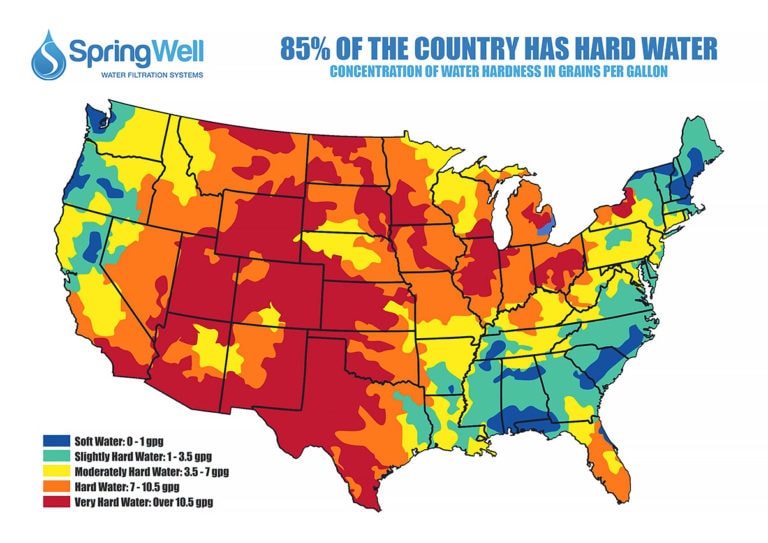 How To Remove “Hardness” from Your Water with a Home Water Softener
The Surprising “Fun” Part (Yes, There Is One)
Here’s a fact that will blow your mind: Florida’s hard water might be why the state smells so… weird. When high-sulfur groundwater (which is common in coastal areas) mixes with that calcium, you get the infamous “rotten egg” smell. It’s not sewage; it’s just nature reminding you that Florida is basically a planet of its own.
Another bizarre upside: the minerals make your coffee taste “stronger” the first few days. That’s because calcium binds with the coffee’s flavor compounds. But after a week, the scale in your coffee maker will make your brew taste like burnt dirt. So, invest in a descaling powder. Or just move to a coffee shop.
And let’s not forget the amazing white crust on your showerhead. You can actually scrape it off and make a tiny chalk drawing of a disappointed alligator. It’s the Florida way.
Can You Escape It? (Spoiler: Only Sort of)
Some areas are worse than others. Miami-Dade, Broward, and Palm Beach counties are the champions of hard water. The Florida Panhandle is slightly softer, but it’s like saying a traffic jam is “less bad” in Ocala. You’re still stuck in the car.
Well water is even harder. My friend in Ocala has well water so hard, he jokes it “grows stalactites” in his toilet bowl. He’s not wrong. A film of calcium can build up so thick it looks like a creamy white coral reef. It’s almost artistic, if you hate art.
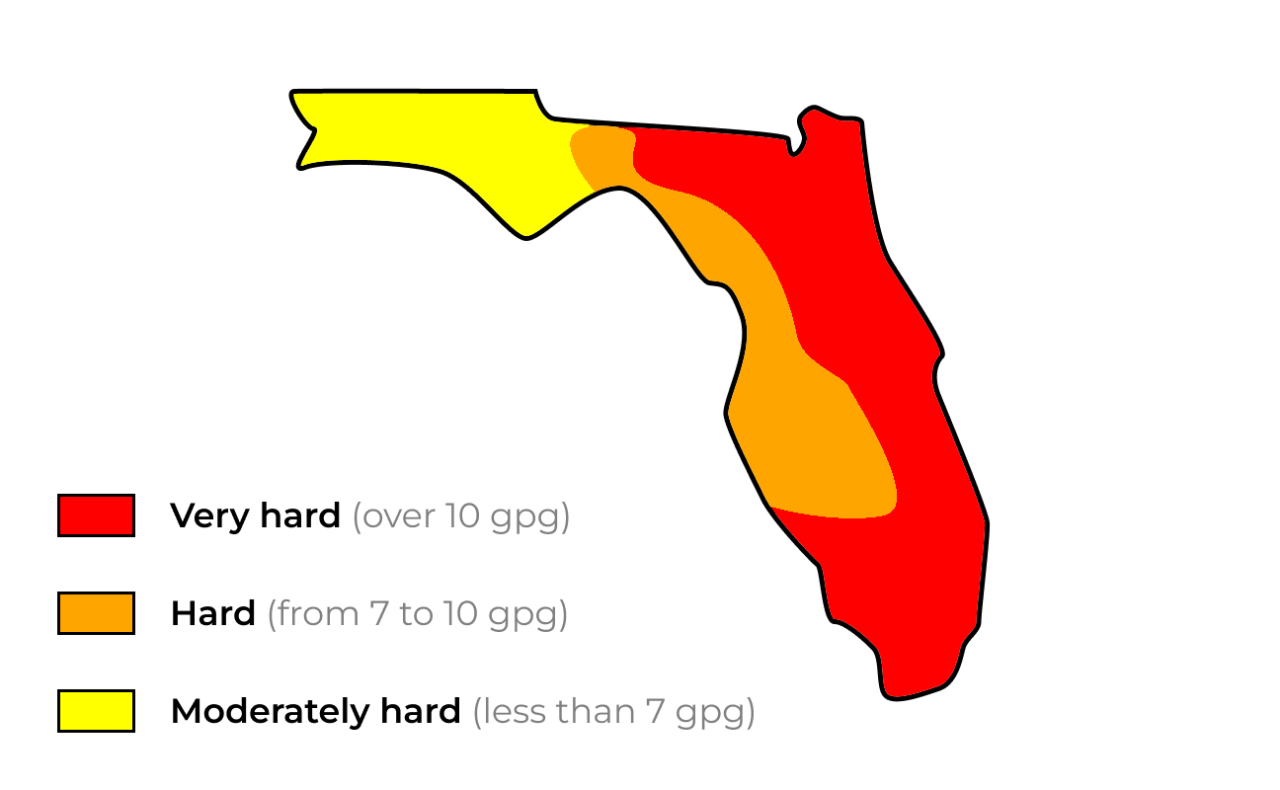 Water Hardness By Zip Code Arizona at Jill Deleon blog
But here’s the kicker: Florida’s tap water is actually very safe to drink. The hardness doesn’t mean it’s dirty. In fact, many of those minerals are good for you (calcium, magnesium). Sure, your water might taste like a Tums tablet, but it won’t kill you.
The Verdict: Do You Need a Water Softener?
If you answer “yes” to any of these questions, you need a water softener:
- Do you hate scrubbing white film off your dishes?
- Is your laundry feeling stiff and “crunchy”?
- Have your pipes started to whisper passive-aggressive complaints at night?
Water softeners are expensive (think $1,000 to $4,000 installed), but they’re the only real fix. A salt-based system swaps the calcium for sodium, making your water “soft and comfy” like a luxury robe. The downside? You’ll have a little extra sodium in your water. If you’re on a low-salt diet, you’ll need a reverse osmosis filter for drinking water—welcome to Florida’s ownership experience.
Otherwise, you’ll just have to embrace the crust. Buy a squeegee for your shower. Use a descaler in your dishwasher. And when a visitor asks, “Why is your tap water white?” just smile and say, “Because Florida is made of dinosaurs.”
In the end, Florida’s hard water is a feature, not a bug. It’s a rustic charm, like gators in the golf course or humidity that makes your hair a volatile substance. Will you survive? Of course. Will your showerhead look like a geode? Absolutely. Welcome to the Sunshine State, where even the water wants to be a rock.
