What Does Water Softening Do

Have you ever noticed that weird, white crust building up on your faucet, or felt like your soap just refuses to lather properly? That, my friend, is the handiwork of hard wat...
Have you ever noticed that weird, white crust building up on your faucet, or felt like your soap just refuses to lather properly? That, my friend, is the handiwork of hard water. It’s not dangerous, but it’s definitely annoying—like a houseguest who never leaves and leaves chalky fingerprints everywhere.
So, what does water softening actually do? Think of it as a spa treatment for your entire plumbing system. It strips away the troublemakers—calcium and magnesium ions—and swaps them for something gentler, usually sodium or potassium.
The "Hard" Truth About Your Water
Hard water is basically water that’s been on a road trip through limestone and chalk deposits. It picks up minerals along the way, which sounds fancy, but in practice, it just makes your life harder.
Must Read
Imagine trying to wash your hands with a bar of soap in a swimming pool. That gross, sticky film? That’s hard water reacting with soap to form soap scum. Not exactly the refreshing clean you were hoping for, right?
And it’s not just your skin suffering. Your pipes are slowly getting clogged with scale, like arteries filled with plaque. A water softener is basically a cardiologist for your home’s heart—it keeps things flowing smoothly.
How Does This Magic Happen?
Water softeners use a clever little trick called ion exchange. Sounds like science fiction, but it’s simpler than you think. The water passes through a tank full of resin beads that are covered in sodium ions.
Since calcium and magnesium are “stickier” than sodium, they jump off the water and cling to the beads instead. The water leaves with sodium, which is much friendlier to your pipes and appliances. It’s like a friendly swap meet, where the annoying minerals trade places with chill ones.
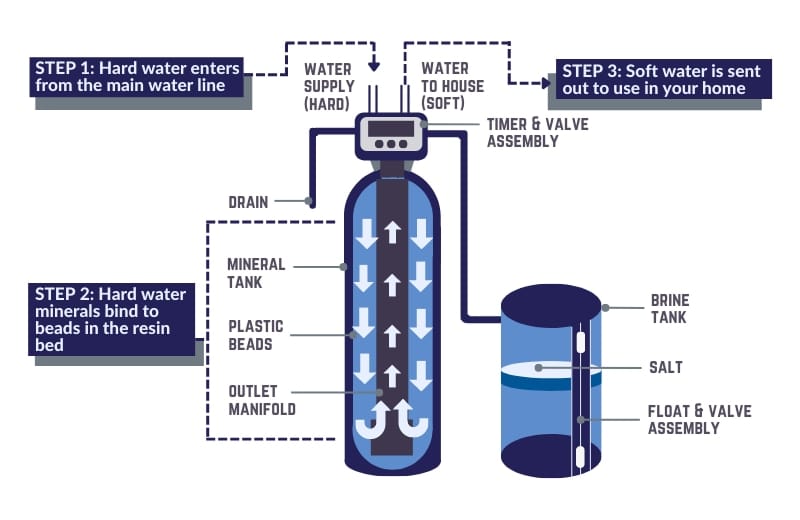 What Does A Water Softener Do And How Does It Work? – NEMXDG
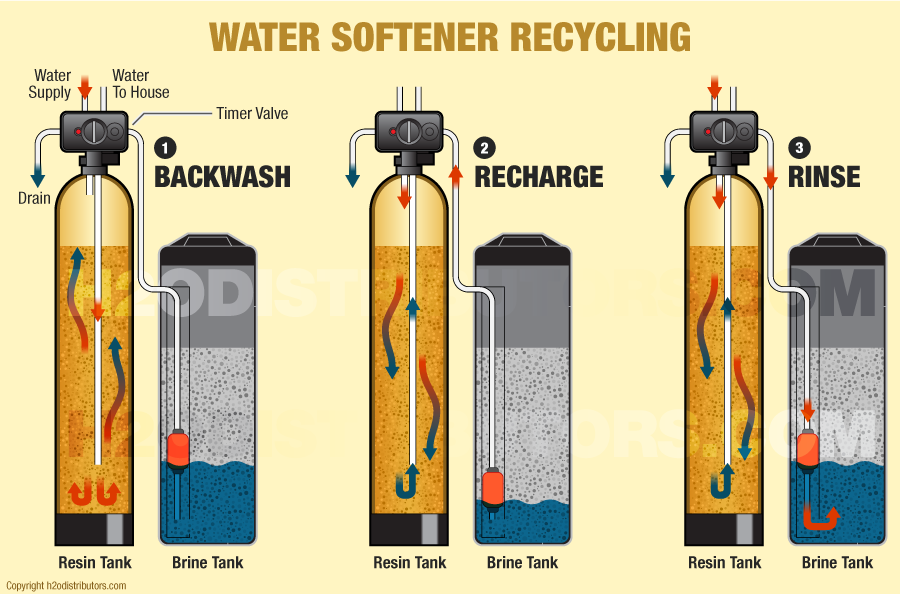
Eventually, the beads get full, so the system flushes them with a salty brine to recharge. Yes, your water softener takes a bath in salt water so you don’t have to. How considerate.
Why Should You Care? (The Fun Stuff)
Your dishes will sparkle like never before. No more cloudy glasses or weird spots that look like water ghosts are haunting your cupboard. Soft water rinses clean, leaving glassware looking brand new.
Your hair and skin will feel noticeably different. Hard water leaves a mineral residue that dries out your scalp and makes hair feel brittle. With soft water, shampoo actually lathers, and your skin feels silky instead of squeaky.
Even your laundry gets a glow-up. Clothes washed in hard water look dull and feel rough because minerals get trapped in the fibers. Soft water helps detergent work better, so your favorite hoodie stays soft and bright longer.
But Wait—Is It All Rainbows and Lather?
Honestly, not everyone loves the feeling of soft water. Some people say it feels a bit slippery, like you can never quite rinse all the soap off. That’s actually a good sign—it means the water is doing its job—but it takes getting used to.
 How Does a Water Softener Work? (And What Do They Do) - Filtersmart
Also, if you’re on a low-sodium diet, you might worry about the extra salt. Relax. The amount of sodium added is tiny—about as much as a slice of white bread. And you can use potassium-based salt if you’re really concerned.
And yes, soft water isn’t great for watering your garden, because plants prefer those hard minerals. So you might need a bypass valve for your outdoor spigot. Think of it as giving your plants their own special brew.
The Bottom Line: Is It Worth It?
If you’ve ever fought with a showerhead that looks like it’s covered in salt crystals, the answer is probably yes. Water softening saves your appliances, cuts down on cleaning time, and makes your morning shower feel like a five-star hotel experience.
It’s not a cure-all for everything, but it’s a pretty cool piece of chemistry that quietly works behind the scenes. Kind of like a backstage crew making sure the show runs perfectly—without you ever seeing the cables.
So next time you’re scrubbing a crusty kettle or battling soap scum, ask yourself: Could your water use a little chill pill? Because softening it just might be the easiest upgrade your home never knew it needed.
