Does Tap Water Have Chlorine

So, the other day I poured myself a tall glass of tap water, and my friend, let’s call her Karen—because, you know, she’s *that* person—wrinkled her nose and said, “Ugh, doesn...

So, the other day I poured myself a tall glass of tap water, and my friend, let’s call her Karen—because, you know, she’s that person—wrinkled her nose and said, “Ugh, doesn’t that taste like swimming in a public pool?” She wasn’t wrong about the vibe. It got me thinking: does my tap water actually have chlorine in it, or is Karen just dramatic?
Spoiler alert: Yes, it does. And it’s probably why your morning hydration sometimes reminds you of a chlorinated splash zone. But before you start sending angry letters to your city council, let’s break down this chemical relationship—because it’s weirder and more fascinating than you think.
The Chlorine Tapwater Tango: Why Is It There?
Here’s the deal: municipalities add chlorine to tap water as a disinfectant. It’s like giving your water a tiny, invisible bouncer that kicks out bacteria and viruses before they crash your glass.
Must Read
(Side note: That bouncer works overtime—chlorine kills stuff like E. coli and giardia. You know, the uninvited guests that cause explosive diarrhea. Yeah, that’s why we put up with the pool smell.)
But here’s the kicker: chlorine doesn’t actually smell like a swimming pool. That distinct “pool smell” comes from chloramines, which are a reaction between chlorine and organic matter—like sweat, urine, and dead skin. Yep, you’re basically drinking sanitized sweat. Cheers!
How Much Chlorine Is Actually in Your Glass?
Your tap water typically contains 0.5 to 4.0 parts per million (ppm) of free chlorine. That’s about the same concentration as a drop of bleach in a bathtub. Sounds tiny, right? But it’s enough to make your taste buds twitch if you’re sensitive.
And yes, that’s why you’ll sometimes get that slight “bleach kiss” when you’re chugging from the faucet at 2 AM. It’s not your imagination—it’s intentional chemistry doing its job.
Fun fact: the EPA mandates that water treatment plants maintain a detectable level of chlorine all the way to your tap. That residual chlorine is your safety net—it ensures nothing nasty grows in the pipes between the treatment plant and your glass. So, you’re welcome.
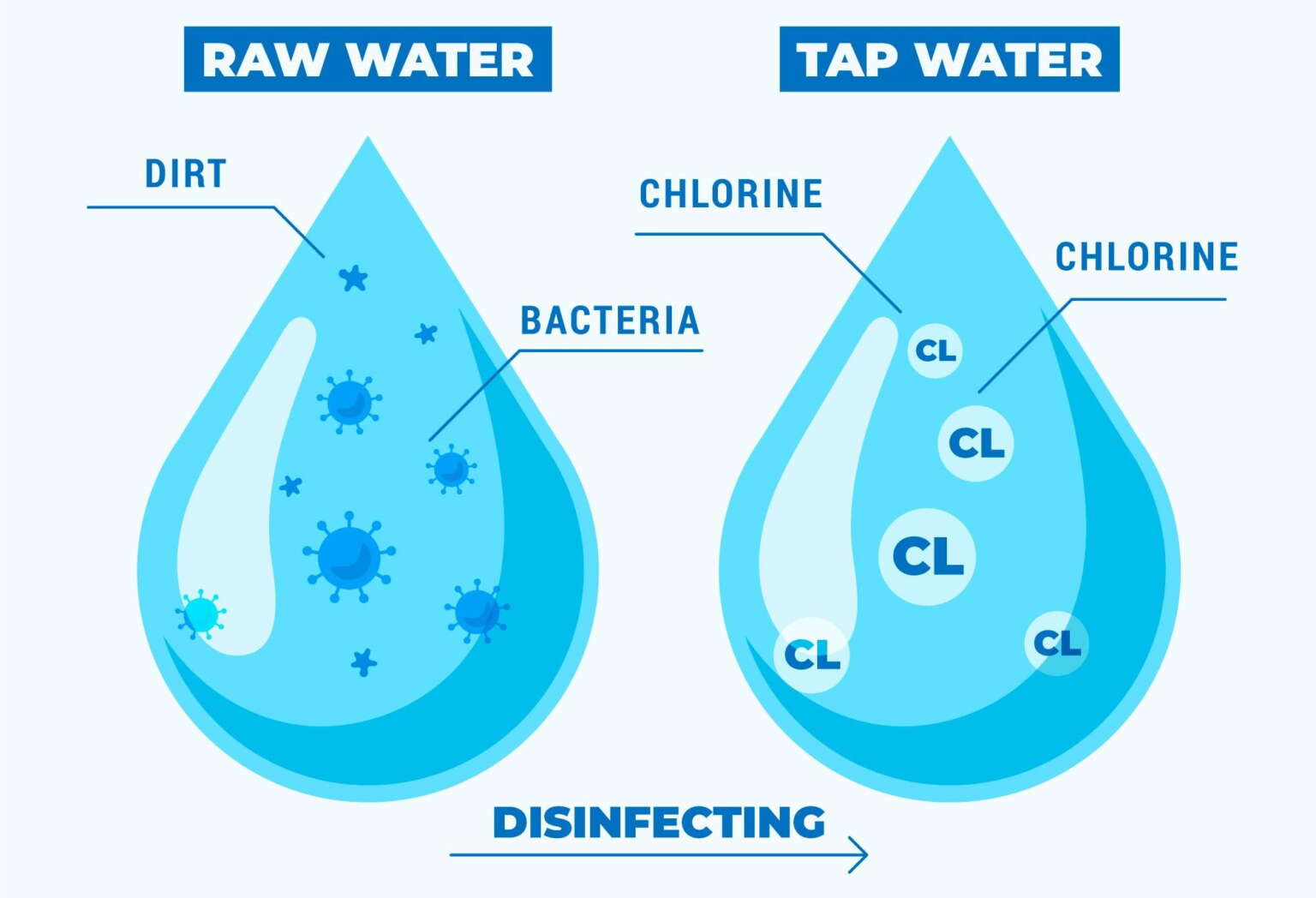 Why Does My Tap Water Smell Like Chlorine? (And How to Fix It)
But Wait—Doesn’t Chlorine Taste Gross?
Okay, I’ll be real with you: it can. If you’ve ever guzzled water from a city tap and thought, “This tastes like a band-aid,” you’re tasting chlorophenols—a chemical reaction between chlorine and trace organic compounds. It’s weirdly metallic and earthy.
But here’s the irony: bottled water companies usually use chlorine or ozone too! They just filter it out after. Your tap water is the raw, un-filtered version of that same process. So technically, you’re sipping the original—no plastic needed.
Pro tip: if the chlorine taste bugs you, let your water sit out for 30 minutes, or stick it in a pitcher in the fridge. That allows the chlorine to evaporate. It’s like “off-gassing” your water. Fancy, huh?
Is Chlorine in Water Actually Safe? (The Ironic Part)
I know you’re thinking: “But chlorine is bleach! I don’t drink bleach!” Calm down, bleach-monger. The amounts in tap water are strictly regulated and far below any level that could hurt you. In fact, the World Health Organization says the benefits of chlorination massively outweigh the risks—like, by a landslide.
The real danger is not having chlorine, which leads to diseases like cholera and typhoid. So, while you’re complaining about the pool taste, people in some parts of the world would kill for that “bleach kiss.” Put your privilege in check, Karen.
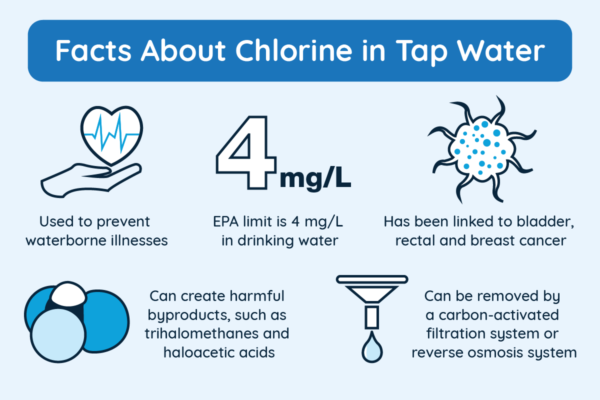 Why Does My Tap Water Smell Like Chlorine? - Angel Water Inc.
But—and here’s the ironic twist—three decades of chlorine exposure might not be great for your microbiome if you’re drinking it every day. Some studies link chlorinated water to altered gut bacteria. But again, it’s a trade-off: a slightly tweaked gut vs. dying of dysentery. I’ll take the former, thanks.
So, Should You Filter It?
If you hate the taste or you’re a hypochondriac, yes, get a carbon filter. It removes chlorine (and its byproducts) like a champ. A simple Brita pitcher works, or a faucet attachment. You’ll notice the difference immediately—it’ll taste like “nothing,” which is how water should taste, right?
But let’s be real: most of us don’t need to. Tap water is one of the most tested and regulated products in the U.S. (and many countries). It’s safer than your bag of kale. So if you’re fine with the pool vibe, drink up.
And hey, if you’re still worried, just remember: every sip of tap water is a tiny victory over bacteria. That chlorine might smell like summer camp, but it’s also the silent champion keeping your guts from a revolt. Now go fill your glass—I promise you’re not drinking bleach. (Okay, maybe a trace, but like, the nice kind.)
P.S. If you’re now obsessed with your water’s chlorine content, buy a $10 test kit online. Or just ask Karen—she probably already has one.
