How Does Water Softener Work

Ever notice those white, crusty stains on your faucets or feel like your soap just won't lather properly? You might be dealing with hard water. It's basically water that's pac...
Ever notice those white, crusty stains on your faucets or feel like your soap just won't lather properly? You might be dealing with hard water. It's basically water that's packed with extra minerals, mostly calcium and magnesium. Think of it as water that went on a mineral-collecting road trip through the ground before reaching your home.
But here's the cool part: a water softener isn't some magical, complex machine. It's actually a clever little system that uses a simple chemical trick. So, how does it work? Let's break it down in the most laid-back way possible.
The Big Swap
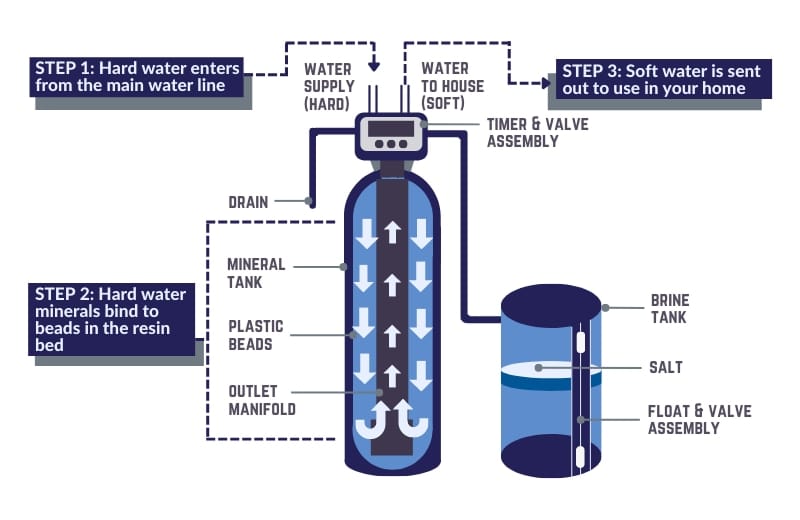
Imagine you have a sponge that's really good at holding onto one thing, but not so good at holding onto something else. A water softener works on the same principle, using tiny resin beads inside a tank. These beads are coated with sodium ions, which are like friendly little hitchhikers looking for a ride.
Must Read
When hard water flows over these beads, the calcium and magnesium ions shout, "Hey, I want a ride instead!" And the beads say, "Sure, swap with the sodium!" This process is called ion exchange. It’s basically a mineral swap meet happening silently inside your pipes.
The result? Your water leaves the tank soft, meaning it's now full of harmless sodium instead of those rock-hard minerals. Soap latthers beautifully, your skin feels smoother, and no more crusty faucets. Pretty neat, right?
But Wait, What Happens to the Calcium?
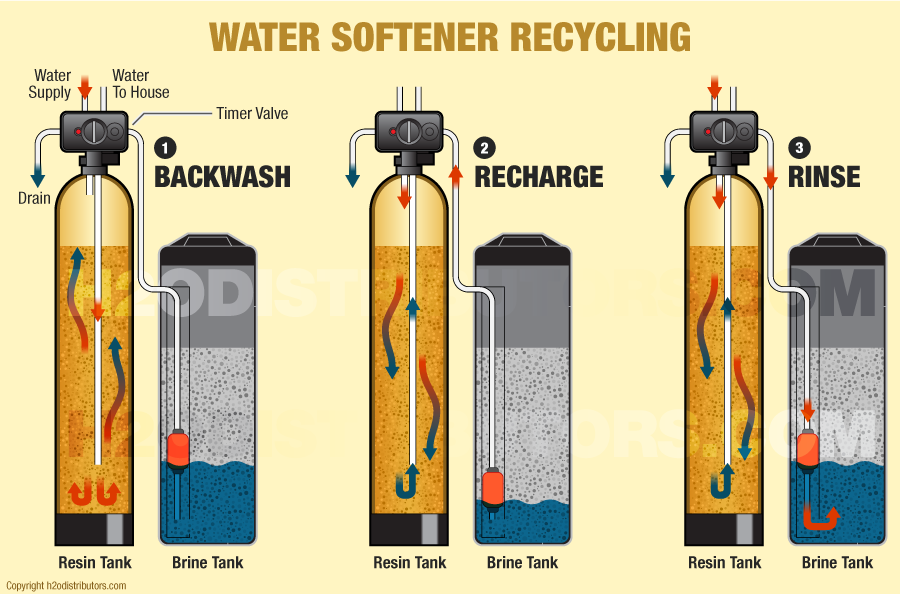
Those resin beads can only hold so many calcium and magnesium guests before they get full. Once they're stuffed, the softener stops working—it needs a refresh. That's where the regeneration cycle kicks in.
During regeneration, the system flushes a super-concentrated brine solution (just salt water) through the tank. The brine has so many sodium ions that it literally pushes the calcium and magnesium off the beads. Think of it like a forceful bouncer throwing out the old crowd so new friends can come in.
 Water Softeners | Midwest Smart Water Solutions
All the flushed-out minerals and extra salt get washed down the drain. Then, the softener goes back to work, ready for another round of ion swapping. It’s like a self-cleaning miracle for your water supply!
Why Is This So Cool?
Here’s a wild comparison: a water softener is like a bodyguard for your appliances. Hard water can gunk up your washing machine, dishwasher, and water heater, making them work harder and break faster. By removing those minerals, your machines last longer and use less energy.
And your skin? Hard water leaves a residue that can dry you out and make your hair feel straw-like. Soft water rinses clean, so your shampoo and soap actually get the job done without leaving a chalky film. Doesn't that sound nice?
Honestly, the whole system is just a beautiful example of chemistry doing a favor for your daily life. No loud noises, no complex electrics—just a quiet, efficient swap-a-thon happening in your basement or garage.
 How Does a Water Softener Work? + System Flow Diagram
The One Little Catch
Okay, so the trade-off is that softened water has a tiny bit more sodium. If you're on a low-sodium diet, you might want to filter your drinking water separately. But for everything else—showers, laundry, dishes—it's a game-changer.
Also, if you have a garden, you might not want to water plants with softened water. Plants don't love extra salt. But that's a small price to pay for having silky-smooth showers and spotless glasses, don't you think?
So, Should You Get One?
If you see white spots on your dishes, feel a rough film on your skin, or notice your water bill creeping up from inefficient appliances, it's worth considering. A water softener is like a silent upgrade to your home's comfort.
Think of it as a plumbing upgrade that pays for itself over time. Plus, it’s just satisfying to know exactly how it works. No magic, no mystery—just ion exchange, salt, and a whole lot of convenience. Who knew chemistry could be so chill?
