How Much To Drill A New Well

So, my neighbor Gary—bless his optimistic heart—decided to “save money” by drilling his own well last summer. He rented a rig, watched a few YouTube tutorials, and spent two w...
So, my neighbor Gary—bless his optimistic heart—decided to “save money” by drilling his own well last summer. He rented a rig, watched a few YouTube tutorials, and spent two weekends covered in mud while his wife, Linda, watched from the kitchen window with a glass of wine and a look that said, “I told you so.” Fast forward four months, and Gary’s yard looks like a moonscape, his water is the color of iced tea, and his total savings? Zero. Actually, minus $8,000, because he had to call in a pro to fix the mess. Gary’s story is hilarious, but it’s also the perfect lead-in to the question everyone’s really asking: how much does it actually cost to drill a new well?
The short answer: it’s a number that makes you wince
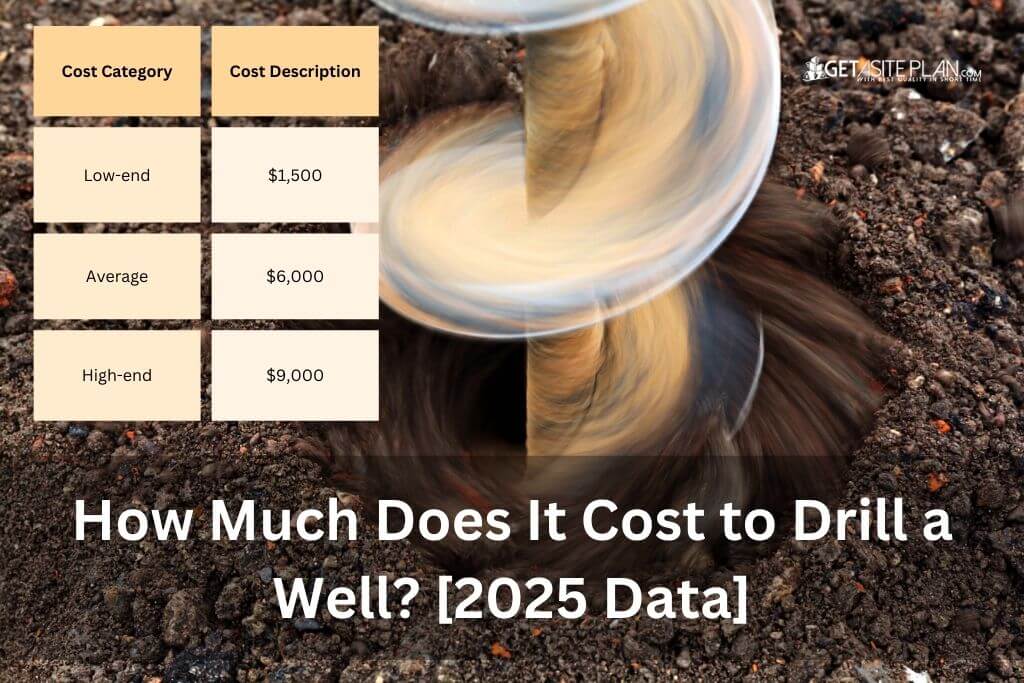
Let’s rip the Band-Aid off right now. For a standard residential water well in the U.S., you’re looking at $3,750 to $15,300 on average. Yes, that’s a wide range—like the difference between a used sedan and a brand-new truck. Most homeowners land somewhere around the $5,000 to $9,000 mark, but that’s for a simple, shallow well in cooperative soil. If you live somewhere with bedrock that hates you, or if you need a deep aquifer, that number can easily hit $20,000 or more. (Go ahead, take a deep breath. I did the same when I first researched this.)
But wait—why is it so expensive?
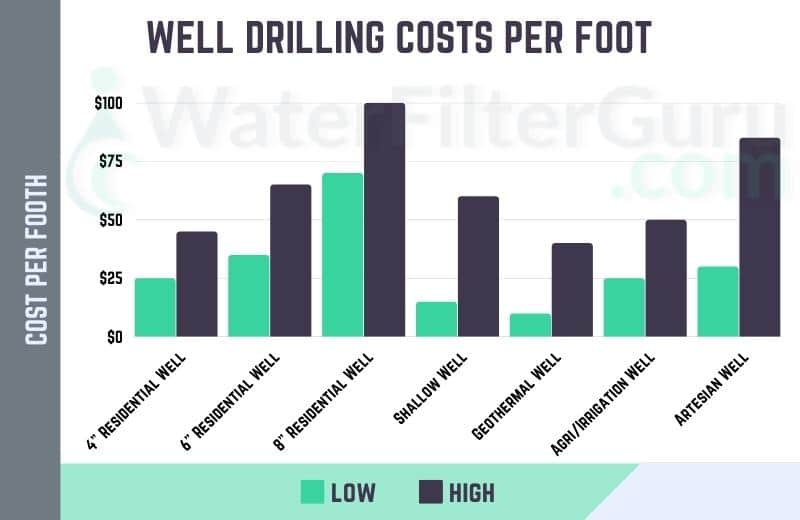
You’re not just paying for a hole in the ground, my friend. You’re paying for a precision surgery on your property. The cost breaks down into a few main chunks, and each one can sting. First, there’s the drilling itself, which is billed by the foot—usually $25 to $65 per foot. Then you’ve got the casing (steel or PVC pipe that keeps your well from collapsing), which runs another $15 to $40 per foot. Don’t forget the pump system—that’s an easy $500 to $2,500 depending on horsepower and quality. And finally, the pressure tank and control box add another $300 to $1,200. See? It adds up faster than a trip to the ER for a paper cut.
Must Read
The sneaky variables that set your wallet on fire
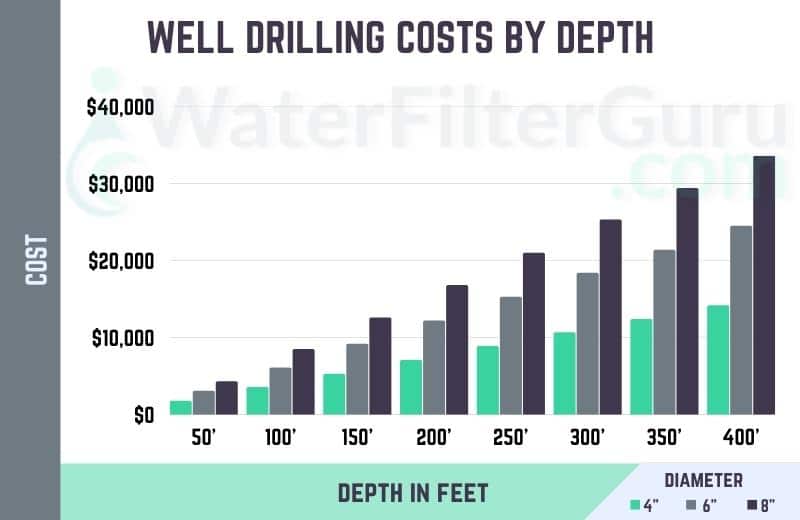
Here’s where it gets tricky—and where you need to channel your inner detective. Location is everything. Drilling in sandy soil in Florida? Cheaper. Drilling through granite in Vermont? Bring a second mortgage. Depth is the other big bully: a shallow well at 50 feet might cost $3,000, but a 400-foot deep well in a drought-prone area can top $20,000. Oh, and permit fees—yes, you need a permit, and they range from $100 to $800 depending on your county. (Because of course they do. Nothing in life is simple.)
Also, let’s talk about the “dry hole” risk. Some contractors charge you even if they hit nothing but dust—so always ask if their fee is “per foot drilled” or “per foot of functional well.” You don’t want to pay $10,000 for a glorified posthole, right?
 Drill Cost Per Hole at Kevin Davidson blog
How to avoid becoming a Gary
Gary’s biggest mistake wasn’t the DIY attempt—it was not getting multiple quotes first. Always get at least three estimates from licensed well drillers in your area. Check their reviews, ask for references, and make sure they carry insurance. A good driller will walk your property, test the soil, and give you a ballpark range before they ever fire up the rig. If they quote you a flat “$5,000” without even looking at your land, run. That’s the kind of promise that ends with you drinking orange water.
Another pro tip: ask about the pump and tank in the quote. Some drillers give you a low price for the hole, then nickel-and-dime you on the equipment. Get everything in writing—per foot cost, casing material, pump model, and labor for installation. Your future self will thank you when you’re not arguing over a $300 pressure switch at 8 PM on a Saturday.
 How Much Does a Well Cost? (2024 Well Drilling Cost Guide)
What about well depth and water quality?
You might think, “I’ll just drill deeper to get better water.” Well, not always. Deeper doesn’t automatically mean cleaner. In fact, deep aquifers can have high mineral content (hello, iron stains on your laundry) or even sulfur smells. Always budget for a water quality test after drilling—it’s about $100 to $300 and can save you from installing a filtration system that costs as much as the well itself. Also, if you’re in an area with known contaminants (like arsenic or nitrates), factor in a reverse osmosis system at $1,000 to $3,000. Suddenly, that $8,000 well is looking more like $11,000. Fun, right?
The bottom line (with a wink)
Drilling a new well is a bit like having a child: you love the independence, but you’re constantly worried about the cost and the potential for unexpected messes. The best thing you can do is arm yourself with knowledge and a thick skin for negotiation. Get those quotes, read the fine print, and don’t be afraid to ask dumb questions. (I asked my driller, “Does the water come out hot?” He laughed. Then he charged me for the chuckle.)
So, how much to drill a new well? It’s $5,000 to $15,000 in most cases, but it could be less—or way, way more. The real answer is: it depends on your land, your luck, and your willingness to haggle. Just don’t be a Gary. Hire a pro, get it in writing, and maybe keep a bottle of wine on hand for Linda. She deserves it.
