How Much Water Does Ro Waste

Let’s talk about your Reverse Osmosis (RO) system. You love that crisp, pure water. But have you ever wondered what’s happening in the drain? Spoiler alert: it’s thirsty. Real...
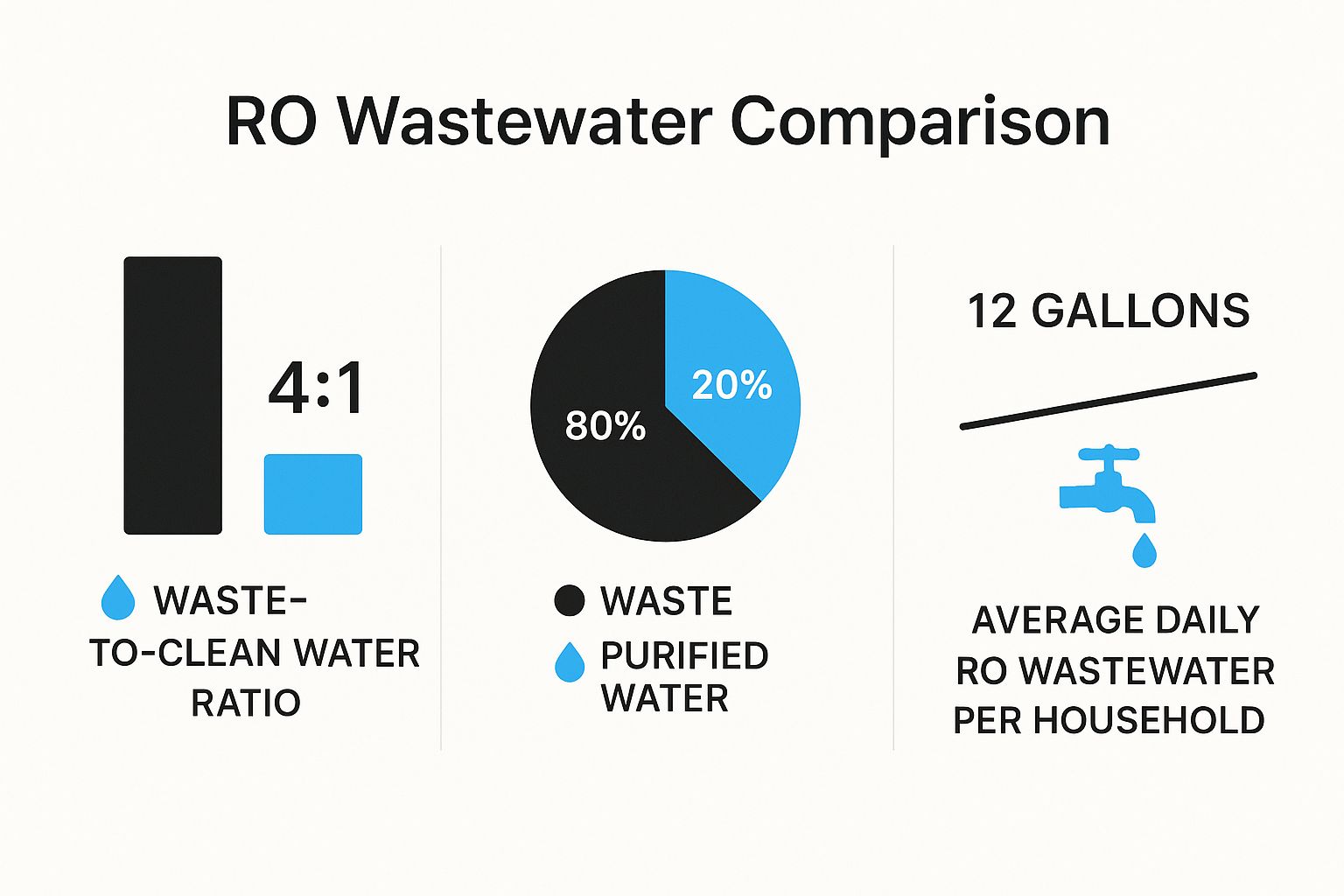
Let’s talk about your Reverse Osmosis (RO) system. You love that crisp, pure water. But have you ever wondered what’s happening in the drain? Spoiler alert: it’s thirsty. Really, really thirsty.
The Great Water Waste Heist
Standard RO systems are notorious overachievers in the waste department. For every one gallon of purified water you drink, they might flush three or four gallons down the drain. Yep, you read that right. It’s like buying a dozen donuts and tossing nine of them into the trash just to eat three.
Why so much waste? Think of RO as a very picky bouncer at a club. The good water (pure H₂O) gets in, but the bouncer also shoves out a ton of water just to keep the line moving and the club clean. That "flushing" water carries away the rejected contaminants—salts, minerals, and weird stuff.
Must Read
A Quirky History Lesson (Sort Of)
RO technology was born in the 1950s. It was meant to desalinate ocean water for the U.S. Navy. Efficiency? Not a priority. They just wanted to stop sailors from dying of thirst on a boat surrounded by saltwater. That’s like inventing a car that burns ten gallons per mile… but it runs on poop. It works, but it’s messy.
Fast forward to your kitchen. That 1950s brute force approach is still alive and kicking in many home units. It’s a little bit like using a fire hose to water a single houseplant.
The "Dirty" Numbers
Let’s break down the math. A typical year with a standard RO system? You might waste over 3,000 gallons of water. That’s enough to fill a small swimming pool. Just to get maybe 800 gallons of drinking water.
But here’s the funny kicker: most of that "waste" water is actually perfectly fine for non-drinking uses. It’s just a bit saltier or has more minerals. It’s not toxic sludge. Your garden doesn’t care. Your toilet definitely doesn’t care. It’s just rejected by the bouncer because it’s not pure enough for your 32-oz insulated mug.
 APEC Water Systems Review 2026: All Models Compared
Not All RO is a Water Hog
Here’s where it gets fun. Modern RO systems are wizards. They learned some tricks. High-efficiency models now waste only one gallon for every one gallon of pure water. Some zero-waste systems even recirculate the reject water back into the cold water line to your house. Boom! No drain water. It’s like the bouncer became a magician and makes the rejected water disappear back into the party.
You can also buy a "permeate pump." This little gadget uses the pressure of the waste water to boost efficiency by up to 80%. It’s like giving your RO system a pair of yoga pants—fits better, works leaner.
The "Wait, That’s Gross?" Factor
People panic when they hear "waste water." They imagine a brown river. Nope. The water going to your drain comes from your tap. It just didn’t make the purity cut. It’s the same H₂O that washed your hair this morning. You’re not flushing away poison. You’re flushing away perfectly decent water that simply didn’t get a “100% pure” sticker.
Fun fact: If you collected your RO reject water for a week, you could water your lawn, wash your car, or flush your toilet like a king. Some people even use it to boil pasta. It’s not recommended for drinking, but your spaghetti won’t know the difference.
 Does Reverse Osmosis Waste Water? - Guide to RO Water Waste
Why Should You Care (Buckle Up)
Because water is a finite, precious, hilarious substance. We treat it like it’s infinite until the bill comes or the well runs dry. Knowing your RO wastes 4 gallons per gallon of pure water is like knowing your car gets 5 miles per gallon. You either upgrade or get a motorcycle.
But here’s the truly wild part: you can fix this for free. Simply collect the waste water in a bucket. Yeah, it feels a little Mad Max – Water Warrior, but it works. Or get a new system. The newest RO units from brands like Waterdrop or APEC boast up to a 2:1 ratio (pure:waste). That’s a massive improvement from the old 1:4.
The "So What?" Takeaway
You don’t need to tear out your RO system. You just need to curious about the flow. Next time you pour a glass of that silky, filtered water, give a nod to the three gallons that sacrificed themselves in the name of purity. They’re the unsung heroes—and villains—of your kitchen.
And if you really want to brag at a party? Tell your friends your RO system has a water footprint bigger than a camel’s. Then watch their faces as you explain how to hook a bucket to the drain line. Curiosity: achieved. Hydration: addressed. Waste: Now hilarious.
Bottom line: RO waste is real, but it’s fixable. Your water is pure. Your conscience can be pure too. Just maybe not your pasta water.
