How To Clean Calcium Buildup

Hey there! So, you’ve spotted that chalky, white crust around your faucet or on your showerhead, and you’re wondering what on earth it is. Don’t panic—it’s just calcium buildu...

Hey there! So, you’ve spotted that chalky, white crust around your faucet or on your showerhead, and you’re wondering what on earth it is. Don’t panic—it’s just calcium buildup, also known as limescale, and it’s basically the ghost of minerals past. It happens when hard water dries and leaves behind its tiny, mineral skeleton. But guess what? You don’t need a chemistry degree or a hazmat suit to send it packing.
The Science is Simple (and a Little Sassy)
Calcium is basic, and we’re going to fight it with something acidic—like a food fight, but much cleaner. Think of it this way: you’re using a sour superhero to dissolve a chalky villain. The best part? You probably have the weapon in your pantry right now.
We’re talking about vinegar and lemon juice. They’re cheap, they’re natural, and they won’t make your eyes water like bleach. Seriously, this is the easiest mandate you’ll ever follow.
Must Read
Step 1: The Vinegar Soak for Faucets and Showerheads
Grab a small plastic bag—a sandwich bag works great. Fill it halfway with plain white vinegar. Not the fancy balsamic, okay? Save that for your salad.
Now, tie the bag around your faucet or showerhead so the nozzle is fully submerged in the vinegar. Use a rubber band or a twist tie to hold it in place. Let it soak for at least 30 minutes to an hour. If the buildup is ancient and stubborn, let it sit overnight. Go read a book, pet your cat, or practice your evil laugh—the vinegar is doing all the work.
After the soak, remove the bag and scrub with an old toothbrush. You’ll see the white flakes fall off like snowflakes in reverse. Rinse with water, and you’re done. It’s magic, but it’s real.
Step 2: Lemon Power for Small Spots
Got a small stain on a glass shower door or a chrome handle? Grab a lemon. Cut it in half and rub the cut side directly onto the calcium. Squeeze a little as you go to release the juice.
Let that sit for 10 minutes. Then wipe it off with a damp cloth. You’ll smell like a lemonade stand, which is way better than smelling like bleach. Plus, your kitchen will feel fancy.
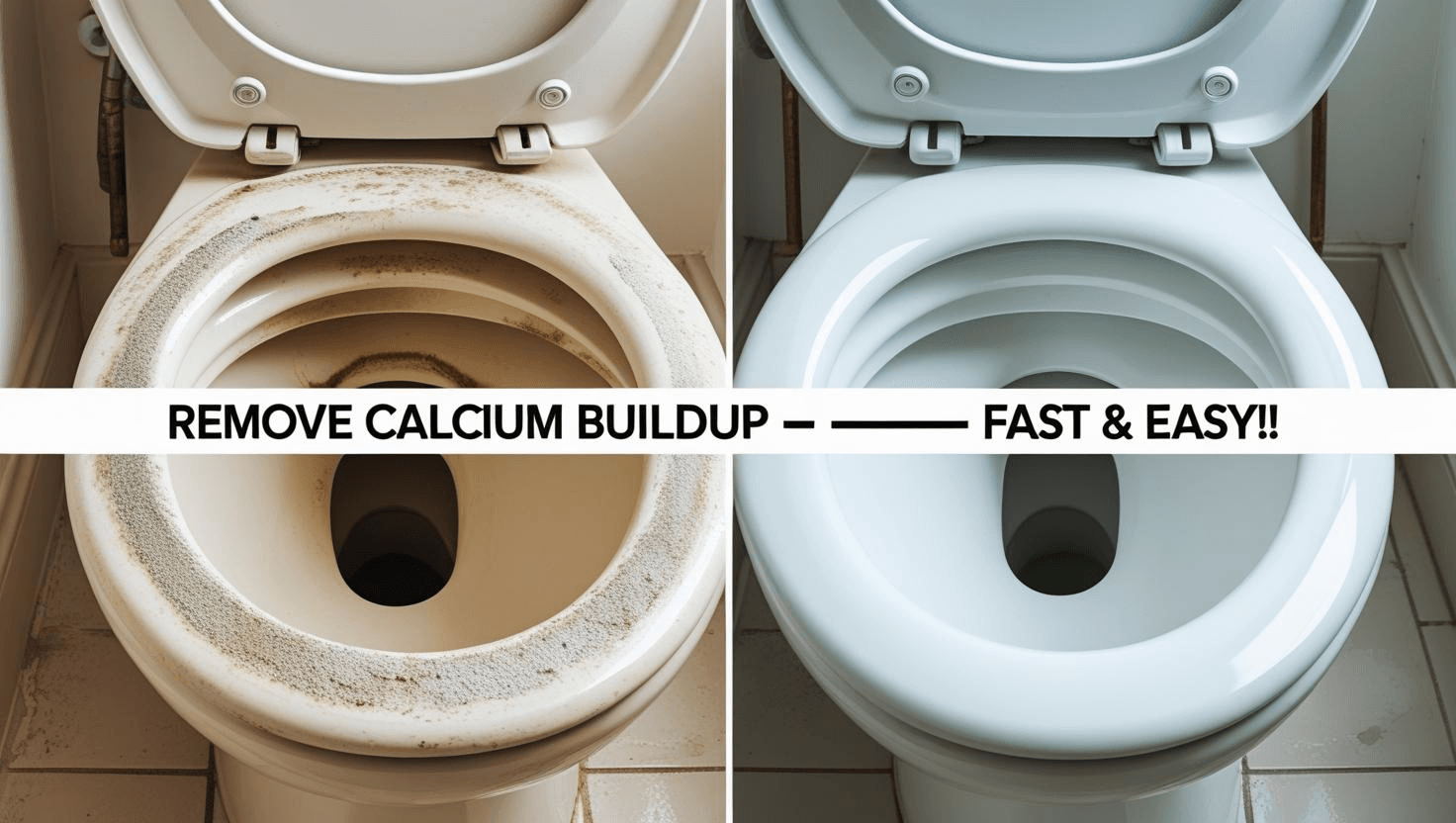 How to Remove Calcium Ring from Toilet: Easy DIY Solutions
If you don’t have a lemon, you can use a citrus-based cleaner, but honestly, the real lemon is cheaper and more fun. It’s like giving your faucet a spa treatment.
Step 3: The Baking Soda Boost (For Stubborn Crust)
Sometimes calcium buildup fights back—it’s the boss level. Make a paste with baking soda and a little water. It should look like thick toothpaste.
Smear it over the buildup and let it sit for 15 minutes. Then spray or pour a little vinegar on top. It will fizz like a science fair volcano—it’s so satisfying. The fizzy action loosens the calcium. Then scrub with a brush or sponge. Rinse. Victory.
This combo is also great for coffee pots. Just run a cycle with half vinegar and half water, then two cycles with plain water. Your coffee will taste like coffee again, not a chalky apology.
Step 4: Prevention (Because Laziness is a Virtue)
You don’t want to fight calcium every weekend, right? So here’s the lazy trick: wipe down wet surfaces after use. Just a quick squeegee on the shower door or a towel swipe on the faucet takes 10 seconds. Calcium can’t build up if there’s no water left to evaporate.
If you’re really serious, install a water softener system. It’s like a bodyguard for your pipes and appliances. But if that sounds like a big project, just live by the rule: dry it, disband the chalk army.
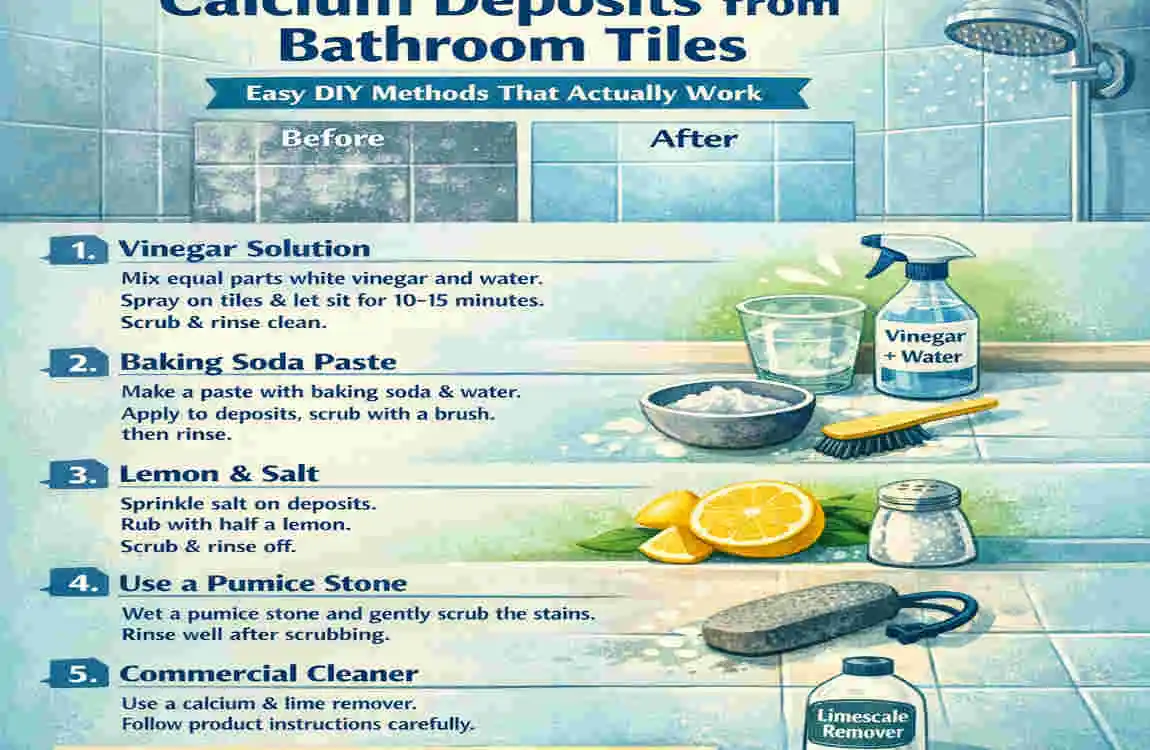 How to Remove Calcium Deposits from Bathroom Tiles: Easy DIY Methods
Also, clean your faucet aerators every few months. Unscrew them, soak in vinegar, scrub, and screw back on. It’s like decluttering for your faucet. Your water pressure will thank you with a happy gush.
A Few Quick No-Nos
Don’t use abrasive scouring pads on shiny chrome or stainless steel. They’ll scratch the surface, and then you’ll have scratches and buildup. Use a soft cloth or an old toothbrush.
Don’t mix bleach and vinegar. That creates toxic gas, not a cleaning solution. We want you alive to enjoy your sparkling faucet. Stick to vinegar, lemon, and baking soda—they’re the Three Musketeers of descaling.
And don’t stress if it takes two tries. Calcium is stubborn, but you’re stubborn-er. You have a sense of humor and a bottle of vinegar on your side. That’s an unbeatable combo.
The Uplifting Conclusion (You Made It!)
So there you have it. You’ve conquered the chalky beast without breaking a sweat or spending a fortune. Your faucet is shiny, your showerhead is singing, and your kitchen smells like a farm stand. You are officially a home maintenance hero—a calcium-crushing, vinegar-wielding cleaning wizard.
Now, step back and admire your work. Take a picture. Show it to your cat. They won’t care, but you know the truth. You turned a boring chore into a tiny victory, and that’s what life is all about. So go ahead, turn on the faucet, and watch that water sparkle like it’s waving a little flag. You earned it. High five from across the internet. Now go make some lemonade with that leftover citrus.
