How To Remove Tds From Water

So, you’ve heard the term TDS thrown around like a bad secret at a dinner party. It stands for Total Dissolved Solids, which is just a fancy way of saying "stuff floating in y...
So, you’ve heard the term TDS thrown around like a bad secret at a dinner party. It stands for Total Dissolved Solids, which is just a fancy way of saying "stuff floating in your water that you can’t see." Think of it as the water’s invisible luggage—minerals, salts, metals, and even bits of old plumbing. Most tap water has some TDS, and surprise: a little is actually good for you, like calcium or magnesium. But when that number gets high, your water starts tasting like a coin collection, and your kettle develops a crust that could double as a concrete wall.
I once tested my friend’s well water, and the TDS reading was 1,200 parts per million. That’s not water—that’s a mineral soup that whispers "salt mine" every time you take a sip. But don’t panic. You don’t need a chemistry degree or a lab coat to fix this. You just need the right tool and a sense of humor about the whole thing.
Reverse Osmosis: The Overachiever’s Guide
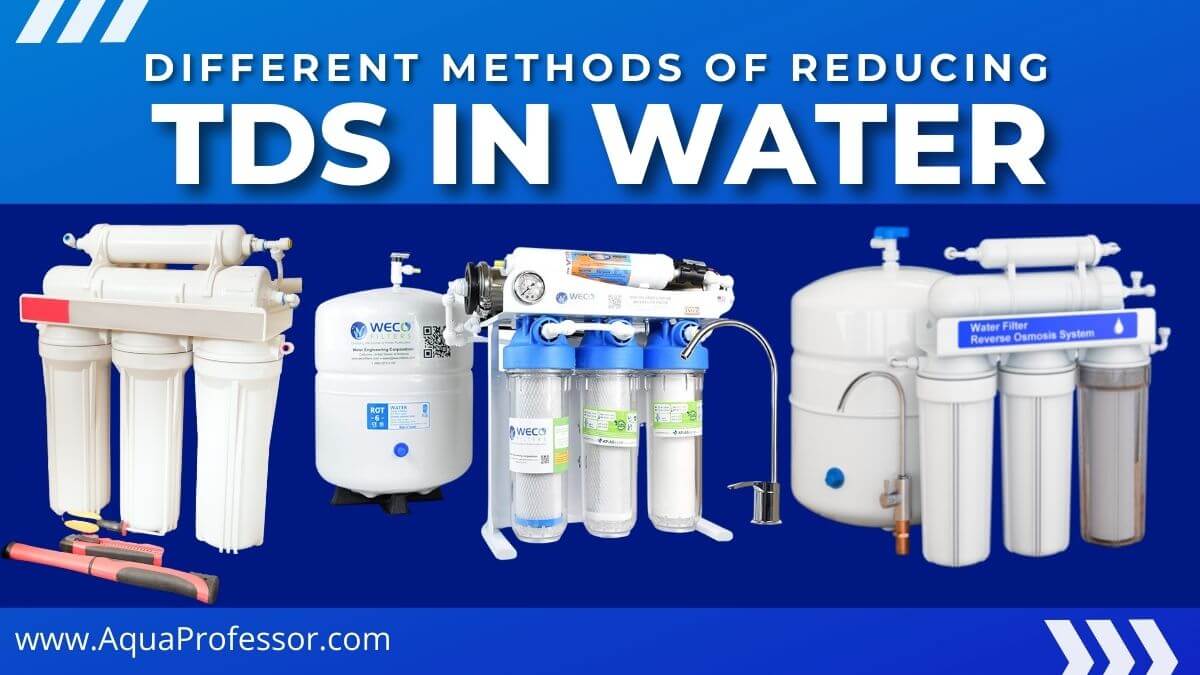
If you want to remove TDS like a boss, get a reverse osmosis (RO) system. It’s the nuclear option for water purification. RO uses a semi-permeable membrane so fine that only water molecules can squeeze through—everything else gets rejected like a bad movie pitch. It can remove up to 99% of TDS, turning your salty tap water into something that tastes like melted glacier. The downside? It’s slow, wastes a bit of water (think of it as the water’s "audition process"), and costs a few hundred bucks. But hey, you’ll never complain about "mineral aftertaste" again.
Must Read
Fun fact: NASA uses RO on the International Space Station to recycle astronaut urine. That’s right—your coffee might have a more glamorous history than you’d like. But as long as the TDS is gone, who’s judging?
Distillation: For the Patient (and Slightly Crazy)
Distillation is the old-school method that involves boiling water into steam and then condensing it back into liquid. It’s like giving your water a spa day, except the spa is a hot pot and the treatment is evaporation. This process leaves behind almost all dissolved solids—salt, lead, even your ex’s bad vibes. But fair warning: it guzzles electricity like a teenager guzzles soda, and you’ll wait hours for a single pitcher. And the result? Water so pure it might taste too flat, like drinking a blank stare.
Pro tip: If you distill your own water, add a pinch of sea salt afterward for minerals. Otherwise, you’ll be the person at parties bragging about your "deionized" water while everyone else sips tap. Don’t be that person.
 How to Reduce TDS in RO System| how to reduce water TDS Level at home
Activated Carbon Filters: The Friendly Bouncer
Activated carbon filters are like the bouncer at a club who only kicks out the worst offenders. They’re great at removing chlorine, bad tastes, and odors, but they’re lousy at removing most TDS. If your water’s TDS is high, a Brita filter will do about as much good as a paper umbrella in a hurricane. It’ll improve the taste, sure, but the dissolved minerals will still be partying in your glass. For real TDS removal, you need something stronger—like RO or distillation.
Surprising fact: Some premium carbon filters combined with ion exchange resins can lower TDS by about 30-40%. That’s like cutting a slice off a pizza—still hungry, but less ashamed.
Deionization: The Geek’s Secret
Deionization uses resin beads that grab onto dissolved ions like a magnet picks up paperclips. It can produce water so pure it’s used in laboratories and car batteries. But don’t drink it straight for weeks—it can leach minerals from your body, leading to a deficiency that makes you feel like a wilted lettuce leaf. Usually, deionization is paired with RO for the ultimate TDS knockout. It’s like having a ninja and a samurai working together.
 How to Reduce TDS in Water at Home-Get 5 Ways!
One warning: Deionization systems require regular resin replacement, which costs money and feels vaguely like feeding a pet you never wanted. But if you’re a science nerd or have a detailed spreadsheet of your water’s mineral content, this is your jam.
Boiling? Nope. Freezing? Definitely Nope.
Let’s clear up two myths: Boiling water kills bacteria but increases TDS because water evaporates, leaving the solids more concentrated. Your soup might taste better, but your TDS reading will look like a stock market crash. Freezing water? That’s a party trick, not a purification method. Ice forms from pure water first, pushing the dissolved solids into the remaining liquid—so you get slightly less TDS in the ice, but the leftover water becomes a brine. Congrats, you made a margarita for your pipes.
The bottom line: If your TDS is under 300 ppm, chill out and drink tap. Between 300 and 900 ppm? Consider a carbon filter for taste, or RO if you’re picky. Over 900 ppm? That’s not water—it’s a mineral bath, and you need a serious system. Or you could just move to a place where the water falls from the sky already perfect. But that’s a different article.
Remember, water’s job is to hydrate you, not test your patience. Pick a method, laugh at the absurdity of needing to "remove" invisible stuff, and drink up. Your body will thank you—though your wallet might give you a side-eye.
