How To Remineralize Ro Water

So you’ve joined the cult of reverse osmosis water. Congratulations! You now own water so pure, so offensively empty, that it’s basically a liquid ghost. It’s so stripped of m...
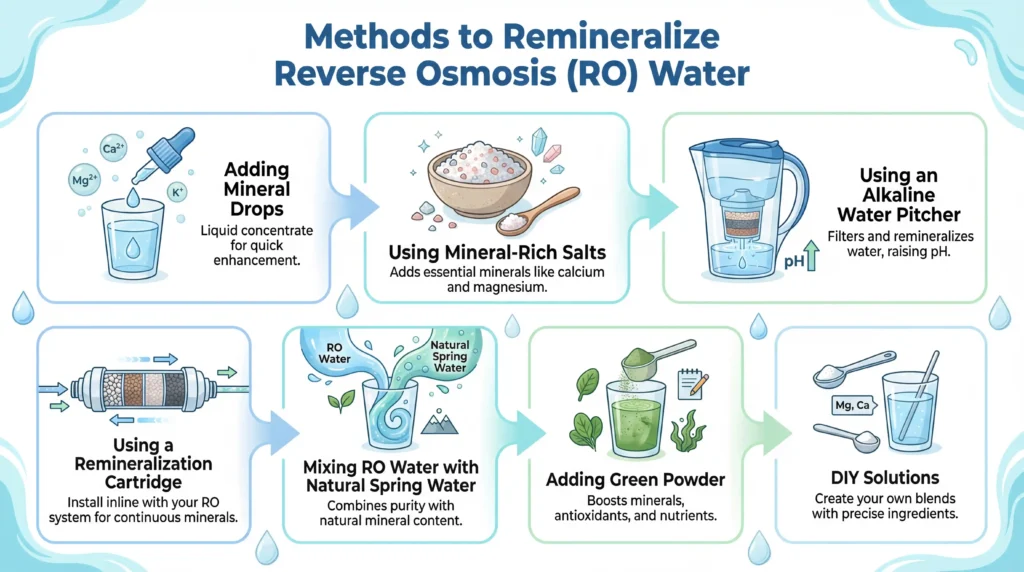
So you’ve joined the cult of reverse osmosis water. Congratulations! You now own water so pure, so offensively empty, that it’s basically a liquid ghost. It’s so stripped of minerals, scientists jokingly call it “hungry water” because it tries to leach minerals from your pipes and, yes, your own body. Drinking RO water straight is like kissing a skeleton—technically hydrating, but lacking all the good stuff that makes life interesting.
The Great Mineral Heist
Reverse osmosis is a miracle—it removes lead, arsenic, and PFAS “forever chemicals.” But it’s also a brute; it kicks out calcium, magnesium, and potassium like rude party guests. The result? Water with a pH lower than a teenager’s mood, often around 6.0. Drink it long-term and you risk messing with your electrolyte balance. That’s why we need to put the minerals back where they belong—like reconstructing a dinosaur from a single bone.
But don’t panic. You won’t need a chemistry degree or a lab coat. You just need a few kitchen hacks and a willingness to look slightly weird in front of your friends. Step one: stop buying expensive “remineralization cartridges” that cost more than a Netflix subscription. You can do this for pennies.
Must Read
The Crushed Eggshell Gambit
Yes, eggshells. Before you call me a health influencer who shills essential oils, hear me out. Eggshells are 95% calcium carbonate, the same stuff in antacids. Wash them, bake them at 350°F for ten minutes to kill bacteria, then crush them into tiny pieces. Drop a tablespoon into your RO water pitcher and let it sit overnight. The water will slowly dissolve the calcium, raising the pH and adding a mild, clean mineral profile.
Surprising fact: This method is ancient. Mongolian nomads used to drop crushed animal bones into river water for the same effect. You’re not being weird; you’re channeling Genghis Khan. Just don’t get the powder too fine—nobody wants gritty H₂O. Unless you’re into that—then you do you.
The Pink Salt Prank
Himalayan pink salt isn’t just for Instagram-worthy lamps. It contains 84 trace minerals, including potassium and magnesium. Add a single, tiny pinch to a gallon of RO water—we’re talking less than a quarter teaspoon. Stir until it dissolves (about three seconds). Boom: slightly mineralized water that tastes rounder, not salty. Your tongue will thank you.
But here’s the catch: too much salt makes it taste like the Atlantic Ocean. Measure with your heart, but also with a measuring spoon. If you overdo it, add more RO water to dilute. This is not chemistry; it’s soup seasoning logic.
 Comment reminéraliser votre système d'eau potable par osmose inverse e
The Baking Soda Betrayal (It’s Not Cheating)
Baking soda isn’t technically a mineral source, but it’s a pH jackhammer. A pinch per gallon of RO water will push the pH from acidic 6.0 to a comfortable 7.5 or 8.0. This doesn’t add minerals, but it makes the water less aggressive to your teeth and stomach. Think of it as putting a sweater on your water. It’s cozier.
But warning: Baking soda has sodium. If you’re watching salt intake, use less. Or just accept that your water now has a tiny, harmless lift of alkalinity. Your kidneys won’t even notice.
The Lazy Pro Move: Mineral Drops
Let’s be real: sometimes you want to skip the eggshell ballet. Commercial mineral drops like ConcenTrace are literally concentrated seawater. Two drops per glass gives you a full spectrum of minerals and a taste that says “I’m fancy.” They cost about $20 for a bottle that lasts months. That’s cheaper than therapy—and your water will thank you.
But here’s the embarrassing truth: you can also just buy a bag of calcium and magnesium powder from a homebrew store. Brewers use it to adjust beer water chemistry—because yes, even your IPA is fussier about mineral content than you are. Mix 50mg of each per liter, shake, and drink. You’ve just out-nerded 90% of the population.
 How to Remineralize RO Water for Drinking | SimPure Best Picks
The “Who Cares” Approach
Let’s be brutally honest: if you eat a balanced diet with veggies, dairy, and nuts, you don’t strictly need to remineralize your RO water. Your body gets plenty of calcium from cheese and magnesium from almonds. The only real risk is the acidic pH, which can erode tooth enamel over years. So if you’re lazy, just add that pinch of baking soda. That’s it. You’re done.
But if you’re a “crunchy” type who wants your water to sparkle with vitality, go ahead and do the eggshell thing. Here’s a shocker: most commercial bottled water like Dasani is just RO water with added minerals. You’re literally creating the same product for free. Congratulations! You’ve now achieved what corporations do at a 10,000% markup.
The Final Swig
Remineralizing RO water is not rocket science—it’s kitchen science with a sense of humor. You can use eggshells, pink salt, baking soda, or fancy drops. Or you can do nothing, and let your thighs digest a cheeseburger to get your minerals. The choice is yours.
Now go forth and conquer your thirsty, lifeless water. Make it sing. Make it sparkle. Make it so full of life that it would win a hydration pageant. And if someone asks why you’re crushing eggshells in your kitchen, just wink and say “ancient Mongolian tradition.” They’ll probably back away slowly, but at least your water will be perfect.
