Does Oregon Have Hard Water

So, you’re wondering if Oregon has hard water, huh? Maybe you’ve noticed a white, crusty residue on your coffee pot that looks like a miniature salt flat. Or perhaps your soap...

So, you’re wondering if Oregon has hard water, huh? Maybe you’ve noticed a white, crusty residue on your coffee pot that looks like a miniature salt flat. Or perhaps your soap just refuses to lather, leaving you feeling like you’re showering in a puddle of sadness. Let’s dive into this watery mystery together—and I promise, no chemistry degree is required.
The Quick & Soapy Truth
The short answer is: it depends on where you live in Oregon. The state is a total split personality when it comes to water. The western side, especially the Willamette Valley and Portland, generally has soft water. Why? Because their water comes from the Cascade Mountains—think pristine snowmelt and rainforests. It’s basically Mother Nature’s filtered water.
But head east of the Cascades, into places like Bend, Medford, or the high desert, and the story changes faster than a squirrel crossing a highway. Those areas rely on groundwater from ancient basalt aquifers. And guess what basalt is full of? Calcium and magnesium—the dynamic duo that turns your water hard.
Must Read
So no, Oregon is not a hard-water horror show like parts of the Midwest. But it’s not a universal soft-water paradise either. It’s more like a water personality swap meets a geological roller coaster.
Your Shower’s Secret Saboteur
If you live in eastern Oregon, you’ve probably battled the dreaded mineral buildup. That’s the white, chalky stuff that clogs your showerhead and makes your faucets look like they’ve been dipped in frosting. It’s not harmful to drink—hard water is actually full of healthy minerals—but it’s a nightmare for your plumbing.
Soap reacts with calcium and magnesium to form a sticky curd. That’s why your hands feel like you’ve rubbed them with a bar of chalk. And your laundry? Hard water makes clothes stiff, dull, and sad. Your poor socks never signed up for a geology experiment.
Fun fact: Hard water can even make your hair feel like straw. But hey, at least you’re getting your daily dose of granite, right? (Please don’t try to eat your showerhead.)
The Map of Splashiness
Let’s get specific. Portland’s water comes from the Bull Run Watershed—rain and snow, pure and simple. It’s so soft it could be a moody indie film star. Eugene? Same deal. Salem? Soft as a marshmallow. The Coast Range towns? Super soft, like drinking a cloud.
 Water Treatment Service - THE ABQ HANDYMAN - 505-289-1102
Now cross the mountains. Bend’s water is moderately hard, thanks to its volcanic origins. Medford is harder. Klamath Falls? Hard enough to make a diamond jealous. And in the far eastern towns like Pendleton or Ontario, you might as well be washing your hands with liquid rock. Your faucets will eventually look like tiny limestone caves.
But here’s the kicker: even within cities, water hardness can vary block by block. Some Portland suburbs mix groundwater and surface water. It’s like a water cocktail, and you never know if you’re getting the soft or the spiky version.
How to Know for Sure (No, You Don’t Need a Lab Coat)
You can buy a simple water hardness test kit at any hardware store. They’re cheap, easy, and way less dramatic than charging a flask with mysterious potions. Or, just look at your dishes after a wash. If they have spots like a dalmatian, that’s hard water. If they sparkle like a unicorn’s tear, congrats—you’re in soft territory.
Another trick: fill a clear bottle with tap water, add a few drops of dish soap, and shake it. Lots of suds = soft water. No suds and a cloudy look = hard water. It’s like a science fair project, but with zero adult supervision required.
And if you’re ever really curious, check your city’s annual water quality report. They’re usually online and full of numbers. The rest of us just look at the spots on our glasses and nod knowingly.
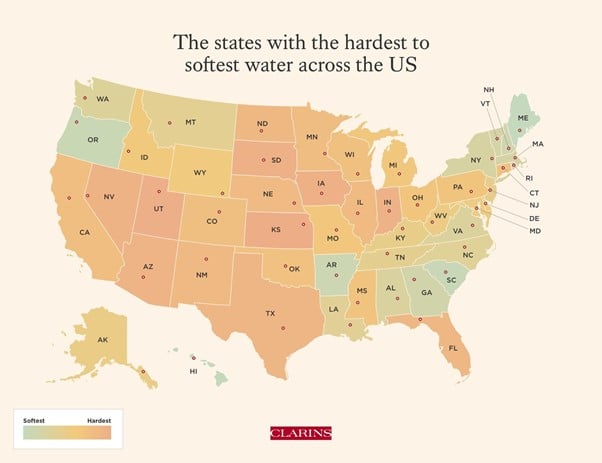 Which State Has the Best Water Quality for Your Skin and Hair? - Clarins
Do You Even Need a Water Softener?
If you live in western Oregon, probably not. Your water is already softer than a baby bunny’s ear. But if you’re in the east and find yourself fighting mineral deposits, a water softener can be a game changer. It swaps calcium and magnesium for sodium—trading hard water for slightly salty water. Your hair will thank you. Your pipes will send you a thank-you card.
Just remember: water softeners aren’t magic. They require salt, maintenance, and a bit of elbow grease. But for those in hard-water zones, they’re basically a spa day for your home. Your showerhead will finally stop looking like a geode.
And hey, even if you don’t soften your water, it’s perfectly safe to drink. So you can keep your granite smoothies if you’re into that sort of thing.
The Uplifting Conclusion (You Knew It Was Coming)
Oregon’s water is as diverse as its people—some is soft and gentle like a coastal breeze, some is rugged and mineral-rich like a volcanic peak. But no matter where you live, the water flows from some of the most beautiful places on Earth: ancient mountains, shimmering rivers, and deep, dark forests.
So, does Oregon have hard water? Only if you live on the hard side of the state—and even then, it’s just a little extra character in your morning glass. You can love it, soften it, or just laugh at the spots on your dishes. The water isn’t perfect, but it’s ours. And honestly? That’s pretty cool.
Now go fill up a glass, toast to your local aquifer, and smile. You’re drinking Oregon, one soft (or hard) sip at a time.
