What Soda Does To Your Body

Have you ever cracked open a cold can of soda and felt that instant fizz of happiness? It’s a little moment of refreshment, right? But have you ever wondered what’s actually h...

Have you ever cracked open a cold can of soda and felt that instant fizz of happiness? It’s a little moment of refreshment, right? But have you ever wondered what’s actually happening inside your body as you sip that sweet, bubbly drink? Let’s take a chill, curious look at the journey soda takes through you—it’s weirder and more fascinating than you might think.
The First Sip: A Sugar Rush
That first gulp hits your tongue, and your brain lights up like a fireworks show. Sugar—about 10 teaspoons in a single can—triggers a massive dopamine release, the same chemical that makes you feel rewarded. It’s like a tiny, happy explosion telling your brain, “This is awesome!” But here’s the kicker: your body doesn’t know it’s getting empty calories; it thinks you just found a ripe piece of fruit in the wild.
Your pancreas, that little organ behind your stomach, immediately panics. It pumps out a flood of insulin to deal with the sugar tsunami. Ever feel a sudden energy spike, then a crash about 30 minutes later? That’s your body overcorrecting, like a driver jerking the steering wheel too hard.
Must Read
The Bubbles: More Than Just Fun
Those fizzy bubbles aren’t just for laughs—they’re carbon dioxide gas. When you swallow them, they expand in your stomach, making you feel full and a little bloated. That’s why soda can actually trick you into eating less, but not in a healthy way. Think of it like inflating a balloon inside your gut; it’s not exactly comfortable, and it can lead to burping or heartburn.
But here’s the weird part: the phosphoric acid in soda is what gives it that tangy kick. It’s also the same stuff used to clean rust off metal. No joke. In small amounts, it’s fine—your stomach is already acidic—but too much can mess with your bones over time. Your body actually pulls calcium from your skeleton to neutralize the acid. Imagine your bones quietly donating their strength just to keep your soda experience chill.
20 Minutes In: The Sugar Crash
By now, your blood sugar has spiked like a rocket, and your liver is working overtime. It converts all that excess sugar into fat, storing it for later. That’s why drinking soda regularly is linked to weight gain—it’s like your body building a tiny emergency pantry you didn’t ask for. And because soda has zero fiber or protein, you’re still hungry, so you eat more anyway. It’s a sneaky cycle, right?
 A Minute-by-Minute Guide on How Soda Impacts Your Body | Soda health
Your teeth aren’t thrilled either. The acid and sugar combine to attack your enamel for about 20 minutes after each sip. That’s like giving your teeth a tiny bath in a corrosive soup. Ever notice that rough, fuzzy feeling on your teeth after finishing a can? That’s the enamel being temporarily softened. No panic—saliva can fix it over time—but chugging a few sodas daily is like leaving your teeth in that soup all day.
One Hour Later: The Caffeine Buzz
If your soda has caffeine, you’re now in the middle of a mild stimulant ride. Caffeine blocks adenosine, the chemical that makes you feel sleepy, so you feel alert and focused. It’s why that afternoon soda feels like a mini-reset. But your kidneys are also busy flushing out water, because caffeine is a diuretic. That’s why you might feel a little thirsty after—ironic, since you just drank a liquid.
Here’s a fun comparison: drinking a soda is like throwing a party in your body. The sugar is the loud DJ, the acid is the messy decorations, and the caffeine is the hyper guest who won’t leave. Your organs are the tired hosts cleaning up afterward. The party is fun, but your body pays the cleaning bill later.
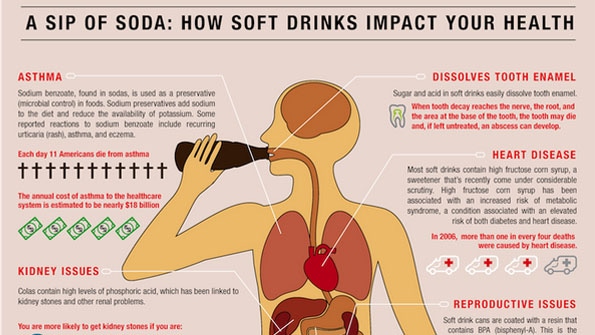 Infographic: The harmful effects of soda on the body
The Long Game: What Happens Over Time?
If you’re a daily soda drinker, your body starts to adapt in weird ways. Insulin resistance can creep in, meaning your cells stop listening to insulin’s “store sugar” signals. That’s a fast track to Type 2 diabetes. And your bones? Years of phosphoric acid can lower your bone density—similar to how a sponge gets flimsy when soaked in acid. Not cool, soda.
But don’t stress—your body is incredible at bouncing back. Quit soda for a few weeks, and your blood pressure drops, your liver fat decreases, and your teeth get happier. It’s like giving your body a long vacation after a wild party. So next time you sip, just think: you’re not just drinking a fizzy treat; you’re starting a tiny, fascinating science experiment inside yourself. Isn’t that kind of cool?
So, what do you think? Maybe grab a sparkling water next time—still bubbly, but way more chill for your body. Cheers to curiosity!
