Why Does My Ice Smell Funny

So you’re just minding your own business, craving a nice, cold glass of water. You crack open the freezer, grab a handful of ice cubes, and drop them into your cup. Then it hi...

So you’re just minding your own business, craving a nice, cold glass of water. You crack open the freezer, grab a handful of ice cubes, and drop them into your cup. Then it hits you: that funny, weird smell. Maybe it’s a little like old socks, or moldy cheese, or a gym locker after a hot summer day. You sniff the ice again, just to be sure, and your brain screams, “Nope!” Welcome to the baffling mystery of stinky ice.
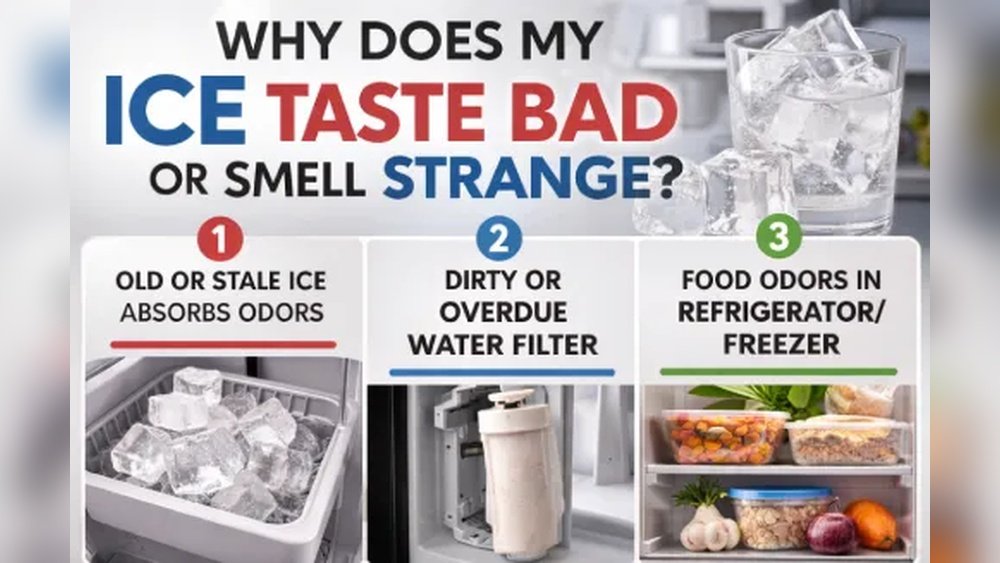
First, let's get one thing straight: you are not losing your mind. Your ice does, in fact, smell funny. And the culprit is almost never the ice itself—it’s the company it keeps. Ice is like a social sponge, absorbing odors from everything around it in your freezer. So if your ice smells like last week’s fish dinner, it’s basically just being polite.
The Usual Suspects in Your Freezer
Your freezer is a magical place, but it’s also a tiny, enclosed environment. Think of it as a frozen, odor-filled closet. When you store strong-smelling foods—like onions, garlic, or that leftover tuna casserole—they release volatile compounds. These little scent molecules float around and eventually cling to your ice cubes like unwanted party guests.
Must Read
Plastic ice trays are notorious for this. Over time, the plastic can absorb those funky odors and pass them on to the water. It’s like your ice tray is holding a grudge against your cooking experiments. And if you’ve ever used a plastic container for soup, you know exactly what I mean—the smell never truly leaves.
The Air in Your Freezer: A Scented Prison
Here’s another shocking truth: your freezer might just smell. If it hasn’t been cleaned in a while, old spills and forgotten frozen veggies can create a stale atmosphere. When you make ice, the water freezes and traps that air inside it, locking in the funk. It’s like making a time capsule of last month’s mystery odor.
And don’t even get me started on frost-free freezers. They cycle between cooling and defrosting, which can actually concentrate odors. Imagine your freezer taking a deep breath and then exhaling a cloud of “essence of freezer burn” right onto your fresh ice. Not exactly a gourmet experience.
The Water Factor: Is It the Source?
Sometimes, the problem isn’t the freezer—it’s the water itself. If your tap water has a high mineral content, or a whiff of chlorine, that flavor will freeze right along with the H2O. But here’s the kicker: freezing can actually amplify subtle smells because your tongue is less sensitive to cold flavors. So that faint “pool water” taste becomes a full-blown cologne.
 Why Does My Ice Maker Smell Bad? Causes and Easy Fixes
If you’re on well water, you might be dealing with sulfur compounds. That’s the classic “rotten egg” smell, and it can make your ice smell like a hot spring—but not the relaxing kind. A simple water filter can be your best friend in this case. Or, you know, just start buying bagged ice from the gas station like a civilized human.
Your Ice Maker Might Need a Hug (or a Cleaning)
For those of you with fancy, built-in ice makers, listen up. These machines have water lines, filters, and little nooks where bacteria and mold love to throw a party. If your ice smells like a swamp, there’s a good chance mold is the uninvited guest. The ice maker’s drain pan and water reservoir are prime real estate for slimy growths.
And yes, bacteria can survive in freezing temperatures, especially if they’re in a cozy biofilm. They just slow down and wait for the thaw. So if your ice smells funky, give your machine a deep clean. Follow the manual—or better yet, search for a YouTube video called “How to scrub your ice maker like a pro.” It’s oddly satisfying.
How to Fix Stinky Ice (Without Crying)
Here’s the good news: you can fix this. First, throw away any old, forgotten ice. Seriously, that bag from three months ago? Gone. Next, give your freezer a thorough wipe-down with a mixture of baking soda and water. Baking soda is the legendary odor absorber—it’s like a superhero for smells.
Switch to silicone ice trays instead of plastic. Silicone is non-porous, so it won’t hold onto odors. Plus, the cubes pop out like magic—no more wrestling with stuck ice. If you use an ice maker, run a cleaning cycle with vinegar or a specialized cleaner. And for goodness’ sake, check the water filter. A stale filter is a flavor saboteur.
 Karen’s at McDonald’s - Imgflip
Another quick trick: store strong-smelling foods in airtight containers. That leftover fish curry? It needs a sealed fortress. And don’t store open boxes of baking soda in your freezer—it does nothing for ice, but it does make you feel productive. Trust me, just use the baking soda for cleaning.
When All Else Fails, Embrace the Weirdness
Sometimes, no matter what you do, your ice will still have a touch of that “freezer funk.” And that’s okay. You can always use that ice for non-drinking purposes—like cooling a sprained ankle or keeping your lunch cold. Or, you can pour yourself a glass of wine and pretend the ice gives it “character.” (Pro tip: it does not, but your guests won’t know the difference.)
Remember: your ice is just a frozen, innocent bystander. It’s not trying to ruin your drink. It’s simply reflecting the messy, flavorful, and sometimes stinky world it lives in. A little empathy for your ice goes a long way. And if you really can’t stand it, there’s always the freezer aisle at the grocery store, where pristine, odor-free ice lives in blissful isolation.
So go forth, clean your freezer, change your filter, and give your ice cubes the fresh start they deserve. You’ve got this. And the next time you hear someone complain about funny-smelling ice, you can smile knowingly and say, “I know exactly why.” Then proceed to explain the whole thing while they nod, amused and slightly horrified. That’s the power of knowledge—and a crisp, odor-free cube.
Here’s to your future, where every sip is pure, fresh, and wonderfully un-funny. Cheers! 🧊🥂
