How Much Is Reverse Osmosis

So, you’ve been hearing about reverse osmosis (RO) systems, right? Maybe you’re tired of that weird tap water taste, or you’ve seen those sleek under-sink units on Instagram....

So, you’ve been hearing about reverse osmosis (RO) systems, right? Maybe you’re tired of that weird tap water taste, or you’ve seen those sleek under-sink units on Instagram. But now you’re scratching your head, wondering, how much is reverse osmosis actually going to set you back?
Let’s break it down without the corporate jargon. The short answer is: it depends on how fancy you want to get. You can snag a basic system for around $150, or you could drop over $1,000 on a setup that talks to your phone and remineralizes the water.
Think of it like buying a car. You can get a reliable little hatchback that gets you from A to B, or you can spring for the luxury sedan with heated seats. Both clean your water, but one does it with a bit more swagger.
Must Read
The Price Range: From Budget to Baller
Let’s talk numbers, because that’s why you’re here. A countertop reverse osmosis unit is usually the cheapest way in, often costing between $50 and $150. You just fill it up, plug it in, and wait for magic to happen.
Next up are the under-sink systems, which are the most popular. A decent one will run you $150 to $400. This is the sweet spot for most people—good water, moderate price, and it’s hidden away.
If you want whole-house reverse osmosis (for every single tap in your home), you’re looking at a different league. Those systems can cost $1,000 to $4,000+, and you’ll probably need a pro to install them. It’s like buying a swimming pool for your pipes.
Don’t Forget the “Hidden” Costs
Here’s the thing about reverse osmosis—it’s not a one-and-done deal. You have to replace the filters, usually every 6 to 12 months. Those filter packs cost about $30 to $100 a year.
And the membrane? That’s the heart of the system. It lasts 2 to 4 years, but replacing it costs $50 to $150. Think of it like changing the oil in your car—it’s a little annoying, but it keeps everything running smooth.
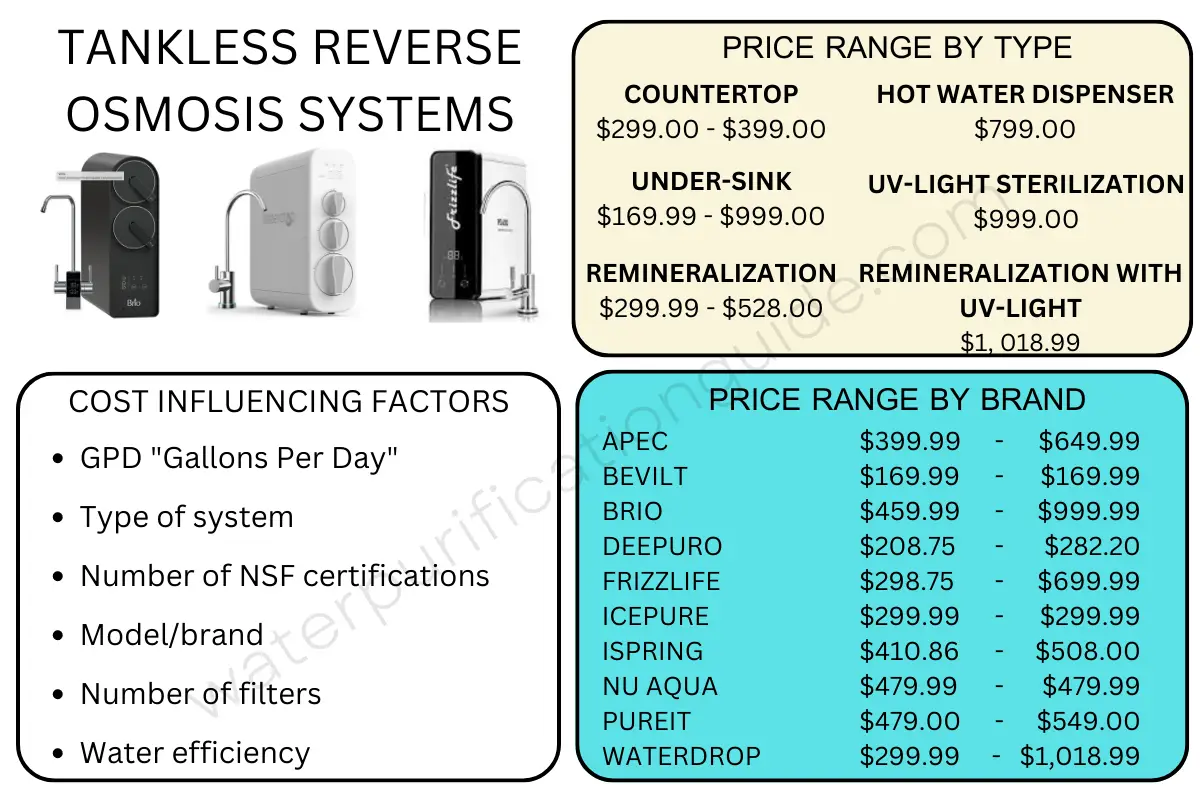 How Much Tankless Reverse Osmosis Systems Really Cost - Water
Also, RO systems waste some water. For every gallon of clean water you make, about 3 to 4 gallons go down the drain. That might nudge your water bill up by a few bucks a month. Is that a dealbreaker? Probably not, but it’s worth knowing.
So, Why Bother with Reverse Osmosis?
Good question! The cool thing about RO is that it removes 99% of contaminants—lead, chlorine, fluoride, pesticides, even microplastics. It’s like a bouncer at a club who kicks out everything except water molecules.
Ever bought bottled water? A case of 24 bottles costs around $5, and you might go through that in a week. Over a year, that’s $260 down the drain (pun intended). A $200 RO system pays for itself in less than a year.
Plus, you’re not creating plastic waste. How cool is that? You’re basically giving the planet a high-five every time you fill up your reusable bottle.
But Is It Worth It for You?
If your tap water tastes like a swimming pool or smells like chlorine, yes, absolutely. Reverse osmosis is like a reset button for your water. It’s also amazing for making coffee, tea, or even soups, because you start with a blank slate of pure H₂O.
 How Much Does a Reverse Osmosis System Cost? (2026)
If your water is already pretty clean, you might not need the heavy-duty filtration. A simple carbon filter pitcher (like a Brita) for $30 could be enough. Why spend $200 on a party when a picnic will do?
But if you have hard water, weird mineral tastes, or you just want to feel like a hydration guru, RO is the cool gadget you didn’t know you wanted.
The Fun Comparison: RO vs. Everything Else
Think of reverse osmosis as the sous-vide machine of water filtration. It’s precise, a bit overkill for some, and produces restaurant-quality results. A standard fridge filter is more like a microwave—convenient, but not the same flavor.
Distilled water? That’s the boiling-a-pot-on-the-stove method. It works, but it’s slow and energy-hungry. RO does the same job without the steam party.
So, how much is reverse osmosis really? It’s $150 to $600 upfront for a good system, plus maybe $50 a year in upkeep. Compare that to a lifetime of buying plastic bottles, and it’s actually a steal.
Just remember: you’re not just paying for water. You’re paying for peace of mind, better-tasting coffee, and the smug satisfaction of knowing your tap is better than the fancy stuff at the store. Worth it? You tell me.
