What Is Water Well Drilling

Have you ever turned on your faucet and wondered where that water actually came from? I mean, sure, it travels through pipes, but before that, it was chilling underground. Tha...

Have you ever turned on your faucet and wondered where that water actually came from? I mean, sure, it travels through pipes, but before that, it was chilling underground. That’s where water well drilling comes in—it’s the art (and science) of poking a hole in the earth to grab a drink from the planet’s secret aquifer.
It sounds simple, but it’s surprisingly cool. Think of it like this: you’re a cosmic straw-sipper, tapping into a hidden ocean that’s been filtering through rocks for centuries. Wild, right?
So, What Actually Happens When You Drill a Well?
The basic idea is straightforward: you need to get past the dirt, clay, and bedrock to reach the groundwater. This isn’t like digging a hole in your backyard for a garden post.
Must Read
Drilling rigs are the real stars here. They’re these massive, noisy machines that spin, pound, or even blast their way down through the earth. It’s like a giant, industrial gopher with a mission.
Once they hit water, the real work begins. The driller lines the hole with a steel or plastic casing to keep the walls from collapsing and to stop surface dirt from contaminating your water. Clean water is the goal, always.
Two Main Ways to Do the Job
You might be curious about the “how” behind it all. Well drillers typically use one of two methods, depending on the ground they’re facing.
1. Rotary Drilling (The Spinning Ninja)
This method uses a spinning drill bit that chews through rock like a hot knife through butter. They pump a special “mud” down the pipe to cool the bit and carry the ground-up rock back to the surface. It’s messy, efficient, and kind of mesmerizing to watch—like a water-powered blender for the earth.
The mud is actually a clever engineering trick. It holds the walls of the hole open while the bit does its work. No mud, no well—simple as that.
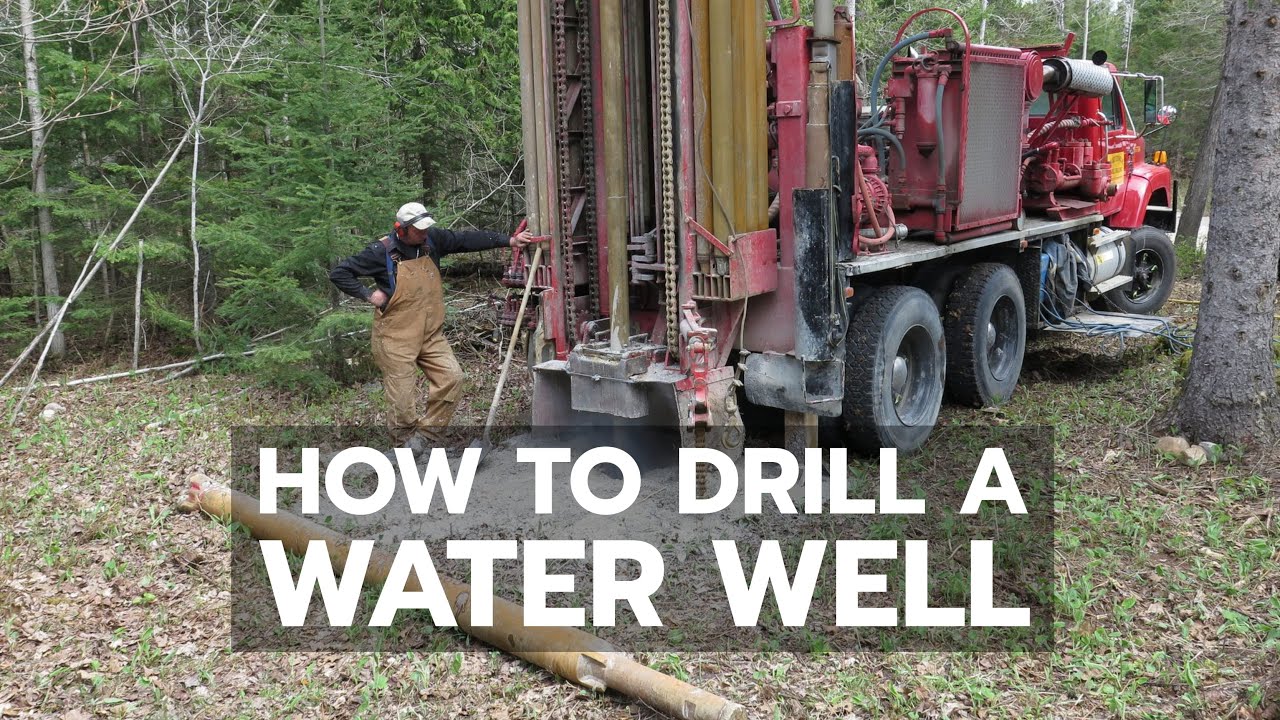 How Does Water Well Drilling Process Work?
2. Cable Tool Drilling (The Old-School Hammer)
Before fancy machinery, there was this method: a heavy chisel-like tool is dropped over and over again to smash through the ground. It’s like a pneumatic jackhammer that’s been doing CrossFit. It’s slower, but it works beautifully in hard rock.
This technique has been around for millennia. Ancient Chinese and Egyptian wells were dug using a similar principle. Imagine the patience it takes to thump a hole into the earth by hand!
Why Is This Even Interesting?
Okay, so it’s a hole in the ground—big deal, right? Actually, it is a big deal. You’re essentially creating a direct line to a resource that’s been hiding for thousands of years.
Have you ever thought about how much water is flowing right beneath your feet? Countless lakes and rivers exist underground, and a well is your personal portal to them. It’s like having a secret key to a hidden world.
Plus, it’s a huge engineering flex. Drillers have to calculate depth, pressure, water flow rates, and how to seal the well from contamination. One wrong move, and you might hit dry rock or muddy sludge.
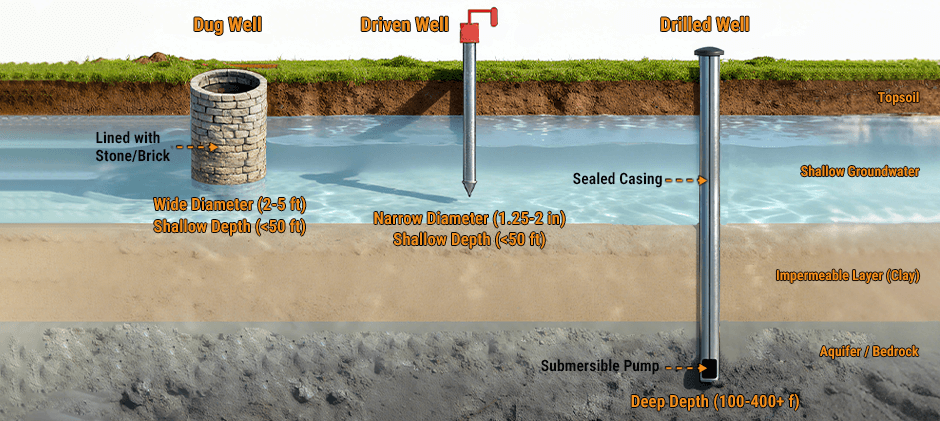 How to Drill a Well: A Guide to Methods and Costs
But It’s Not All Magic—There’s Science
You can’t just drill anywhere and hope for the best. Geologists and hydrogeologists study the land to find “aquifers”—those underground layers of sand, gravel, or rock that hold water. It’s like treasure hunting for H2O.
They look at maps, measure the water table, and sometimes do test holes. The perfect well hits a spot where water flows in steadily, not in a trickle. Think of it as choosing the right spot in a forest to dig for a hidden underground stream.
The Coolest Part? It’s Totally Self-Sufficient
Once your well is drilled, you’re basically off the municipal grid for water. You install a pump, a pressure tank, and you have an independent water supply that’s filtered by nature itself. No monthly water bill, just the sound of your pump humming.
Of course, you have to test the water and treat it sometimes, but the independence feels amazing. It’s like having your own private reservoir, courtesy of the planet.
So next time you see a drilling rig on a farm or in a suburban yard, give it a nod. That machine is doing something ancient and profound: it’s tapping into the very pulse of the earth, one spin or bang at a time. And that’s pretty rad, don’t you think?
