What Is Hard And Soft Water

You know that squeaky-clean feeling after a shower? The one where your skin feels a little tight and your hair squeaks when you run your fingers through it? That’s not necessa...

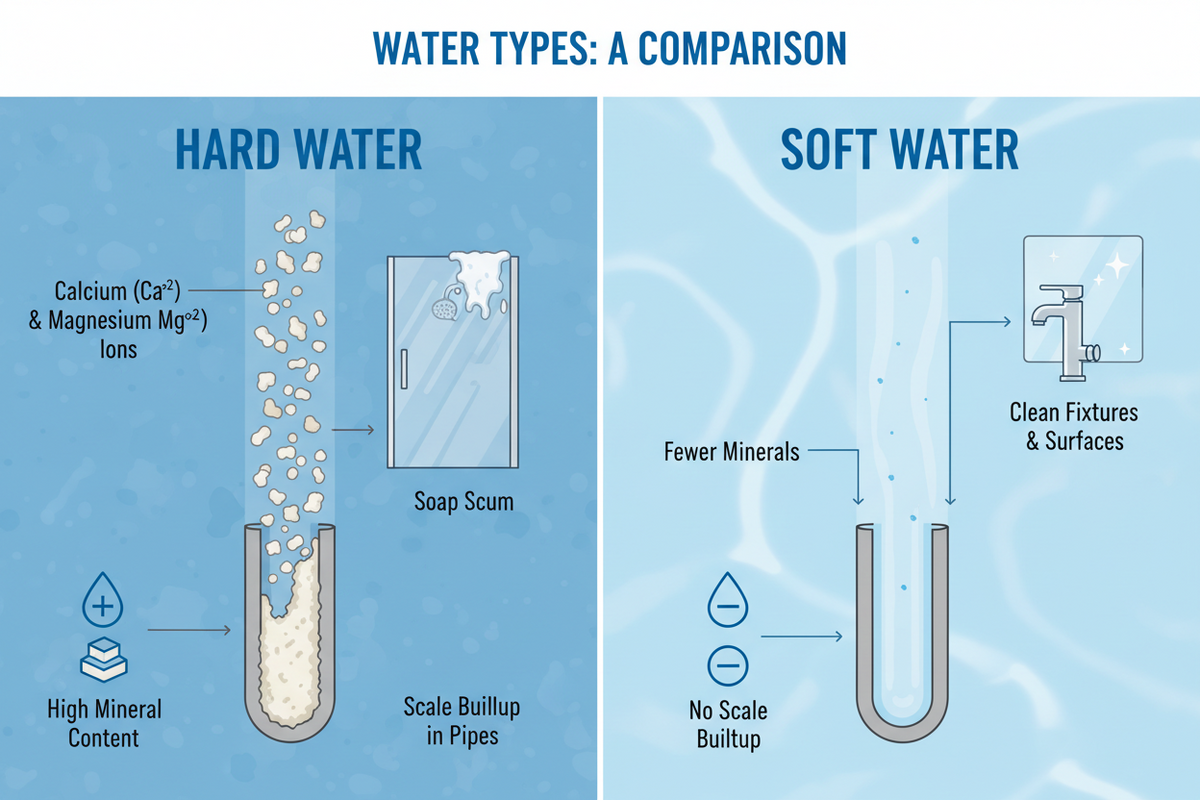
You know that squeaky-clean feeling after a shower? The one where your skin feels a little tight and your hair squeaks when you run your fingers through it? That’s not necessarily clean—that’s likely hard water doing a number on you. It’s the mineral-rich water that flows through two-thirds of American homes, leaving a trail of white spots on your glasses and a film on your shower door.
On the flip side, there’s soft water. It feels silky, almost slippery, and it lathers up like a dream. This is water that’s been stripped of its heavy minerals (mostly calcium and magnesium) and replaced with sodium. It’s the water your friend with the fancy water softener raves about.
The Chemistry of Your Tap
Let’s get a little geeky, but keep it light. Hard water picks up minerals as it travels through limestone and chalk deposits underground. Think of it as water that went on a road trip through a cave and brought back souvenirs.
Must Read
Soft water, on the other hand, has either been naturally filtered through granite or has been treated to swap those heavy minerals for lighter ones. It’s the minimalist of waters—clean, simple, and a little bit salty.
Here’s the fun fact: The term “hard water” actually comes from the way soap behaves in it. Soap has a hard time lathering, so the water was called “hard.” Clever, right?
How It Shows Up in Your Life
Ever noticed white crusty buildup on your faucet or kettle? That’s limescale, the calling card of hard water. It’s also why your laundry might feel stiff and look dull after a few washes.
Soft water gives you a rich, creamy lather with half the soap. Your hair feels softer, your skin less dry, and your dishes come out spot-free. It’s like upgrading from a basic cable package to premium streaming.
But here’s the trade-off: soft water can taste a bit flat or salty to some people. Also, because it doesn’t form a solid soap scum, it can leave a slippery residue on your skin that makes you feel like you didn’t rinse well enough.
The Great Taste Debate
Coffee snobs and tea lovers often argue about water. Hard water can make your morning brew taste muddy or flat because the minerals interfere with extraction. Soft water can make it taste cleaner but a little one-dimensional.
This is why some baristas use a specific mineral mix for their brewing water. It’s a whole rabbit hole of “water recipes.” If you’ve ever been disappointed by a hotel coffee, blame the water.
Fun fact: The world’s best whiskies come from Scotland, where the water is famously soft and flows through granite. Meanwhile, some iconic lagers from Germany rely on hard water for their crisp, malty profile. Your tap water has a terroir too.
 Hard vs. Soft Water Explained | Synergy Science™ – Echo Water
Practical Tips for Managing the Hard/Soft Divide
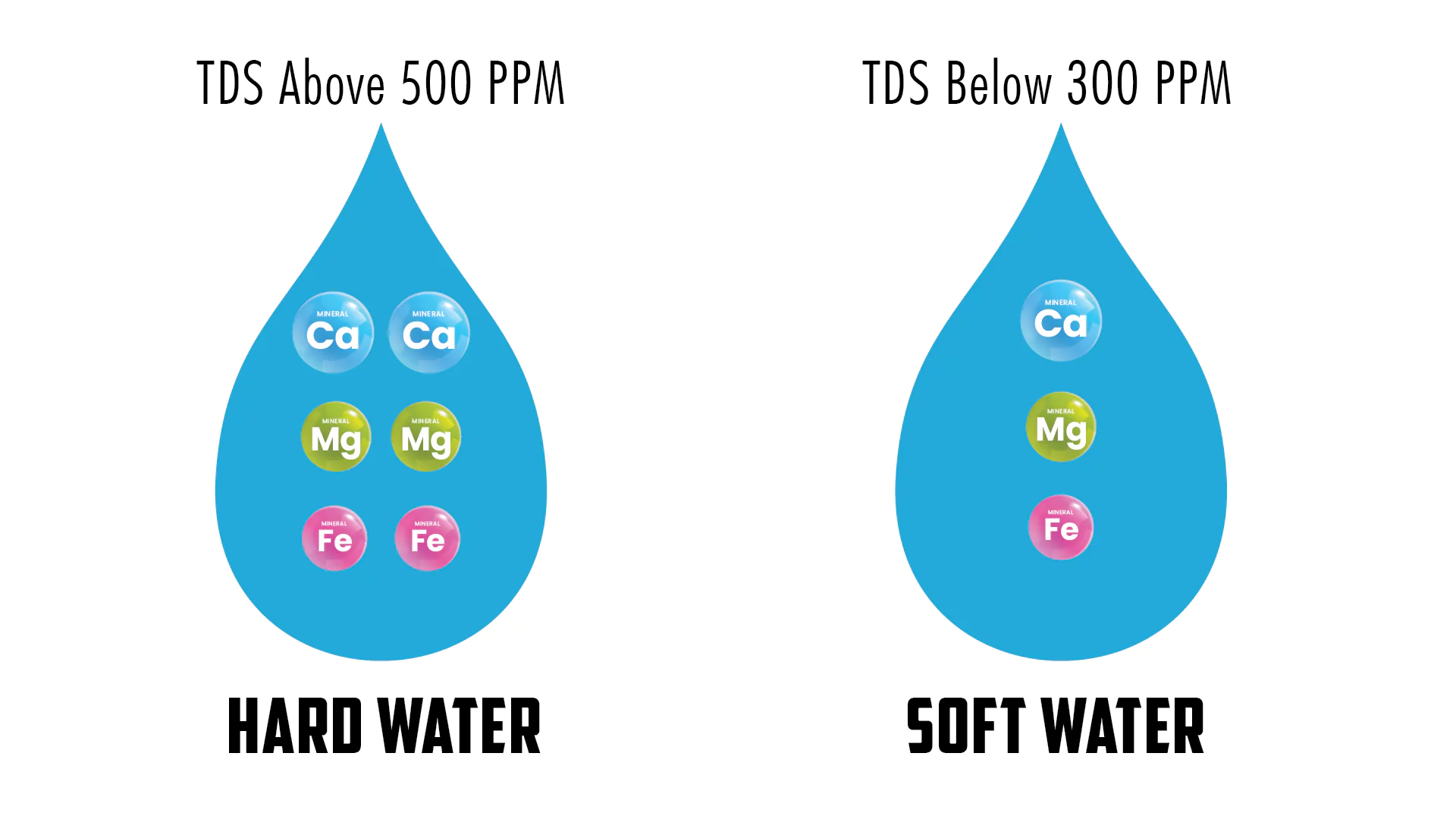
Test your water. You can buy a cheap test strip kit online or at a hardware store. It takes two minutes and will tell you exactly how hard your water is on a scale from 0 to 300+ parts per million.
If you have hard water, try these hacks:
• Add a splash of vinegar to your final rinse cycle in the dishwasher for spotless glasses. It cuts through limescale like a charm.
• Use a chelating shampoo once a week to remove mineral buildup from your hair. It’s like a detox for your scalp.
• Install a showerhead filter—they’re cheap and reduce the worst of the hardness for your skin and hair.
If you have soft water:
• Cut your soap and detergent use by half. You really don’t need that much. You’ll save money and avoid that slippery feeling.
• Add a pinch of salt to your pasta water or coffee to mimic the mineral content of hard water. Some home chefs swear by this for better texture and flavor.
 What is Hard Water and Soft Water
• Drink more tap water—soft water’s low mineral content means less scale, but it also means you’re getting fewer natural electrolytes. No big deal, just stay hydrated.
Cultural Obsessions with Water
In Japan, people obsess over water “hardness” for their green tea. A soft water (like the famous Nagara River water) is preferred for gyokuro tea because it lets the delicate flavors sing. Hard water is seen as aggressive.
Meanwhile, in Paris, the water is famously hard and full of calcium. Parisians don’t mind—they drink it by the liter and swear it’s good for their bones. Their hair? That’s another story.
And let’s not forget the #WaterTok trend on TikTok, where people add syrups and powders to their water to make it taste like candy. Most of those viral recipes use soft water as a base because it’s more receptive to flavorings. Hard water fights back with its own mineral taste.
One Last Fun Fact
Your water’s hardness is literally a matter of geography. If you live in the Midwest or the Southwest (USA), you almost certainly have hard water. The Northeast and Pacific Northwest tend to have softer water. It’s one of those subtle things that defines a region, like the local accent.
There’s even a joke among real estate agents: “You can tell a house has a water softener by the number of empty salt bags in the garage.” It’s that common of a conversation starter.
So, what’s the verdict? Neither hard nor soft water is “better.” They’re just different tools for different needs. Hard water is great for your bones and your plants (calcium, baby!), but terrible for your hair and plumbing. Soft water is kind to your skin and your washing machine, but it needs a little help in the taste department.
The real lesson? Learn what’s coming out of your tap. Once you know, you can work with it instead of against it. Your morning coffee, your evening shower, and your laundry pile will all thank you.
And the next time you feel that squeaky-clean sensation, you’ll know exactly what’s happening. It’s not cleanliness—it’s just chemistry having a conversation with your skin. Listen to it.
