How To Soften Stiff Clothes

Let’s be honest—running your hand over a shirt that feels like a sheet of corrugated cardboard is a special kind of betrayal. You did the laundry. You even used the nice-smell...
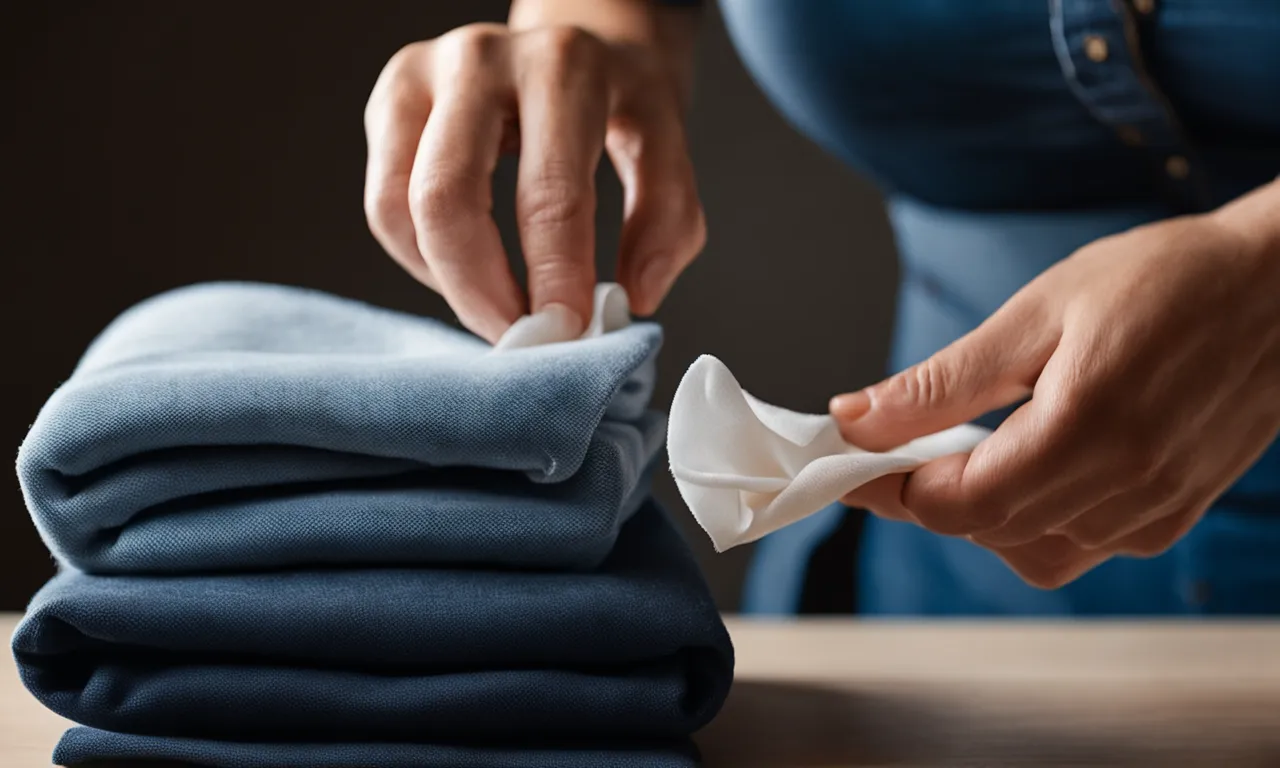
Let’s be honest—running your hand over a shirt that feels like a sheet of corrugated cardboard is a special kind of betrayal. You did the laundry. You even used the nice-smelling detergent. And yet, your favorite jeans now stand up on their own like a grumpy ghost. It’s not your fault; it’s the water and the agitation of the machine, which actually mash the cotton fibers together. But don’t worry—we’re going to fix this with science, kitchen staples, and maybe a little bit of rage.
The Culprit is Hard Water (And Your Washing Machine is a Bully)
First, know your enemy: hard water. It’s full of calcium and magnesium ions that cling to fabric like clingy exes at a party. These ions make detergent less effective, leaving behind a chalky residue that stiffens everything from towels to T-shirts. The other villain? Friction. Your washer beats the fibers into submission, and then the dryer bakes them into armor. But here’s the surprising fact: ancient Romans used urine to soften and whiten their togas. Yes, really. The ammonia in stale pee breaks down grease and fibers. Please don’t try that at home. We have better options.
White Vinegar: The Magic Potion You Already Have
Grab a jug of white vinegar. It’s cheap, it smells like a salad, and it will save your laundry. Add half a cup to your washing machine’s final rinse cycle. The acetic acid in the vinegar neutralizes the alkaline residue from soap and hard water, loosening those clamped-down fibers. Your clothes will come out softer, and when they dry, the vinegar smell disappears completely. I promise—I sniffed my own shirts after and got only the scent of victory. If you’re worried, use a little less. The worst that happens is your clothes smell like a pickle for one spin cycle. Small price to pay.
Must Read
Baking Soda: The Bubbly Sidekick
Pair your vinegar with baking soda. No, they won’t cause a science-fair volcano in your washer (unless you mix them directly—don’t). Instead, add half a cup of baking soda to the wash cycle with your detergent. It boosts the detergent’s power and breaks down mineral deposits. Think of it as a bouncer for your fabric, kicking out the hard-water thugs. For seriously stiff stuff—like a new pair of jeans that could stand in a corner—soak them in a bucket of warm water with a cup of baking soda for 30 minutes before washing. It’s like a spa day for denim.
Dryer Balls: The Bouncy, Woolly Warriors
Stop using dryer sheets like it’s 1995. Those sheets coat your clothes in a waxy film that actually reduces absorbency. Instead, buy wool dryer balls. They bounce around, beating the fibers into fluffiness without chemicals. Toss in three to six balls—the more, the merrier. They reduce drying time by 25% (surprising fact: that saves you about $100 a year in energy bills). If you want extra softness, add a few drops of essential oil to the balls before drying. Your clothes will smell like a lavender field, not a fake-scented chemistry lab.
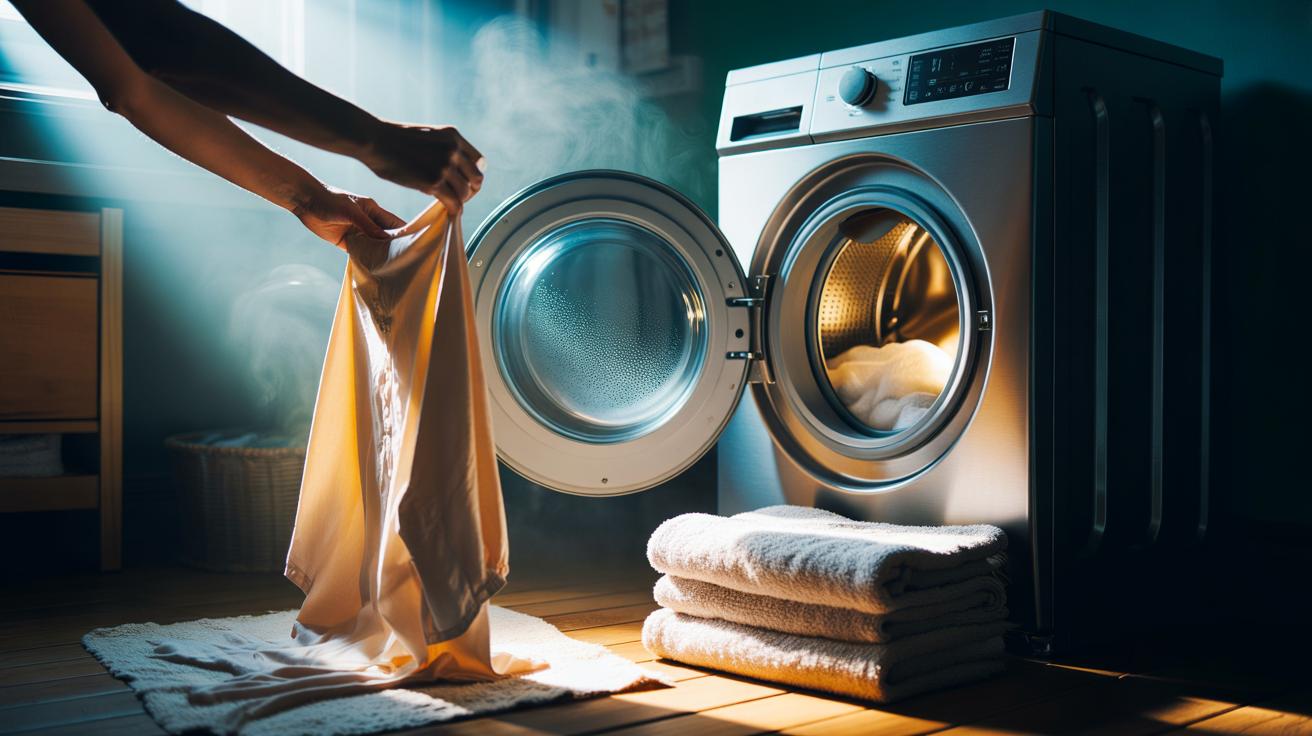 The warm-rinse technique that softens stiff clothes: how heat relaxes
The Air-Dry Secret (Yes, It’s Annoying, But It Works)
If your clothes still feel stiff, blame the dryer. High heat seals in the stiffness like a bad perm. Try air-drying your clothes outside on a line. The wind and sun naturally soften fibers because the moving air gently fluffs them as they dry. I know, I know—you don’t have a yard or the patience. So compromise: air-dry for 30 minutes on a rack, then finish in the dryer on low heat with dryer balls. It’s like the lazy person’s version of line-drying. Your clothes will thank you by not attacking you when you put them on.
Salt: The Hard-Water Exorcist
Here’s a weird trick from the Great Depression: add rock salt to your wash. Dissolve a quarter cup of coarse salt in hot water and pour it into the machine before adding clothes. The salt breaks up the mineral bonds in hard water, making the rinse cycle more effective. It’s a cheap, chemical-free way to soften. Bonus: it works as a mild bleach for whites. I once added too much salt and my white socks looked so bright I had to squint. Use with caution.
 Soften Clothes Without Using Fabric Softeners
The Final Boss: Fabric Softener (But Don’t Buy the Cheap Stuff)
If you must use commercial fabric softener, splurge on the liquid, not the sheets. But here’s the catch: never pour it directly onto your clothes. Fill the dispenser properly, or dilute it with water first. Softener works by coating fibers with lubricating chemicals, but too much makes fabric feel greasy and can damage moisture-wicking materials like gym wear. Use it only for towels and jeans. And if you want a real laugh: the first “fabric softener” in history was just olive oil mixed with water, used by ancient Greeks to polish their linen togas. It smelled like a salad, too. Some things never change.
So next time your shirt tries to impersonate a cardboard box, grab vinegar, baking soda, and some wool balls. You are now a fabric-softening warrior. Go forth and wear clothes that move with you—not against you. And if all else fails, just wear the stiff shirt and claim it’s “irony.” It’s cheaper.
