How To Clean Water Softener

So, you’ve got a water softener. Congratulations, you’re now the proud owner of a magical box that turns your hard, soul-crushing water into silky, luxurious liquid. It’s like...

So, you’ve got a water softener. Congratulations, you’re now the proud owner of a magical box that turns your hard, soul-crushing water into silky, luxurious liquid. It’s like a spa day for your pipes. But here’s the dirty little secret: this machine gets gross inside. Like, “science experiment in a petri dish” gross. And if you don’t clean it, you’ll be back to scrubbing calcium deposits off your showerhead while crying into your coffee. Let’s fix that.
Why You Can’t Just Ignore It (Spoiler: You Absolutely Can, But You’ll Regret It)
Think of your water softener as a superhero with a tragic flaw. The resin beads inside it capture all the hard minerals—calcium and magnesium—like a greedy toddler hoarding candy. But over time, those beads get coated with iron, manganese, and biofilm. Yes, biofilm: a polite word for “slimy bacterial community that throws parties in your pipes.” If you don’t clean it, your softener turns into a hardener. Your “soft” water leaves rust stains, and your hair feels like it’s been dry-shampooed with sandpaper.
Step 1: Assemble Your Weapons (And Your Courage)
You don’t need a hazmat suit, but you will need a few things. Grab a bucket, a stiff brush, a screwdriver, and a bottle of resin cleaner or a cheap box of citric acid powder. Avoid bleach at all costs—it’s the water softener’s kryptonite. Oh, and have a towel nearby. Not for theatrics. Because you will spill water on your floor. It’s a rite of passage.
Must Read
Step 2: Put It Into “Bypass Mode” (Or Feel the Wrath of the Dreaded Flood)
Find the bypass valve—it’s usually a knob or lever near the top or back. Twist it until water stops flowing into the tank. If you skip this, you’ll unleash a geyser that would make Old Faithful blush. Trust me: you don’t want to explain to your spouse why the laundry room looks like a submarine movie. Once bypassed, unplug the system. Electricity + water = a shocking experience you don’t want.
Step 3: The Great Disassembly (Or, “Why Are There So Many Screws?”)
Pop open the top lid. You’ll likely find a distributor tube stuck in the middle—it looks like a plastic straw for giants. Wiggle it out gently, or curse like a sailor when it won’t budge. Then dump the water out of the brine tank (the big plastic drum that smells vaguely of pickles). You’ll see a layer of sludge at the bottom. That’s your enemy. Laugh at it. Then scoop it out with your sponge or shop vac. This is the messiest, most satisfying part.
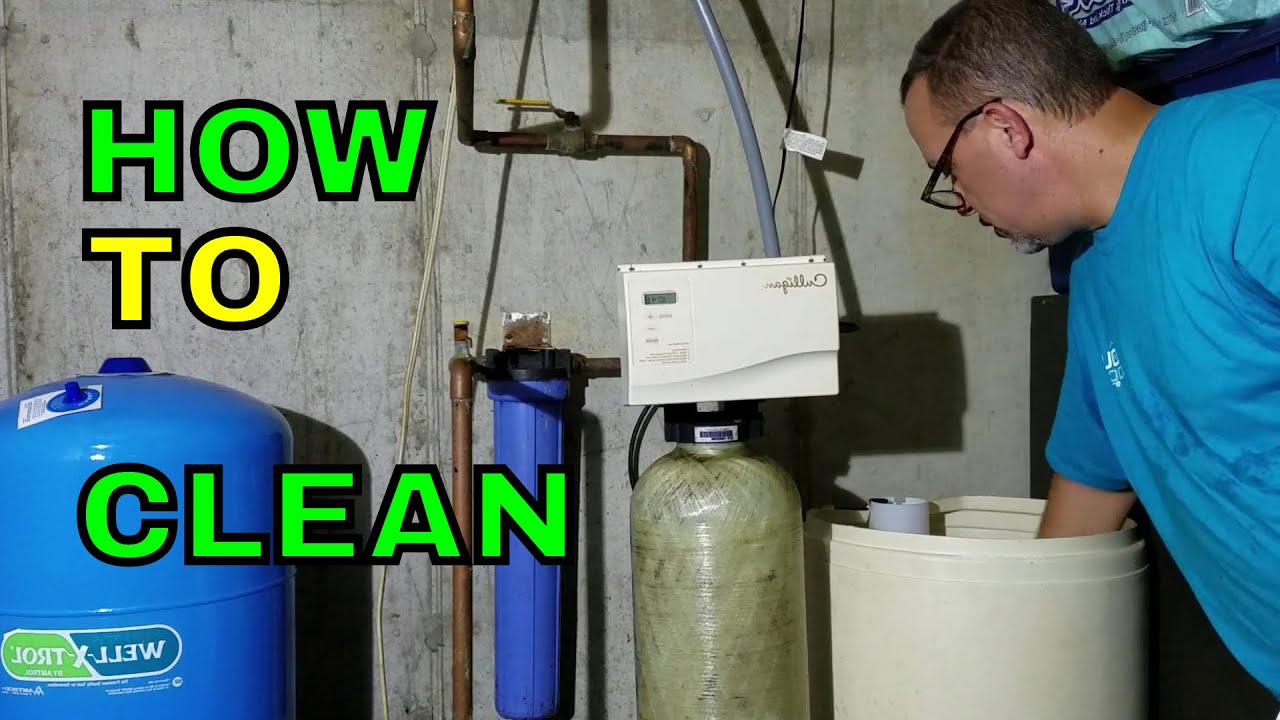 DIY Water Softener Maintenance Culligan - YouTube
Step 4: The Scrub-a-Dub (Your Arms Will Burn, But Pride Comes After)
Mix your cleaner (follow the bottle instructions, or dissolve half a cup of citric acid in warm water) and pour it into the brine tank. Let it sit for 20 minutes. Then scrub the sides with your brush. If you see orange or black slime, you’ve discovered the “water softener version of a haunted house.” That’s normal. Rinse thoroughly. For bonus points, clean the resin tank too—just dump the cleaner in, let it soak, then flush with water. Pro tip: Do this outside, because your bathroom will smell like your gym socks after a marathon.
Step 5: Reassemble and Pray (Or Just Follow These Steps)
Put the distributor tube back in its sweet spot. Reattach the lid. Turn the bypass valve back to “service” position. Plug it in. Then do a manual regeneration cycle—check your manual for the “regen” button, or just hit every button until something happens. Your softener will gurgle, spit, and smell like a wet dog for ten seconds. That’s normal. Give it a full cycle, and your water should be back to silky perfection.
 Water Softener Cleaning & Restore it Like New - Don't skip this EASY
Surprising Fact: You Only Need to Do This Once a Year (Or Less)
Most people overclean their water softeners. Once a year is plenty—unless you have iron-rich well water, then every six months. The real crime? Using too much salt. Check your salt level monthly, but don’t fill it to the brim. A half-full brine tank is better for your wallet and your machine. Fun fact: If you use a salt like “pellets for water softeners” and you see a crusty lump, you’ve created a “salt bridge.” That’s not a fantasy novel term. It’s a legit problem that stops regeneration. Break it up with a broom handle. Yes, a broom handle. You’re welcome.
Final Wisdom (And a Joke)
You’ve just saved yourself a few hundred dollars in repair calls. Go treat yourself to a glass of your now-perfectly soft water. It won’t taste different, but it feels different—like drinking a hug. Remember: your water softener is a loyal, underrated beast. Clean it annually, and it’ll give you years of sudsy, lather-filled showers. Ignore it, and you’ll end up scrubbing hard-water stains with a toothbrush, crying harder than you did during the finale of Friends. Now get out there and give that machine a spa day. It earned it.
