How To Fix A Water Softener

Your water softener is the unsung hero of your home, quietly waging war against the mineral buildup that turns your hair into straw and your dishes into cloudy relics. But whe...
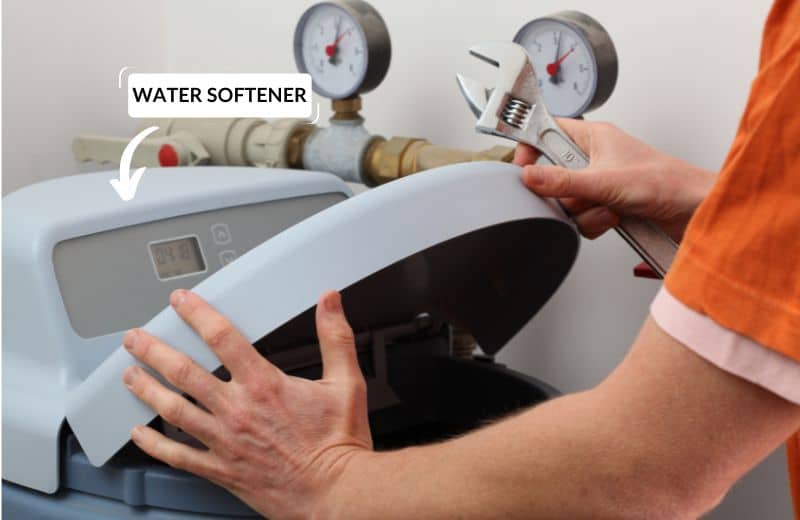
Your water softener is the unsung hero of your home, quietly waging war against the mineral buildup that turns your hair into straw and your dishes into cloudy relics. But when it stops working—leaving you with that familiar soap scum film—it feels like a betrayal. Before you call a plumber and wince at the bill, know this: you can probably fix it yourself with the calm confidence of a mid-century handyman.
Think of the water softener as a mechanical pet. It needs food (salt), a clean bed (the brine tank), and a gentle reset every now and then. When it fails to produce soft water, the culprit is almost always something simple. Let’s start with the most obvious suspect: the salt.
Step One: The Salt Check
Pop open the brine tank and peer inside. If the salt level is low, or if you see a solid, crusty bridge spanning the top, you’ve found your problem. A salt bridge looks like a prehistoric glacier and prevents the water from mixing with the salt to create brine.
Must Read
Break the bridge with a broom handle or a long, blunt object—just don’t stab the tank itself. Fun fact: salt bridges form because of high humidity or using the wrong kind of salt (avoid rock salt; use solar or evaporated pellets). Once it’s broken, fill the tank to about half full and run a manual regeneration cycle.
If the tank is full of mushy, wet sludge, that’s a problem too. That’s called a salt mushing, and it happens when cheap salt dissolves too fast. Scoop out the sludge, wipe the tank clean, and start fresh with high-purity pellets. Your water will thank you.
Step Two: The Error Code Dance
Modern water softeners are chatty—they flash error codes like a moody teenager. Check the display or the owner’s manual (which you probably stuffed in a drawer three years ago). Common codes include Err for electrical issues or Clog for a blocked injector.
If you see a code, try unplugging the unit for 60 seconds. This is the tech version of “turn it off and back on again.” It resets the control board and clears ghost errors. It works more often than you’d think. Jeff Goldblum in Jurassic Park had a similar moment of calm repair—except you won’t face a velociraptor.
For persistent errors, look at the tiny plastic screen mesh filter inside the brine line. It’s about the size of a dime and often gets clogged with grit. Rinse it under warm water with an old toothbrush. That single action saves more service calls than any tool in a plumber’s van.
 How to Fix a Water Softener - YouTube
Step Three: The No Soft Water Mystery
Your water tastes hard, but the system seems to hum. This usually means the bypass valve is accidentally engaged. The bypass valve looks like a little lever or knob near the control head. If it’s turned to “bypass,” the water flows around the tank, not through it.
Simply turn the valve back to service mode. It’s that easy. I once spent an hour diagnosing a client’s “broken” unit only to find the previous owner’s kid had spun the valve as a prank. Check the bypass first—it’s the water-softener equivalent of checking if the cord is plugged in.
Another sneaky cause: the brine line is kinked or pinched. Follow the thin tube from the tank to the control head. Straighten any bends. A kinked line is like a collapsed straw—nothing moves.
Step Four: The Regeneration Reset
Sometimes the softener just needs a manual kickstart. Press the “regenerate” or “recharge” button on the control panel. This forces the system to flush, rinse, and recharge the resin beads with sodium. Do this when everyone in the house has already showered—it takes about 90 minutes.
If you hear a grinding, screeching, or knocking noise during regeneration, the motor or the piston might be jammed. Unplug the unit, remove the cover plate, and gently turn the black plastic gear by hand. It should rotate smoothly. If it feels gritty, you might have sand or debris caught in the works. A gentle spray of compressed air can clear it out.
 How Do I Fix My Water Softener at David Daigle blog
Fun fact: the resin beads inside the tank can last 15 years if cleaned annually with a resin cleaner (available at hardware stores). It’s like a spa day for your softener—it strips away iron and manganese buildup that makes water taste metallic.
Practical Tip: The Hot Rod Cleaner
For extreme cases where water is still hard after all the above, your system might have “resin fouling”. This happens when iron bacteria forms a slime coating on the beads. Buy a commercial resin cleaner, dissolve it in warm water, and pour it into the brine well (the tube inside the salt tank). Run a manual regeneration immediately.
Trade secret: a tablespoon of citric acid powder (found in grocery stores) works as a cheaper cleaner. It’s the same stuff used in sour candies—and in softeners, it removes mineral scale with gentle fizzing action. No need for hazmat gear.
The Cultural Connection
Water softeners have a surprising pop-culture footprint. In the film The Big Lebowski, The Dude’s rug-wetting incident is a metaphor for life’s hard edges—and soft water is essentially the opposite: a smoothing agent. In Breaking Bad, Walter White uses a water softener’s resin to extract chemicals, proving that even villains respect good plumbing. Your fix is less dramatic, but no less satisfying.
Remember that every time you fix something yourself, you become a tiny bit more independent. You’re not just saving money; you’re reclaiming a small corner of your home from entropy. Soft water is a luxury that makes laundry softer, skin smoother, and morning coffee less bitter. It’s a quiet upgrade to your daily life.
Final Reflection
Fixing a water softener is a meditation on patience and simplicity. Most of our problems—in homes and in life—are just a clogged filter or a setting that needs toggling. The fix rarely requires a new machine; it requires a fresh look at the old parts. So pour yourself a glass of that newly soft water, enjoy how clean it tastes, and know you’ve done something real today.
