How To Treat Water Hardness

So, there I was, staring into my pristine glass of water. It looked perfect—crystal clear, no floaties. But when I took a sip, it tasted like I was licking a dusty rock from m...

So, there I was, staring into my pristine glass of water. It looked perfect—crystal clear, no floaties. But when I took a sip, it tasted like I was licking a dusty rock from my grandpa’s driveway. Ugh, I thought. That’s when I realized my “fresh” tap water was secretly waging war on my coffee, my skin, and my poor washing machine.
That gritty taste? That’s hard water, baby. It’s packed with calcium and magnesium minerals that think they own the place. And they do—until you learn how to kick them out. Let’s dive into the wild, bubbly world of treating water hardness.
What Is Hard Water, Really? (And Why Should You Care?)
Hard water isn’t some villain from a sci-fi movie. It’s just water that picked up extra minerals while traveling through limestone or chalk underground. You know that white, crusty stuff on your faucet? That’s limescale, the calling card of hard water. It’s basically the mineral equivalent of a bad house guest who leaves messes everywhere.
Must Read
And it doesn’t stop at faucets. Hard water ruins your clothes (hello, stiff jeans), dries out your skin (itchy elbows, anyone?), and makes your soap refuse to lather. Seriously, you’ll use twice the shampoo and still feel like you’re washing with sand. Fun times.
But here’s the kicker: it’s not toxic. You can drink it, bathe in it, and even make soup with it. It just tastes meh and wreaks havoc on your appliances. So, if you want your coffee to taste like coffee—not minerals—you’ve got options.
The Classic Solution: A Water Softener
This is the big guns. A water softener is a machine that swaps those calcium and magnesium ions for sodium or potassium ions. Think of it as a mineral jailbreak—your hard minerals get arrested, and nice, soft sodium ions take their place. You hook this thing up to your main water line, and it works like magic.
But here’s the irony: now your water has a tiny bit of salt in it. Not enough to taste like the ocean, but enough to make your plants throw a tantrum. So don’t water your prized petunias with softened water, unless you want them to look like they just survived a drought. Oops.
Also, these systems cost a few hundred bucks and need salt refills. But if you’re tired of scratching your head clean, they’re totally worth it. Plus, your water heater will thank you by not clogging up with limescale every six months.
The No-Salt Alternative (For the Skeptics)
Don’t want salt in your water? I get it—it feels weird. Enter the salt-free water conditioner. This doesn’t remove the minerals; it just crystallizes them so they can’t stick to your pipes. It’s like making the minerals chill out and behave.
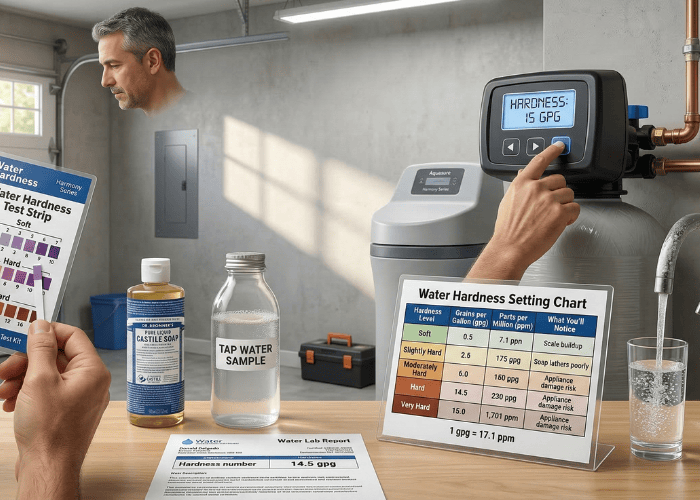 How to Measure Hardness in Water (and Using a Water Softener Hardness
This method is great for people who hate the idea of chemically altered water. It’s also cheaper to maintain—no refills, just a cartridge change every year. The downside? It’s not as effective as a traditional softener, especially if your water is super hard. But hey, it’s perfect for the lazy homeowner who just wants less scale.
Chemical Warfare: Water Conditioners and Chelators
Then there are the chemical treatments—like polyphosphates or chelating agents. You’ll find these in some dishwasher detergents or inline filters. They bind to the minerals and stop them from forming crusty deposits. It’s basically chemical pacifying.
These are great for spot removal on your glassware. You know that cloudy film on your wine glasses? That’s hard water etching them. A chelating agent makes them sparkle again. But don’t rely on these for your whole house—they’re more of a spot treatment. Kind of like using acne cream for a rash—effective, but not a cure-all.
The Low-Tech Hack: Boil It (But Only Sometimes)
Yes, you can boil hard water. But does it soften it? Not really. Boiling only removes temporary hardness—the kind caused by calcium bicarbonate. When you boil, the bicarbonate turns into carbonate and forms that white powder you see on the bottom of your kettle. The permanent hardness? That stays in the water, laughing at you.
So, if you’re desperate for a cup of tea, boil your water and pour it through a cloth filter to catch the flakes. You’ll get softer-tasting water, but it’s a pain. And it won’t help your shower or laundry. Use this trick only when you’re camping or visiting your grandma’s cottage and out of options.
And please, for the love of all that is caffeinated, don’t drink the boiled scale. It tastes like chalk and sadness.
The Filtration Route: Reverse Osmosis (RO)
This is the ninja-level move. Reverse osmosis forces water through a super-fine membrane that blocks almost everything—minerals, bacteria, even some viruses. You get water so pure it’s almost aggressive. It’s what they use for fancy fish tanks and making vodka, apparently.
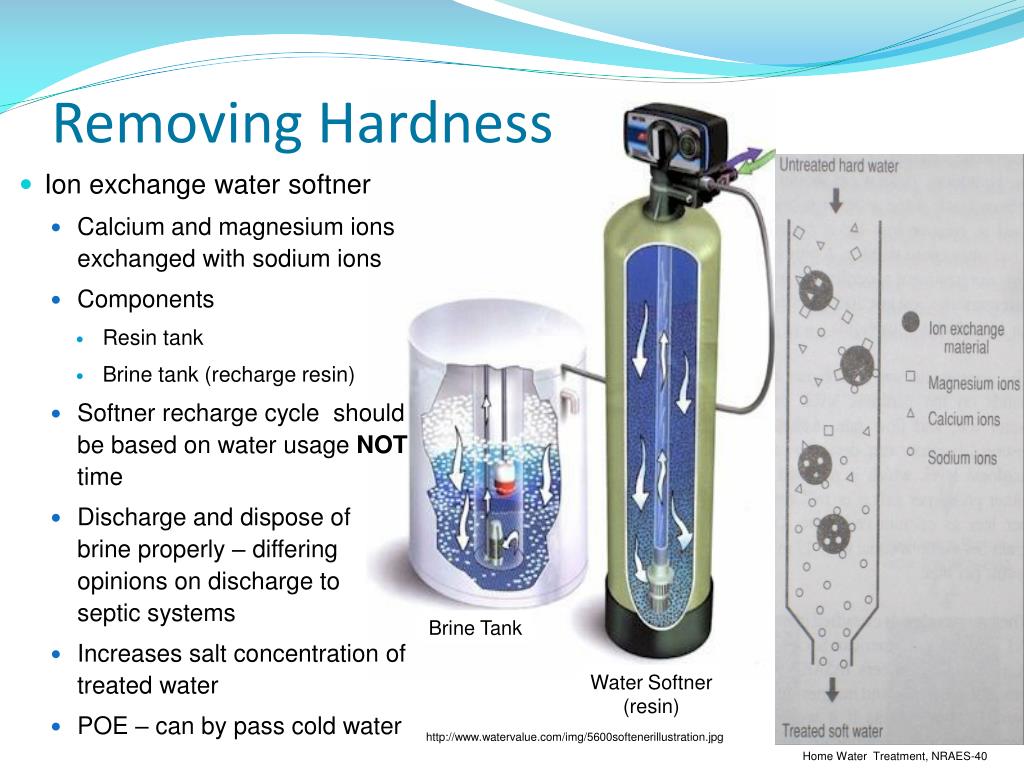 PPT - Water Treatment Basics PowerPoint Presentation, free download
RO systems sit under your sink and give you a separate faucet for drinking water. Perfect for your morning coffee and hydration needs. But they waste a lot of water in the process—like 3 to 4 gallons of reject water for every 1 gallon of pure water. So, it’s expensive and environmentally questionable unless you collect the waste for your garden.
Also, RO water tastes so neutral that some people find it boring. But if you’re a water snob who wants zero aftertaste, this is your jam.
Quick Fix: Shower Head and Faucet Filters
Sometimes you don’t need to treat the whole house, just the parts you touch. A shower filter with a KDF or activated carbon cartridge can reduce chlorine and some minerals. Your skin will feel less like sandpaper. And your hair? It won’t look like a straw broom after a drought.
Faucet filters do the same for your sink. They’re cheap (under $50), easy to install, and you can toss them after six months. This is the beginner’s entry point—like dipping your toe into the soft water pool without buying the whole water park.
Just know they don’t soften water as dramatically as a full-scale system. They’re more like polishing agents. But hey, for $30, your tea will taste noticeably better. Win.
The Final Word: Pick Your Poison (Or Your Salt)
Hard water isn’t the end of the world, but it’s annoying. You’ve got options: from the full-on salt softener to the hipster RO system, or even a simple filter. Think about your budget, your laziness level, and how much you hate limescale. I went with a salt-free conditioner because I’m cheap and don’t mind a little mineral flavor—and my kettle is finally clean.
So, go forth and make your water behave. Your skin, your coffee, and your washing machine will send you a thank-you note. And if you ever find yourself tasting that dusty-rock water again, just remember: you now have the tools to evict those mineral squatters. Drink up, my friend. Cheers.
