Why Does Water Taste Weird

You know that moment. You’re parched, you grab a glass of tap water, take a sip, and something is off. It doesn’t taste like water. It tastes like *something else*. You’re not...
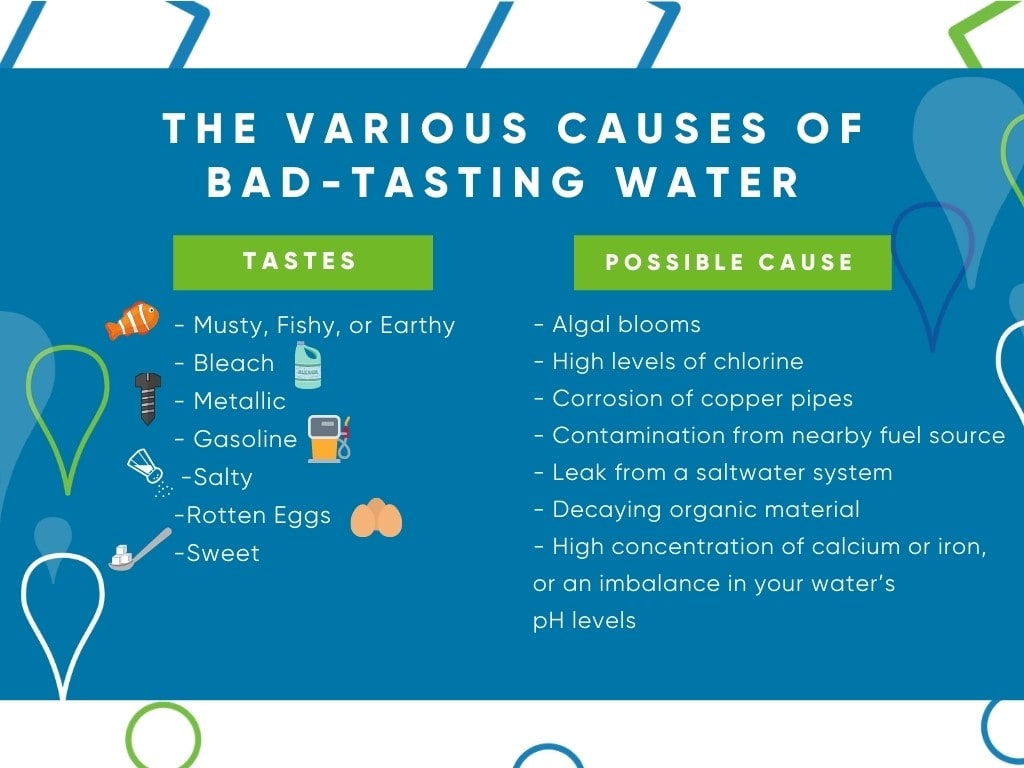
You know that moment. You’re parched, you grab a glass of tap water, take a sip, and something is off. It doesn’t taste like water. It tastes like something else. You’re not alone, and you’re not crazy. That weird taste is a complex conversation between your glass and the world around it.
The Science of the Sip
First, let’s get one thing straight: pure water has no taste. It’s a chemical blank slate. What you’re tasting is actually the total dissolved solids (TDS) in the water.
Minerals like calcium and magnesium give water a "hard," chalky flavor. Sodium makes it taste slightly salty. Then there’s chlorine—your water utility’s trusty sidekick for killing bacteria, but a real party pooper for flavor.
Must Read
Even the temperature matters. Cold water numbs your taste buds, which is why that iced glass always goes down smoother than a lukewarm one from a plastic bottle left in the car.
Your Cup, Your Problem
Don’t blame the water too quickly. Your glass might be the culprit. If you just washed it with dish soap and didn’t rinse thoroughly, you’re tasting detergent residue.
Same goes for that reusable bottle you’ve had since 2019. Old plastic or metal can harbor biofilm—a thin, invisible layer of bacteria that adds a musty, metallic kick. A quick scrub with baking soda can save your next sip.
Even the air in your kitchen matters. Water left in a glass overnight absorbs carbon dioxide, which forms weak carbonic acid. That’s why morning water tastes flat and slightly sour.
Cultural Sips: How the World Drinks
Different cultures have very different relationships with terroir in water. In Paris, tap water is famously high in calcium carbonate, giving it a distinct minerality that locals swear by.
Meanwhile, in Tokyo, the water is incredibly soft—low in minerals—making it perfect for delicate green tea. Travelers often complain it tastes "empty" or "thin." It’s all about what you’re used to.
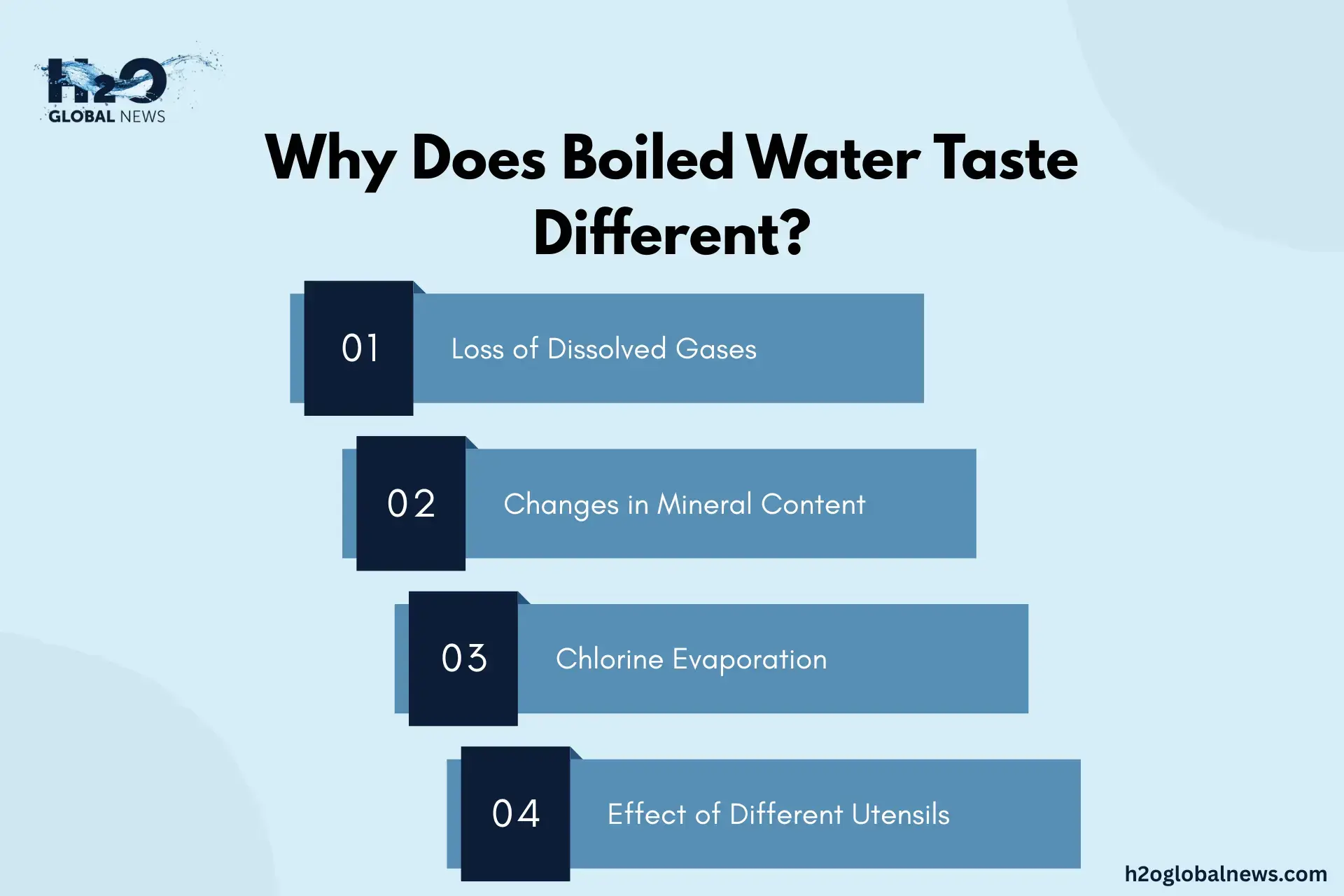 Why Does Boiled Water Taste Different? Is It Safe? | H2O Global News
And let’s not forget the iconic New York City bagel. Locals insist it’s the city’s soft, low-mineral water that gives the bagel its legendary chew. Your kettle is basically a culinary weapon.
The Plastic Ghost
If you’re drinking from a single-use plastic bottle, you’re probably tasting phthalates and other chemicals that leach into the water, especially if it’s been sitting in a warm warehouse. It’s a faint, sweetish, chemical note.
That’s why sommeliers of water (yes, they exist) recommend glass or stainless steel for the purest experience. Temperature also matters here: plastic releases more compounds when heated. Never leave a bottle in your car on a sunny day.
A fun fact: In Japan, there’s a popular water called “Silica Water” that’s bottled from deep volcanic aquifers. It’s known for its incredibly smooth, almost silky mouthfeel. It’s the luxury sedan of hydration.
Practical Tips for Better Tasting Water
Start with a good filter. A simple charcoal pitcher removes chlorine and some sediment, instantly making tap water taste fresher. Change the filter on schedule, please.
If you’re stuck with hard water, try boiling it and letting it cool. This precipitates some calcium out, softening the taste. It’s an old trick from grandma’s playbook.
Add a slice of lemon, cucumber, or a sprig of mint. This isn’t just for spa vibes; the citric acid and essential oils mask any unpleasant mineral aftertaste. It also makes you look very sophisticated at your desk.
-1920w.png) Why Does My Water Still Taste Weird After Installing a Water Softener?
Why Does My Water Still Taste Weird After Installing a Water Softener?
Swirl your water before drinking. Aeration releases volatile gases like chlorine, making the water taste less "pool-like." It’s the same reason wine is decanted.
When Water Tastes Like Dirt
That earthy, muddy, or musty taste is usually caused by geosmin—a compound produced by soil bacteria and blue-green algae. It’s completely harmless but powerfully aromatic. Your nose can detect it at parts per trillion.
This flavor peaks in the late summer and early fall when reservoirs have more algal activity. It’s a natural seasonal shift, not a sign of pollution. Some people even enjoy it, calling it "earthy" or "terroir-driven."
If it bothers you, a high-quality carbon filter or a reverse osmosis system will remove it completely. Or just embrace the vibe—you’re basically drinking the essence of a rainstorm.
The Final Gulp
We spend so much time fussing over coffee beans and wine grapes, yet we often ignore the most consumed beverage on the planet: water. That weird taste is a reminder that water is not a neutral void; it’s a living substance shaped by geology, chemistry, and your own kitchen habits.
So next time you take a sip that feels just off, pause. Don’t immediately blame the tap. Think about your glass, the temperature, the season, and the journey that water took from a cloud to your lips. It’s a tiny, everyday mystery. And solving it makes even the most ordinary glass of water feel like a small, satisfying victory.
Now go refill your bottle. With a lemon slice this time.
