How Much To Drink In A Day

Let’s be honest, the age-old question of “how much water should I drink today” usually gets answered with a vague shrug or a hard-and-fast rule that feels impossible to follow...
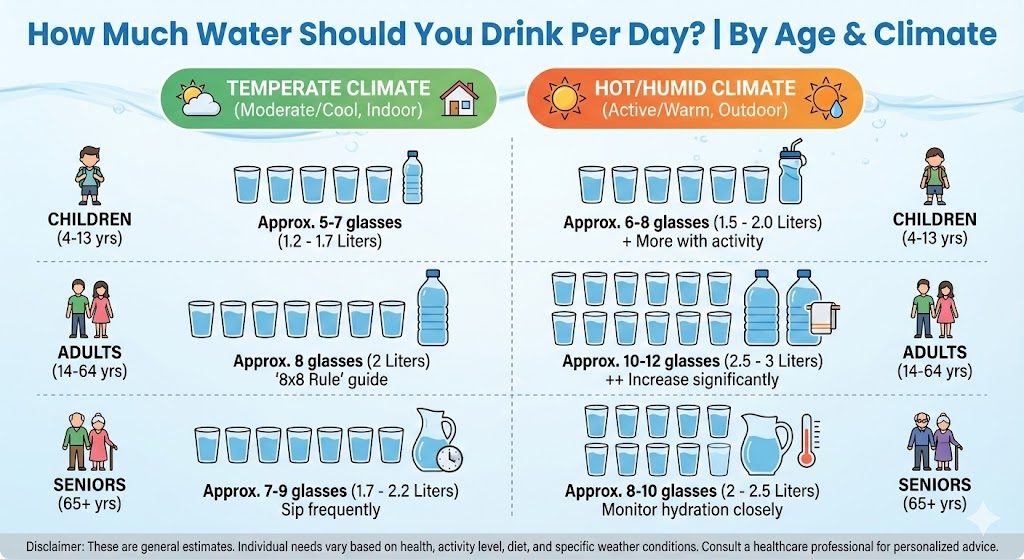
Let’s be honest, the age-old question of “how much water should I drink today” usually gets answered with a vague shrug or a hard-and-fast rule that feels impossible to follow. You’ve heard the eight-glasses-a-day mantra, but does it actually work for your life, your coffee habit, and that midday slump? It’s time to ditch the guilt and get practical, because hydration is less about a magic number and more about listening to your body’s very clever signals.
The Myth of the Magic Number
The “8x8” rule—eight 8-ounce glasses a day—is a convenient starting point, but it’s not a sacred text. The National Academies of Sciences actually recommends about 3.7 liters for men and 2.7 liters for women total, and that includes water from food and other beverages. Yes, your morning orange juice and that juicy slice of watermelon count, too.
Think of your body as a high-performance engine, not a measuring cup. If you’re sweating it out at a hot yoga class or power-walking through a humid city, you’ll obviously need more. If you’re binging a Netflix series in an air-conditioned room, less. The real trick is to match your intake to your output.
Must Read
Fun fact: A study in the Journal of the American College of Nutrition found that even mild dehydration can slow your metabolism by about 3%. That’s not a reason to chug water obsessively, but it’s a good nudge to keep a glass on your desk.
Beyond Plain Water: The Lifestyle Upgrade
Let’s be real: plain water can get boring. That’s why hydration should feel like a lifestyle, not a chore. Think of it as a cocktail of wellness—but swap the vodka for electrolytes. Infused water with cucumber, mint, and lemon isn’t just for Instagram; it’s a delicious way to hit your targets without gagging on tap water.
Here’s a pro tip from health coaches: Start your day with a glass of water before coffee. Your body has been fasting all night, and that first gulp wakes up your organs and kickstarts your digestion. It’s a tiny ritual that feels like a reset button for your entire morning.
And yes, coffee and tea do count. While they have a mild diuretic effect, the net hydration benefit is still positive. So go ahead, enjoy that second latte without the side of guilt. Just don’t rely on it as your only fluid source.
How to Know You’re Doing It Right
Forget the color charts and urine trackers for a second. The simplest test? Your thirst. If you’re thirsty, you’re already a little behind, but it’s not a crisis. Drink, and then stop when you feel satisfied. Your body is an incredible self-regulating machine—trust it.
 Daily water intake – Artofit
A more reliable indicator is your energy level. If you feel that familiar 3 p.m. fog, try a glass of water before reaching for the candy drawer. Dehydration can mimic fatigue and brain fog. Bonus: drink too much and you’ll just pee more; it’s not dangerous for a healthy person.
Fun cultural tidbit: In Japan, it’s common to drink a glass of water immediately upon waking, a practice called “Mizu no Kankaku.” In India, many families sip warm water throughout the day for digestion. You don’t need to fly to Kyoto—just borrow the habit of mindful sipping.
Practical Tips for Real Life
Carry a reusable bottle that you actually like looking at. A sleek metal or glass bottle makes you want to sip. If you’re forgetful, set a timer on your phone for every hour, or use a water tracker app that sends a gentle nudge.
Eat your water. Cucumbers, celery, oranges, and watermelon are over 90% water. A bowl of gazpacho on a summer day is basically a meal and a hydration session combined. Your grandma was right: soup counts as a fluid, too.
For those who exercise: weigh yourself before and after a workout (in minimal clothing). For every pound lost, drink about 16 to 24 ounces of fluid. This is a science-backed way to replace exactly what you sweated out without overdoing it.
 B Fit B Hydrated - The Braden Aboud Memorial Foundation
The Gentle Curveball: How Much is Too Much?
Yes, it’s possible to over-hydrate, but it’s rare. Hyponatremia (low sodium from excess water) usually happens in endurance athletes who chug liters without electrolytes. For the average person, your kidneys are amazing filters—they can process up to a liter per hour. You’d have to drink gallons to cause harm.
Listen to your stomach. If water feels sloshy and uncomfortable, you’ve had enough. A good rule of thumb is to drink in steady, small amounts throughout the day rather than guzzling a liter at lunch. Your cells love a slow, consistent drip.
One last myth: sparkling water is just as hydrating as still water. So if bubbles make you happy, go for it. The carbonation doesn’t dehydrate you; it just makes your burps more dramatic. You do you.
Daily Life Reflection
Think of hydration as a gentle conversation with your body, not a strict command. Some days you’ll drink more because the heat is relentless; other days, less because you’re cozy in bed. That’s not failure—that’s intuition.
So, next time you’re staring at an empty glass, ask yourself: Does my body feel light, or sluggish? Let that be your guide. The perfect amount is the amount that makes you feel clear-headed, energetic, and comfortable in your own skin.
Now go sip something delicious—water, tea, or a cucumber-packed infusion. Your cells are cheering you on, one tiny gulp at a time.
