What Is Tds Value In Water

So there I was, at a friend’s house for dinner, and he hands me a glass of tap water. “Try this,” he says, with the smug look of a guy who just bought a new gadget. I took a s...
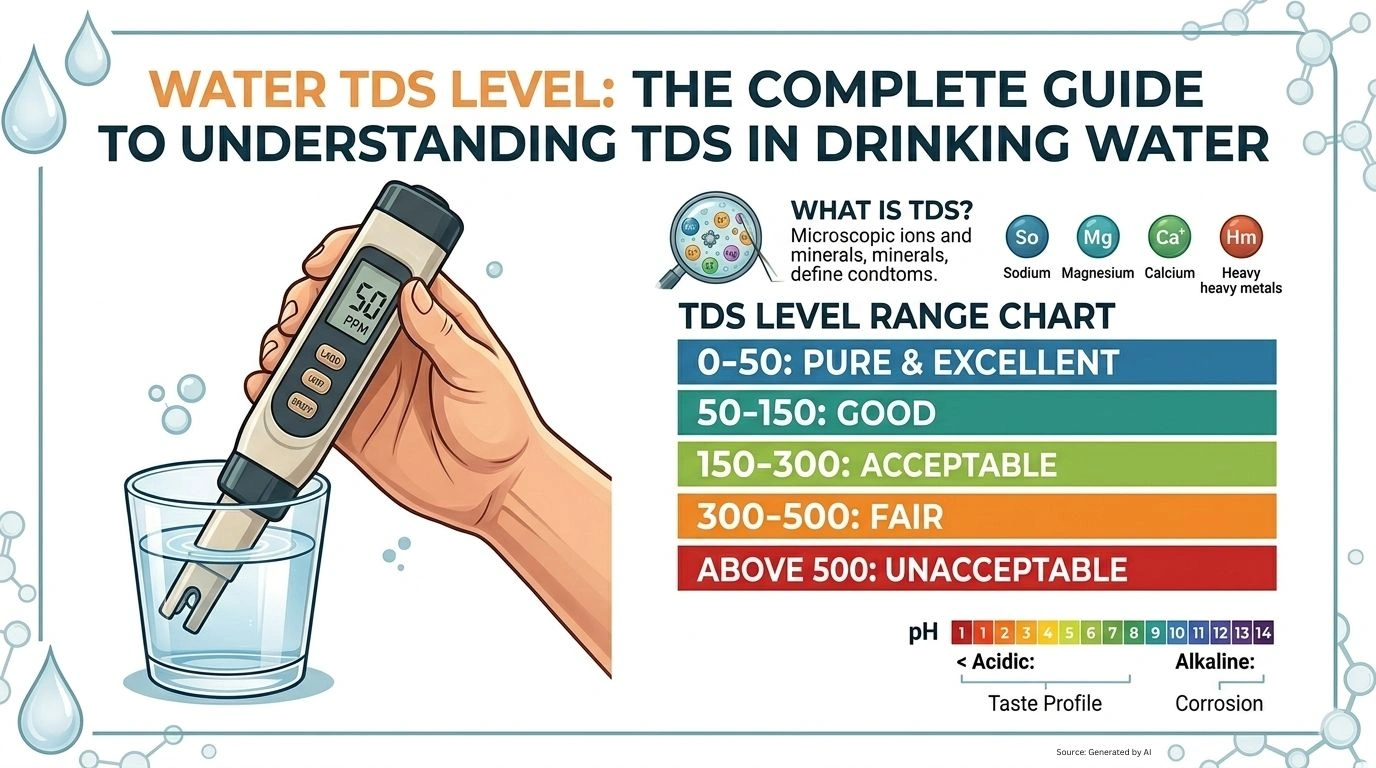
So there I was, at a friend’s house for dinner, and he hands me a glass of tap water. “Try this,” he says, with the smug look of a guy who just bought a new gadget. I took a sip – and it tasted… flat. Like someone had sucked all the life out of it, leaving behind a hollow, slightly metallic ghost of water. That was the day I learned about the sacred, all-seeing TDS meter he had just bought.
He then launched into a passionate monologue about his water’s “perfect” TDS value, as if he’d just won a science fair. I nodded politely, wondering if my well water was secretly plotting against me. That’s when I realized: TDS is one of those things everyone talks about but nobody explains in plain English.
Total Dissolved Solids. Fancy, right? Let’s break it down. Think of water as a really excellent hitchhiker—it picks up everything it touches: minerals, salts, bits of organic matter, even tiny metals. TDS is simply the total weight of all that stuff dissolved in your water, measured in parts per million (ppm). It’s the unsung backstory of every glass you drink.
Must Read
Now, here’s the irony that blew my mind: Pure H₂O (the kind you get from expensive lab filters) actually tastes terrible. It’s aggressive, science says; it wants to steal minerals from your tongue. That hollow, unsatisfying taste? That’s zero TDS. So low TDS doesn’t automatically mean “amazing water.”
So, What’s a “Good” TDS Value?
If you Google this, you’ll get a hundred charts with different numbers. But here’s the unvarnished truth: There’s no universal “perfect” number. It’s subjective, like asking if a medium-rare steak is better than one cooked well-done.
Most of the bottled water you buy falls between 100 and 300 ppm. That’s the sweet spot where you can still taste minerals (like calcium and magnesium) without feeling like you just licked a salt lick. Fun fact: Some people genuinely love high TDS water—like the stuff from natural springs—which can hit 500 ppm or more and taste like a mineral bath.
But here’s the kicker: High TDS doesn’t equal dangerous. You could have water with 800 ppm that’s perfectly safe to drink (looking at you, mineral-rich aquifers). Conversely, you could have water at 150 ppm that’s full of pesticides. TDS tells you “how much” stuff is in there, not “what” it is. Sneaky, right?
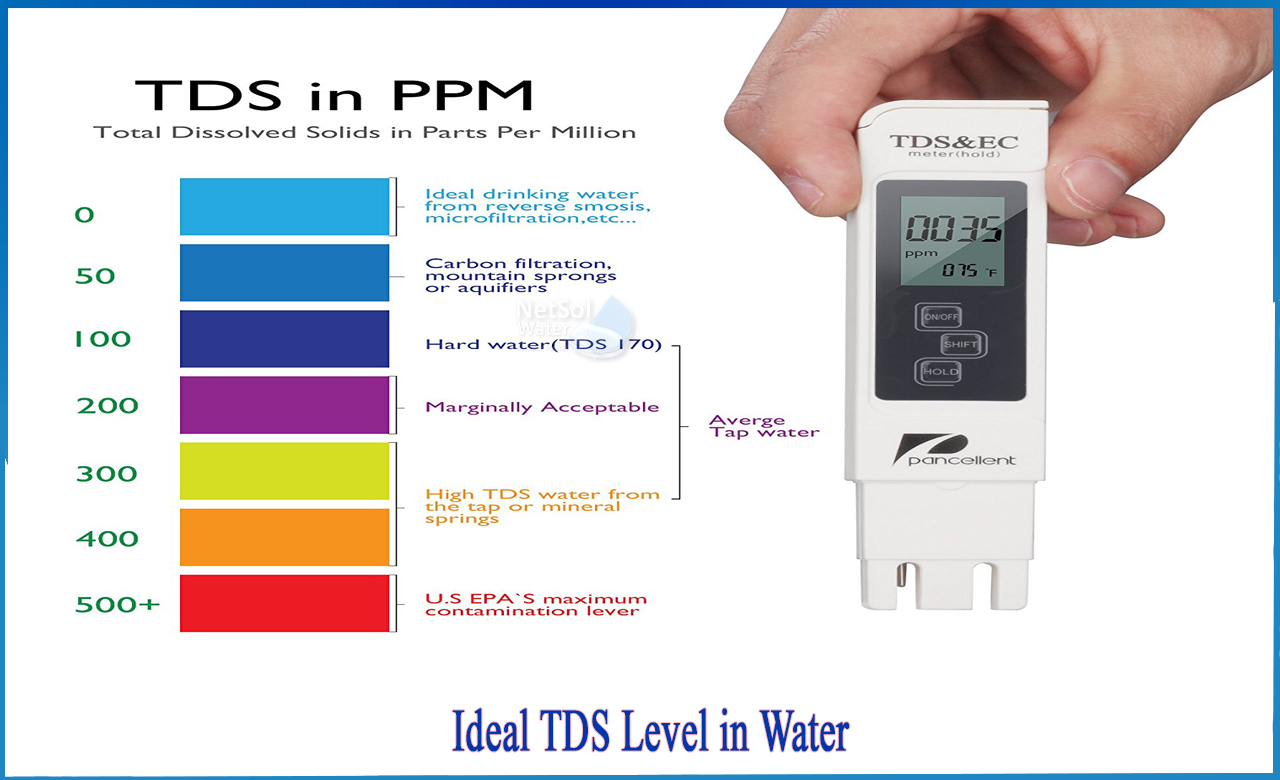 Tds Water Meter Chart – What Is A Tds Meter – FPYK
The Two Faces of Dissolved Solids
Good solids are things like calcium, magnesium, and potassium. Your body loves these – they give water that “crisp” mouthfeel and help with everything from bones to blood pressure. Bad solids are toxic heavy metals like lead, arsenic, or copper. A TDS meter lumps them all together. It’s like weighing a bag of apples and a bag of rocks and saying “both are 5 pounds.”
So don’t panic if your TDS meter reads 400 ppm. It could just mean you have deliciously hard water (which is annoying for your kettle but great for your heart). On the flip side, a reading of 50 ppm might mean you’re drinking over-purified water that’s stripped your body of essential minerals. See the catch-22? (Bet you didn’t sign up for a water philosophy lesson today, but here we are.)
What’s the rule of thumb? The WHO (World Health Organization) suggests below 300 ppm is excellent, 300–600 is good, and above 900 is poor. But take that with a grain of salt (pun intended). I’ve had incredible-tasting spring water at 450 ppm, and awful-tasting tap water at 120 ppm. Context is king.
The Sneaky Culprit: Your Filter’s Affect
Here’s where it gets personal: Reverse osmosis (RO) systems are the ninjas of water purification. They can strip almost everything out, leaving you with TDS below 50 ppm. That’s “lab-grade” water. Problem? It’s so pure it’s hungry—it will leach minerals from your body and taste like a sterile hospital. This is why fancy RO systems add a mineral cartridge back in. It’s a real-life “you need the bad to appreciate the good” moment.
 Tds In Water Analysis
But if you have hard water (high TDS), you might notice scale buildup on your showerhead or a weird taste in your coffee. In that case, some TDS reduction is a lifesaver. Just don’t go full nuclear mode and aim for zero. Your water shouldn’t taste like nothing. That’s weird.
Testing Without Paranoia
Buy a cheap TDS meter (they’re like $15 on Amazon). Test your tap water, bottled water, and maybe even the water from your friend’s fancy system – watch their face when you reveal their precious RO water has a TDS of 12 ppm while your “inferior” tap has 260 ppm. That conversation is worth the price of admission.
Just remember: TDS is a starting point, not a final verdict. It’s like knowing the calorie count of a meal without knowing if it’s spinach or a doughnut. Use it to notice changes—like if your TDS suddenly spikes, something might be leaching into your pipes. That’s a red flag. A steady TDS of 350 ppm from a limestone aquifer? That’s just Tuesday.
So before you go chasing a mythical “perfect” TDS number, ask yourself: Does the water taste good? Does it make me feel good? If yes, stop obsessing over the number. Your body isn't a lab beaker; it’s a thirsty human. Drink up, and save the TDS meter for satisfying your curiosity—or for winning smug arguments at dinner parties.
