What Is Water In Nutrients

Ever looked at a nutrition label and wondered why water is listed as a nutrient? It feels strange, right? Like listing "air" as an ingredient in your breakfast. But stick with...
Ever looked at a nutrition label and wondered why water is listed as a nutrient? It feels strange, right? Like listing "air" as an ingredient in your breakfast. But stick with me, because this is actually one of the coolest things your body does.
The Invisible Giant on Your Plate
Let’s be honest: water doesn’t look like a nutrient. We think of nutrients as things like protein, fiber, or Vitamin C. But water is the most abundant substance in every single cell you own. It’s the quiet, invisible giant doing all the heavy lifting.
Think of your body as a really advanced water park. Every ride—your muscles, your brain, your heart—needs water to function. Without enough water, the park shuts down. You wouldn’t call a lazy river "food," but you’d sure miss it if it dried up.
Must Read
Why It's Technically a Nutrient
Scientifically, a nutrient is anything your body needs to survive, grow, and repair itself. Water checks every single box. You can survive weeks without food, but only days without water. That’s how non-negotiable it is.
It’s a macronutrient—just like carbs and fats. Wait, doesn't that sound wild? Water has zero calories, but it’s still a macronutrient because you need massive amounts of it. It’s the only macronutrient you can’t burn for energy, yet it fuels everything else.
What Water Actually Does in Your Body
This is where it gets fascinating. Water isn’t just a passive filler. It’s a delivery driver, a cleanup crew, and a cooling system all rolled into one. Imagine a tiny UPS truck traveling through your veins—that’s water carrying oxygen and nutrients to your cells.
 Nutrition Facts For Water , 10 Dasani Water Nutrition Facts – FYCB
It also acts like a shock absorber for your joints and brain. Ever felt a headache coming on when you’re dehydrated? That’s your brain literally shrinking and tugging on your skull. Fun, right?
And here’s a wild one: water even helps you think. Your brain is about 73% water. When you’re low, your mental processing slows down. It’s like trying to run a video game on a computer that’s overheating. You need that liquid coolant.
The "Water in Food" Secret
Here’s the secret most people miss: you don't have to drink all your water. A huge chunk of your hydration comes from food. That cucumber in your salad? It’s 96% water. An apple is about 86%. Watermelon is basically a water balloon in disguise.
So when you eat a juicy fruit, you’re giving your body a bonus hydration hit. It’s like sneaking vegetables into a smoothie—except here, the water is the smoothie. Foods high in water also make you feel fuller with fewer calories. That’s a cheat code for eating smarter.
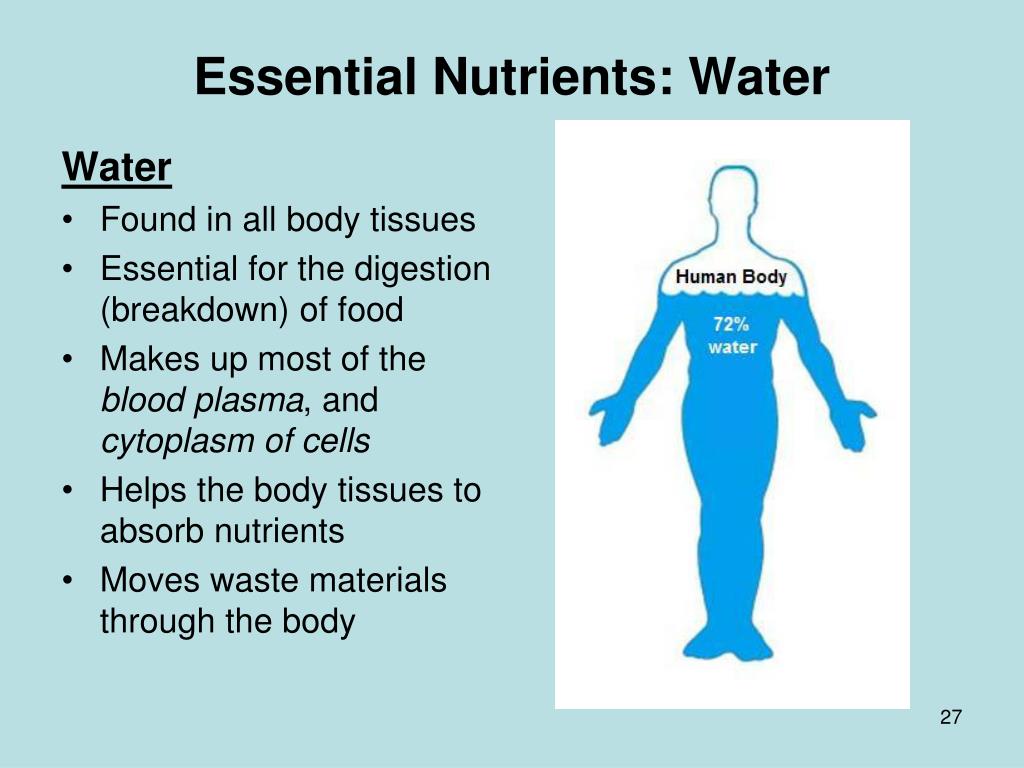 PPT - Nutrition and Diets Chapter 11 PowerPoint Presentation, free
Why You Should Care About This
Because most of us are walking around slightly dehydrated and don’t even know it. You might feel tired, get a dry mouth, or feel a little foggy. You reach for coffee or a snack, but your body was actually asking for water.
Think of water as the oil in your car engine. You don’t need it to run for one second, but without it, the whole engine seizes up. The same goes for your digestion. Water helps break down food so your body can actually absorb the vitamins you’re eating. No water, no benefit.
The Bottom Line
So, what is water in nutrients? It’s the ultimate multitasker. It’s the silent partner every other nutrient needs to do its job. Fiber needs water to move. Vitamins need water to dissolve. Protein needs water to build muscles.
Next time you take a sip of plain water, give it a little nod. It might be boring compared to kale or protein powder, but it’s the VIP of your entire nutritional life. Hydrate or die-drate is silly, but it’s also true. Drink up, you beautiful human water park.
