How To Measure Ph Of Water

You’ve probably seen influencers swirling glass vials of green juice or testing their morning water with a sleek wand. That magic number—7.0—has become a modern wellness flex....

You’ve probably seen influencers swirling glass vials of green juice or testing their morning water with a sleek wand. That magic number—7.0—has become a modern wellness flex. But measuring the pH of your water isn’t just for lab coats or wellness gurus; it’s a surprisingly easy way to connect with what you actually drink every day.
The Why Behind the Strip
pH stands for potential of hydrogen, and it’s simply a scale from 0 to 14 that tells you how acidic or alkaline a liquid is. Pure water sits right at 7.0, but your tap, spring, or filtered water can drift depending on where it’s been. Newsflash: Your coffee is around 5.0, your stomach acid is a raging 2.0, and your favorite bottled “alkaline” water might be pushing 8.5.
Why care? Because water that’s too acidic (below 6.5) can corrode pipes or taste metallic, while very alkaline water (above 8.5) might feel slippery or bitter. For most of us, the goal isn’t perfection—it’s awareness.
Must Read
Your pH Toolkit (No Lab Coat Required)
You have three main options, and they range from “I found this in a kitchen drawer” to “I look like a science influencer.” First, pH test strips. They’re cheap, tiny, and you simply dip one in water for a few seconds. Watch the color change, then compare it to the chart on the bottle.
Second, digital pH meters. These are the cool kids. You calibrate them with a powder solution (yes, it feels fancy), dip the probe, and read a precise number. They cost more but last years. Third, the old-school liquid test kit—the one aquarium owners use. A few drops change your water’s color instantly.
Fun fact: The pH scale is logarithmic. That means water at 6.0 is ten times more acidic than water at 7.0. So a tiny number change is a huge chemical shift.
Practical Tips for the Home Tester
Always test your water at room temperature. Cold or hot water can throw off the reading by a few decimal points. Let a glass of tap water sit for five minutes before you dip a strip.
Don’t test from the same glass twice. Contamination from your lips or dish soap residue will ruin the measurement. Use a clean, dry container—preferably glass, not plastic, which can leach its own chemistry.
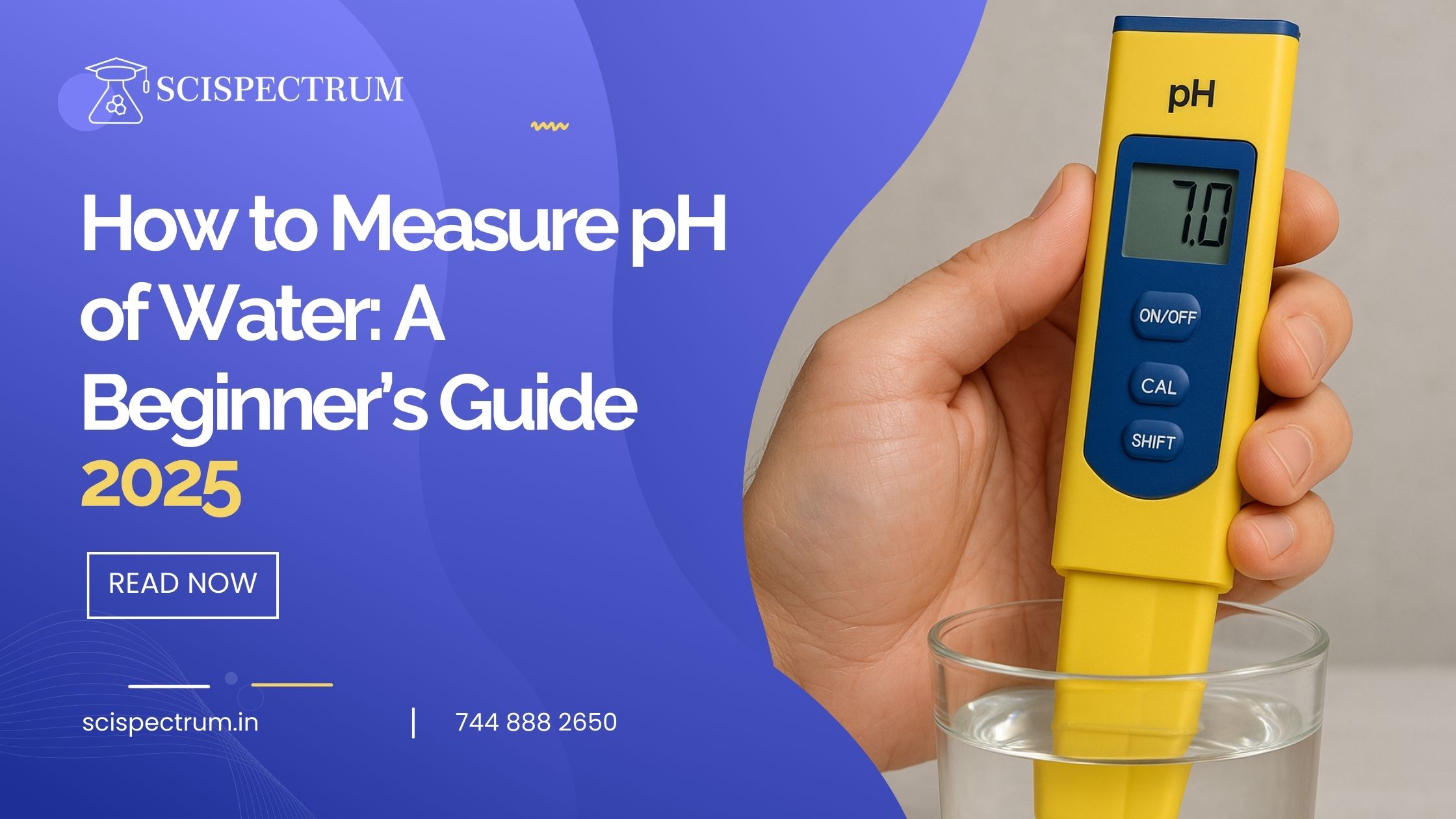 How to Measure pH of Water: A Beginner’s Guide (2025) - Scispectrum Lab
Calibrate your digital meter monthly if you use it. It’s like zeroing a scale; without it, your fancy gadget is just an expensive guess. Most kits come with a simple 7.0 and 4.0 buffer solution for this.
The Cultural Obsession with “Alkaline”
You’ve seen the celebrity water bottles branded with “9.5 pH.” It’s the wellness industry’s favorite flex. Does it actually “balance” your body? Not really. Your blood pH is locked between 7.35 and 7.45 by your lungs and kidneys. Drinking alkaline water can’t change that—but it might taste smoother to some people.
In Scandinavian countries, people often test their well water for pH to protect their expensive sauna pipes. In Japan, the ritual of testing water pH at hot springs (onsen) is a quiet act of reverence. You’re joining a global tradition of paying attention.
Still, it’s worth a personal experiment. Try testing your tap water, then your favorite bottled spring water. The difference is often shocking and always educational.
But What If Your Water Is “Off”?
If your pH test shows a reading below 6.0, don’t panic. It doesn’t mean you’re poisoned. It might just mean you have soft water or old copper pipes. Do check your local water report (most cities publish it online) to see if a pH adjustment is standard.
If it’s above 8.5, your water might have high mineral content, often from limestone aquifers. A simple pitcher filter with activated carbon can nudge it closer to neutral. For extreme cases, a reverse osmosis system is the nuclear option.
 The importance of measuring pH in water treatment - Carewater Solutions
Remember: fish are the canaries in the coal mine. Aquarium enthusiasts keep their water between 6.5 and 7.5. If you have a goldfish, your tap water’s pH matters more to them than to you.
The Fun Little Facts
Rainwater is naturally acidic (around 5.6) because it absorbs carbon dioxide from the air. That’s why it helps break down rocks. Pure water—the kind in labs—has a pH of exactly 7.0 but is so boring it’s almost poisonous to drink because it lacks minerals.
Your saliva varies from 6.2 to 7.6 depending on what you just ate. Tasting an orange? Your mouth drops to 3.5 briefly. That’s why test strips for water are different from test strips for saliva—they’re calibrated differently.
One bottle of premium “alkaline water” can cost three dollars. A pack of 100 pH test strips costs five dollars and can test your tap water for years.
Connecting It to Your Daily Glass
Testing your water’s pH isn’t about chasing a perfect number. It’s a small, mindful ritual. You pause, you dip, you watch a color change, and you suddenly feel plugged into the chemistry of your own life. It’s like checking your plant’s soil moisture or the pressure in your bike tires—a tiny act of care.
Next time you fill a glass, consider this: water is the most measured substance on earth, yet most of us never measure what we drink. A strip, a meter, a few drops—it’s a two-minute detour into the invisible world that keeps you alive. Drink curious.
