How To Detect A Water Leak

So, you suspect a water leak. Maybe your water bill has started looking like a second mortgage payment, or you’re hearing a phantom drip-drip-drip that sounds like your house...
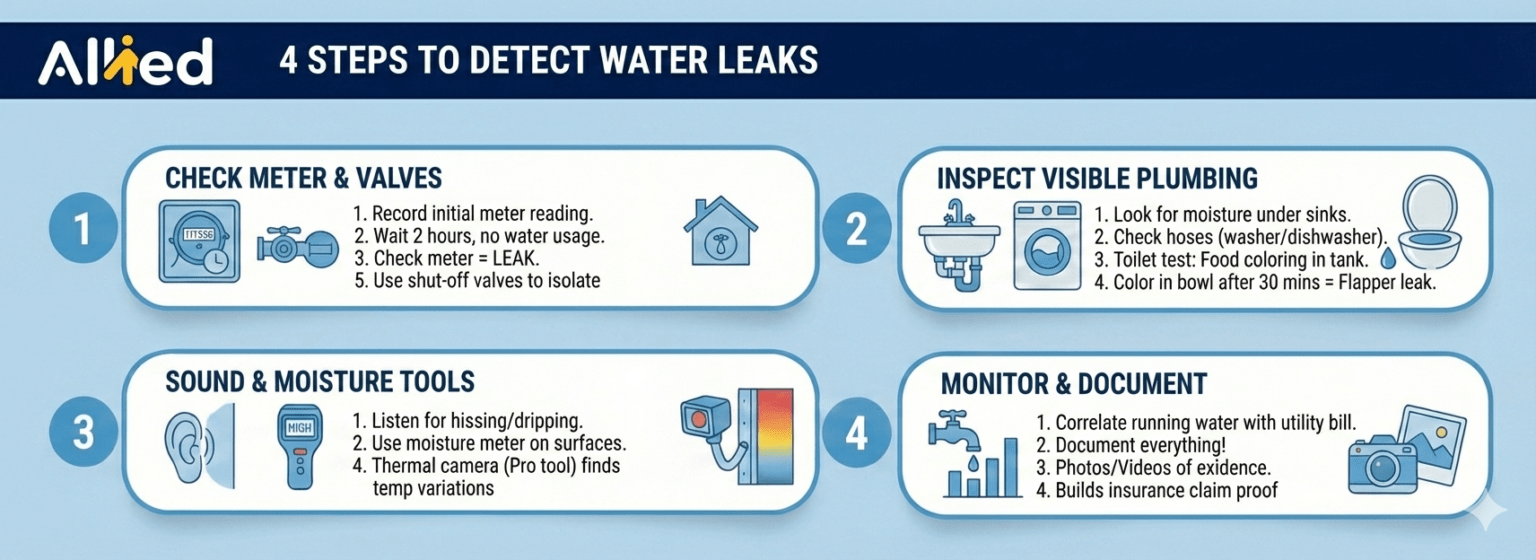
So, you suspect a water leak. Maybe your water bill has started looking like a second mortgage payment, or you’re hearing a phantom drip-drip-drip that sounds like your house is auditioning for a horror movie. Don’t panic! You don’t need a plumber’s license or a degree in hydrology to play detective. Just grab your magnifying glass—or, you know, a flashlight—and let’s get sleuthing.
Step 1: The "Meter Mystery" Game
First up, let’s become best friends with your water meter. It’s usually a boring gray box in your basement or in a concrete pit outside. Go find it. Yes, even if it means getting a little dirt on your knees.
Turn off every single water-using appliance in your house: faucets, shower, washing machine, even the ice maker. Make it like a desert in there. Now, check the meter. If that little dial is still spinning like a dizzy cartoon character, you’ve likely got a leak.
Must Read
Write down the numbers, wait an hour (don’t use \any\ water), and check again. If the number changed, congratulations—you’ve got a leak! Or a ghost who really loves hydration. Either way, it’s time to act.
Step 2: The "Toilet Test" (It’s Weirder Than It Sounds)
Toilets are the silent assassins of water leaks. They can waste hundreds of gallons without a single audible gurgle. Here’s your mission: pop the lid off the toilet tank. Careful! It’s heavy, and dropping it will add a “broken porcelain” problem to your list.
Drop a few food coloring drops (red or blue, not green unless you want a swamp vibe) into the tank water. Don’t flush yet! Wait 10–15 minutes. If color seeps into the bowl without you flushing, you’ve got a leaky flapper. That little rubber thingy needs replacing.
It costs like five bucks at the hardware store. That’s cheaper than paying for a swimming pool’s worth of water you never even used. Plus, you get to feel like a total handyperson—even if you’re just watching a YouTube tutorial with your phone propped on the toilet seat.
Step 3: The "Soggy Spot" Walkthrough
Now, put on your detective shoes and walk through every room with water connections. Look for warped floorboards, peeling paint, or wallpaper that looks like it’s trying to escape the wall. That’s classic leak behavior—water is shy, but it leaves a mess.
 How to Detect Water Leaks in Walls: 13 Steps (with Pictures)
Check under sinks, around the dishwasher, and behind the fridge’s water line. Touch the pipes—if they feel damp or have that weird, slimy texture (eww, but valid), you’ve found a friend. Pay attention to musty smells, too. Your nose is a surprisingly good leak detector.
Also, check your water pressure. If the shower suddenly feels like a sad drizzle, a leak might be stealing your water’s energy. Or your pipes are just having a lazy day. Don’t judge them too harshly.
Step 4: The "Bill Shock" Method
Compare your last three water bills. If one month looks like you suddenly started watering a secret jungle, you’ve got a problem. Your wallet is literally screaming at you. A small leak can waste 10,000 gallons a year—that’s like taking 200 baths nobody enjoyed.
If you live in a house with a sprinkler system, check those heads too. A broken sprinkler can spray water like a party fountain, except nobody’s dancing and your lawn is drowning. Turn the system on manually and watch for geysers or suspicious puddles.
Step 5: The "Fuzzy Logic" Technique (Bonus Round)
Sometimes leaks are invisible. Listen for running water when everything is off. Put your ear to the wall like you’re a doctor checking a patient’s heartbeat. “Hmm, yes, the patient has a slow weep in the kitchen.”
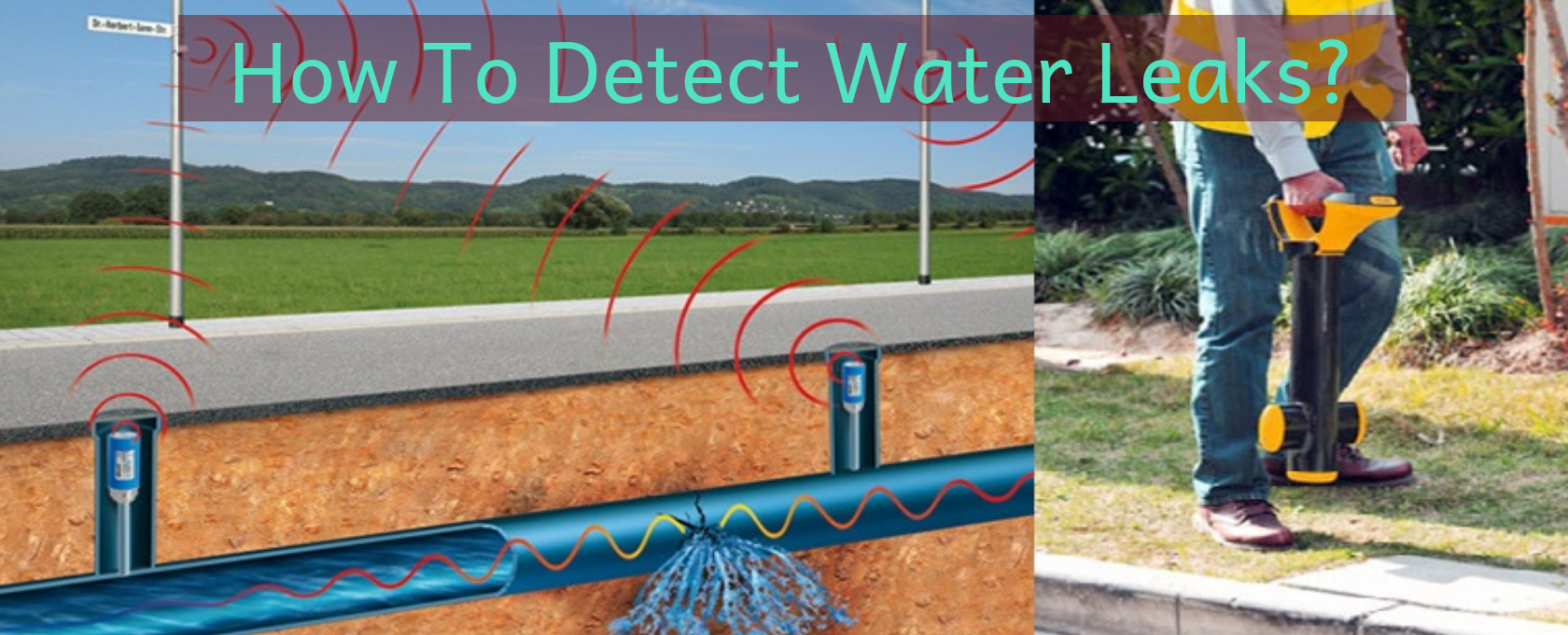 How To Detect Water Leaks Inside and Outside Your Home?
Check the exterior faucets, too. A hose left on can trickle for days, creating a lovely mud pit for mosquitoes. And don’t forget the water heater—look for rust or a little puddle at its base. That’s a leak that’s about to become an emergency. Water heaters are drama queens; they never leak quietly.
If you’re still stumped, there’s one final trick: turn off your main water valve for a few hours. Yes, you’ll have to survive without toilet flushes, but check your meter again. If it’s still moving, the leak is between the street and your house. Call a pro. That’s above your pay grade, detective.
When In Doubt, Call Reinforcements
Listen, I’m not saying you can’t fix a leak yourself. You absolutely can patch small holes, replace a flapper, or tighten a loose connection. But if the water is gushing, the ceiling is sagging, or you feel completely overwhelmed, call a plumber. They’re like wizards with wrenches, and they’ve seen way worse than your little drip.
Also, don’t forget about mold. Mold is water’s grumpy cousin who shows up uninvited and refuses to leave. If you see black spots or smell that damp basement vibe, you might need a remediation pro, too. But hey, that’s a story for another day.
Final Pep Talk (You’ve Got This)
Finding a water leak is like finding a gray hair—annoying, but totally manageable. You’ve now got the tools to spot a problem before it turns into a flood. You’re a water detective, a plumbing poet, a household hero. And hey, if you do find a leak, you’ve just saved yourself hundreds of dollars and a potential indoor swimming pool.
So go forth, check your toilet tank, and give your water meter a friendly nod. You are now the master of moisture, the captain of the coach. And if you mess up? No sweat. That’s what towels are for. Plus, you’ll have a great story to tell at parties. “Remember that time I identified a leak by listening to my refrigerator? Classic me.” Keep smiling—you’ve earned it.
