How To Locate A Water Leak

You know that feeling when you hear a mysterious drip-drip-drip in the middle of the night, but you can’t figure out where it’s coming from? It’s like having a tiny, persisten...

You know that feeling when you hear a mysterious drip-drip-drip in the middle of the night, but you can’t figure out where it’s coming from? It’s like having a tiny, persistent ghost living in your walls. I’ve been there, and let me tell you, ignoring it is like ignoring a slow leak in your favorite pair of jeans—eventually, you’ll have a soggy mess on your hands. But don’t worry, finding a water leak is more like a fun scavenger hunt than a plumbing nightmare.
Why should you care about a little drip?
Think of your water bill like a bag of chips—every drop you lose is a chip you paid for but never got to eat. A small leak can waste hundreds of gallons a month, which is like flushing a full swimming pool down the toilet. Plus, a hidden leak can turn your cozy home into a science experiment for mold, which is definitely not the kind of pet you want.
So, grab your detective hat, and let’s turn you into a leak-locating legend.
Must Read
Step 1: Listen like you’re eavesdropping on a secret
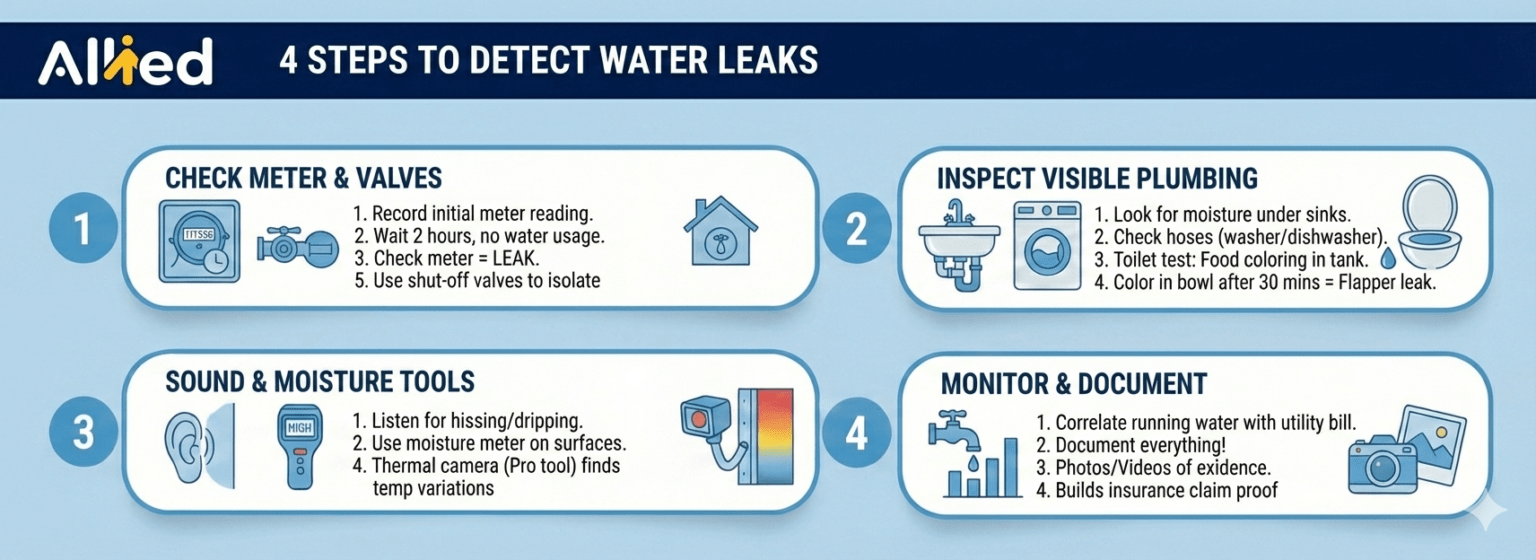
Before you start pulling up floorboards, just stand still and listen. Turn off the TV, the dishwasher, and the kids. Walk around your house like you’re hunting for a whisper. That constant hissing sound from the toilet tank? That’s a leak. The gentle trickle behind the fridge? Your icemaker might be crying for help.
I once found a leak by following the sound of a tiny waterfall under my bathroom sink—turns out the shut-off valve was loose. Always trust your ears over your eyes, because water can hide in the quietest corners.
Step 2: The “Meter Test” – No math degree required
This is the easiest trick in the book. Find your water meter (usually a grey box near the street), and write down the numbers. Then, turn off every single tap, flushing toilet, and appliance that uses water. Wait two hours—go watch a movie or take a nap.
Come back and check the meter. If the numbers moved even a little, you’ve got a leak. It’s like catching a mouse in the kitchen—you know something’s there even if you haven’t seen it yet.
Step 3: Become best friends with your toilet
Toilets are the silent saboteurs of water bills. A leaky flapper can waste up to 200 gallons a day without making a peep. Here’s the test: take the lid off the tank, drop in a few drops of food coloring (blue or red works great), and wait 15 minutes. Don’t flush during this time.
 How to Find a Water Leak | Expert Tips & Detection Guide
If you see colored water seeping into the toilet bowl, you’ve found your culprit. It’s like catching a toddler with a cookie—the evidence is right there. Replacing the flapper costs about $5 and takes five minutes.
Step 4: Check your taps like a pro
Your faucets might be leaking even if you don’t see a drip. Wipe the spout dry with a paper towel, then place a dry tissue under the faucet. Leave it overnight. If the tissue is damp in the morning, you’ve got a slow leak. Think of it as a confession written in water.
Same goes for outdoor spigots—if your garden hose is dripping, you’re essentially watering your driveway. That’s like paying for a fancy coffee and dumping it on the sidewalk.
Step 5: The “Wet Spot” detective work
Now, walk around your house like you’re looking for treasure. Feel the floors near walls, under cabinets, and around the base of your water heater. Warm spots on the floor can mean a hot water pipe is leaking. Soft spots or warped wood are dead giveaways.
I once found a leak in my laundry room because I slipped on the linoleum—turns out the hose to the washing machine had a pinhole. It was like finding a needle in a haystack, but my socks got wet first.
 How to Find a Water Leak Inside a Wall - Trojan Plumbing
A quick word on walls and ceilings
If you see a bubble of paint or a yellow stain on the ceiling, that’s a sign. Don’t poke it unless you want a surprise shower. That’s your water leak writing a love letter to your drywall.
Step 6: Use the “Blue Dye” trick for hidden leaks
Got a slab foundation? Leaks in the concrete are tough, but you can test for them. Turn off everything, then flush the toilet once. Listen for water running after the tank refills. If it keeps running, the leak is likely underground. Call a plumber—this is not a DIY situation unless you own a jackhammer.
For outdoor sprinkler systems, it’s simpler: walk the line of the pipes during a dry day and look for unusually green or damp patches of grass. That’s your lawn telling you it’s getting too much of a good thing.
When to wave the white flag
Listen, not every leak is fixable with a wrench and a smile. If your water meter is spinning like a DJ’s turntable and you can’t find the source, call a professional. They have fancy acoustic gadgets that can hear a leak through concrete. It’s like having X-ray vision for your pipes.
But remember: most leaks you can find yourself, and the sense of pride when you do? Priceless. Plus, you’ll save money, your home, and your sanity. So next time you hear a drip, don’t panic—just grab your ears, a bit of food coloring, and that detective hat. You’ve got this.
