How Does A Well Get Water

Picture this: you’re standing in a field, staring at a hole in the ground, and you think, “How in the world does this thing actually get water?” It’s a fair question, because...
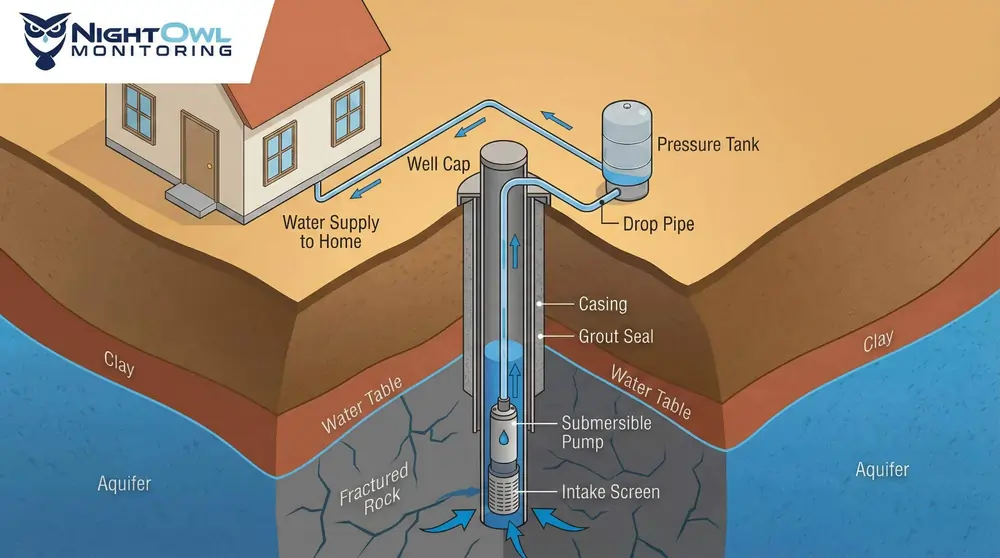
Picture this: you’re standing in a field, staring at a hole in the ground, and you think, “How in the world does this thing actually get water?” It’s a fair question, because wells look like magic—or at least like plumbing from a parallel universe where gravity works on weekends. But the truth is way simpler, and a little ridiculous once you dig into it (pun absolutely intended).
First, forget everything you’ve seen in cartoons where a well is just a deep, dark bucket-hole. Nope. A modern well is basically a giant straw that you shove into the earth’s underground lake—and yes, those lakes are real. We call them aquifers, which is fancy scientist-speak for “sand and rock that got so soaked it turned into a watery sponge.”
Step One: The Dig (Or, How to Annoy the Earth)
To get that water, someone first has to drill a hole—deep. We’re talking hundreds of feet, sometimes over a mile. That’s like stacking 30 football fields on top of each other and then dropping a PVC pipe down the middle. Why so deep? Because water doesn’t just pool up near the surface like a puddle; it seeps down through layers of dirt, gravel, and rock until it hits a confining layer—basically, a waterproof rock ceiling that traps the water underneath.
Must Read
Now here’s the wild part: the water you’re aiming for might be older than your grandma’s secret cookie recipe. Some aquifer water has been trapped underground for 10,000 years. That’s before humans invented farming, writing, or even the concept of “refreshing.” You’re literally drinking prehistoric rain. Honestly, that’s either awesome or terrifying—I haven’t decided.
Step Two: The Casing (Or, Why Your Well Isn’t a Mud Pit)
Once you’ve drilled your super-hole, you can’t just leave it naked. You line it with a steel or plastic pipe called a casing. Without this, your well would collapse into a glorified mud puddle, and all the bacteria from the surface would party down there like it’s 1999. The casing also seals off any shallow, gross groundwater so your deep, ancient water stays pristine—like a time capsule, but wetter.
At the bottom of the casing, they install a screen—yes, like a window screen, but tougher. This keeps out sand, pebbles, and the occasional lost fossil. Because nothing ruins a glass of “10,000-year-old water” like a crunch of gravel, am I right?
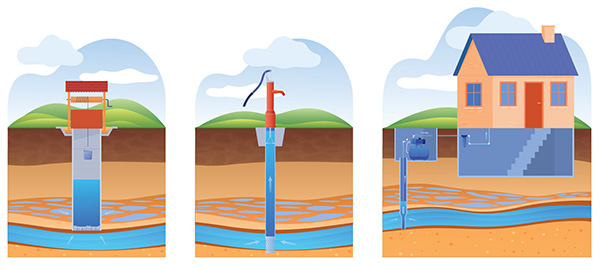 How A Well Water System Works Explained With Diagram
Step Three: The Pump (Your New Best Friend)
Now you’ve got a pipe in the ground, but water doesn’t just jump out—it’s lazy, like a cat in a sunbeam. You need a pump. Most wells use a submersible pump, which is basically a motorized impeller that sits underwater and pushes it upward. Think of it as a tiny, overachieving fire hose that lives at the bottom of a dark tube and never takes a vacation.
Here’s a shocking fact: the pump doesn’t “pull” water like a vacuum; it pushes it from below. Water is heavy—8.34 pounds per gallon—so lifting it from 300 feet down is like bench-pressing an angry toddler every second. That’s why your pump needs electricity. Without it, you’d be back to a rope and bucket, which is so 1693.
Step Four: The Water Table (Earth’s Secret Mood Ring)
The whole system only works if the water table is high enough. The water table is the underground level where all the rock pores are fully saturated—like a wet sponge that’s had enough. But it isn’t fixed; it rises and falls with rain, drought, and how much you water your lawn. In a dry year, that table can drop like your phone battery at 2 PM. That’s why some wells go dry, and homeowners suddenly learn the true meaning of “panic shopping for a deeper drill.”
 Sanitary Well Labelled Diagram
Fun fact: if you drill into a confined aquifer—one under pressure—water can shoot up on its own like a natural fountain. That’s called an artesian well. Nature’s own soda fountain, but with fewer bubbles and more rocks.
The Surprising Science of “Just Add Water”
So how does a well get water? Simple: rain falls, seeps through dirt, gets trapped by rock, ages for millennia, then you drill a straw, drop a pump, and boom—you’ve got water. It’s not magic; it’s hydrogeology with a side of “I hope nobody built a gas station upstream 100 years ago.”
Next time you fill a glass from the tap, give a little nod to the 10,000-year-old rain, the overworked pump, and the guy who decided to drill a mile down looking for a drink. And remember: if your well ever does run dry, just move. It’s way cheaper than digging deeper. Trust me, I’ve got a story about that.
