How Does Ice Machine Work

There’s a quiet magic in that steady clunk of ice dropping into your glass. It’s the sound of relief on a hot day, of a cocktail well-made, of a kitchen that has its life toge...
There’s a quiet magic in that steady clunk of ice dropping into your glass. It’s the sound of relief on a hot day, of a cocktail well-made, of a kitchen that has its life together. But how does that little machine do its frosty dance?
You press a button, and within minutes, you have a cascade of perfect, chewable cubes. It feels like sorcery, but it’s actually a clever loop of physics and engineering. Let’s pull back the curtain on this cool companion.
The Cool Cycle: A Three-Act Play
Your ice machine isn’t just a bucket that gets cold. It’s a miniature, automated factory that follows a three-step playbook. First, it freezes water; second, it releases the ice; third, it harvests the bounty.
Must Read
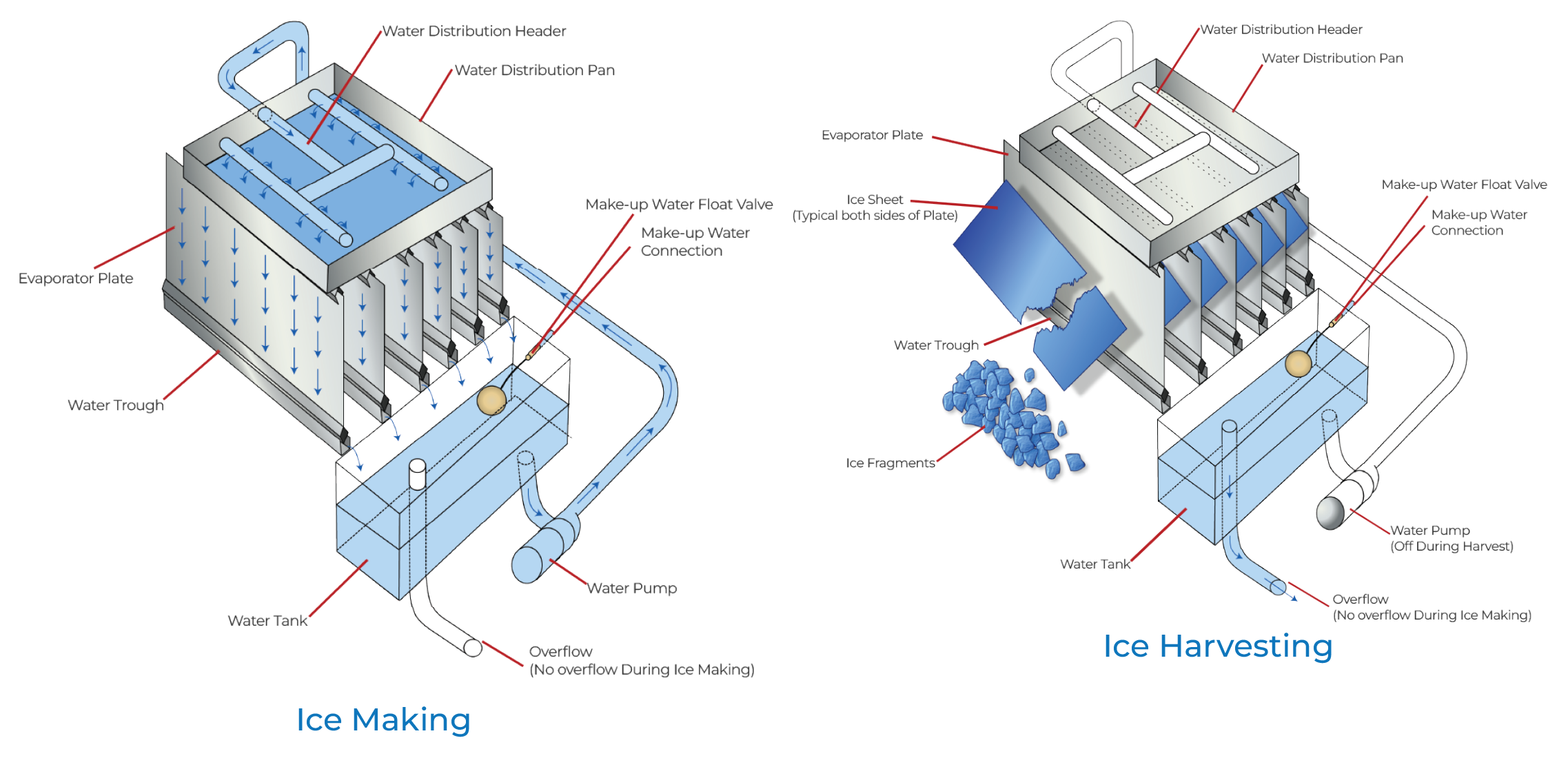
Act one begins with a reservoir or a direct water line. A pump pushes water up into a tray or over a freezing plate called an evaporator.
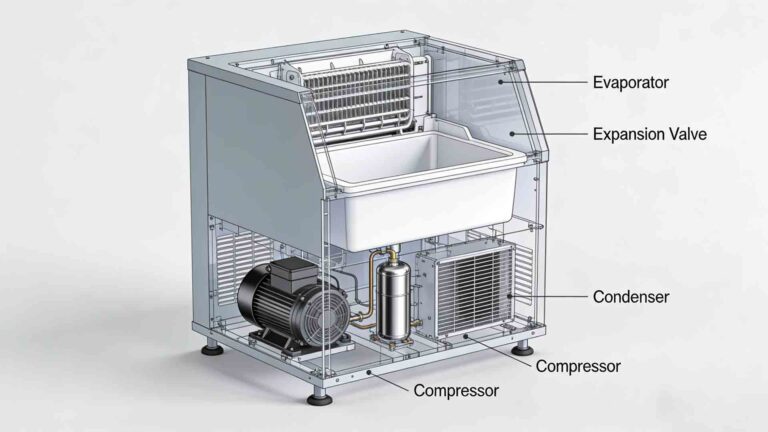
That evaporator is the star of the show. It’s chilled by refrigerant—the same stuff in your fridge—dropping to well below freezing. As water flows over it, layer by layer, ice crystals form.
Why it’s not just a solid block
Here’s the clever part: the water is constantly moving. This motion traps air, creating that cloudy, soft core that’s so satisfying to crunch. Pure, still water makes clear, rock-hard ice—great for whiskey, but terrible for a blender.
Fun fact: Sonic Drive-In became famous for its “nugget” ice, which is actually compacted ice flakes. The process mimics the classic cube cycle but adds a compression step. Pure genius for a soda fountain.
The Great Release: How Ice Lets Go
Once the ice reaches a certain thickness—usually managed by a sensor or a timer—the machine flips the script. The system reverses its refrigerant flow in a process called hot gas bypass.
 Understanding the Inner Workings of a Commercial Ice Machine: A
It’s a gentle warm-up. A puff of hot refrigerant gas flows through the evaporator, warming it just enough to loosen the ice’s grip. The cubes slide off with a satisfying thump into the storage bin below.
This is where bad ice machines fail. If the harvest cycle is weak, the ice sticks. You get a half-melted mess. A good machine makes the release feel effortless, like a perfectly baked cake sliding from its pan.
Beyond the Cubicle: Ice Machine Culture
Think about the charm of a hotel ice machine. That metallic rattle at 2 AM is a ritual of late-night travel. It’s a shared experience—a lonely traveler filling a bucket, hoping their room has a working refrigerator.
Or consider the bar. A craft cocktail lives and dies by its ice. A single, clear, slow-melting sphere is a status symbol. It’s not just cold water; it’s dilution control, the bartender’s quiet art.
Cultural footnote: In Japan, ice is serious business. Some restaurants use carved ice blocks from a single, pure source. The shape affects the flavor. It’s a reminder that ice isn’t neutral—it’s an ingredient.
 How Does a Commercial Ice Maker Work? The 2026 Technical Guide
Practical Tips for Your Own Machine
Whether you have a built-in model or a countertop gadget, maintenance is your best friend. Change the filter. Hard water is the number one killer of ice machines—it leads to scale and foggy, fragile cubes.
Clean it monthly. Use a dedicated sanitizer. Your ice is only as clean as the tray it froze in. Nobody wants a cube that tastes like last week’s forgotten broccoli.
And listen for the harvest cycle. If it starts taking longer than usual, you likely have a clog or a sensor issue. A quick rinse with vinegar can work wonders before you call a repair person.
The Quiet Genius
Think about that first cube of the day. It’s the most honest thing in your kitchen. It doesn’t pretend to be anything but frozen water. Yet its creation is a testament to human ingenuity, a perfect loop of heat exchange and mechanical timing.
When you reach into the bin and hear that cheerful crackle of fresh ice, you’re touching a tiny piece of industrial magic. It’s a reminder that the best things in life often arrive cold, on time, and without any fuss.
So the next time you pour a tall glass, take a moment. Watch the ice bob. Taste the chill. Your machine just ran a marathon so you could enjoy a slow sip. That’s a friendship worth honoring.
