How Much To Put In A Well

Let’s be honest—how much to put in a well sounds like a question you’d hear at a construction site or during a heated debate about ancient plumbing. But in real life, it’s mor...

Let’s be honest—how much to put in a well sounds like a question you’d hear at a construction site or during a heated debate about ancient plumbing. But in real life, it’s more like asking, “How much hot sauce should I add to my eggs?” The answer? It depends entirely on who you are, what you’re building, and whether you’re willing to risk a little explosive feedback from the universe.
Imagine you’re digging a well in your backyard. You’ve got a shovel, a dream, and maybe a YouTube tutorial playing on a damp phone. The first thing you realize is that “how much to put in” isn’t just about water—it’s about hope. You want enough water to fill a pool for the dog, but not so much that your basement turns into a koi pond. Striking that balance is like trying to hold a conversation with a toddler: unpredictable, messy, and likely to end in a surprise.
The “Goldilocks” Principle of Wells
You’ve heard the story. Goldilocks tried three bowls of porridge—too hot, too cold, just right. Your well is the same. Put in too little, and you’re hauling buckets from the neighbor’s spigot, feeling like a desperate pioneer. Put in too much, and you’re suddenly the owner of an artesian fountain that floods your garden and impresses no one but the mosquitoes.
Must Read
I once knew a guy named Dave who decided to “go big” on his well. He drilled down 300 feet, thinking he’d hit the Amazon underground. Instead, he hit a pocket of sulfur water that smelled like a gym sock dipped in old eggs. His advice? “Start small, and test the water before you commit to a full-on plumbing marriage.” Smart man, that Dave.
So, How Much Is Enough?
Professionals will tell you that the average household well needs about 5 to 10 gallons per minute. But that’s like saying a good chili needs beans—technically true, but it ignores the soul. For most of us, it’s about three things: your family size, your daily water habits, and whether you have a teenager who takes 45-minute showers. That teenager is your water meter.
Let’s break it down like a bad math problem. A typical person uses 80-100 gallons a day. That’s flushing, drinking, washing, and watering the prize-winning petunias. Multiply that by your household, add a buffer for guests and the occasional laundry marathon, and you’ve got your target. But here’s the kicker: wells aren’t like credit cards. You can’t just overpay and hope for a refund. The earth gives what it gives.
 Box 1 – How Much Water is Needed from a Domestic Well? – Domestic Wells
The “Trying to Fill a Bathtub with a Straw” Phase
That’s what it feels like when you’ve underdone it. You turn on the tap, the water trickles like an old man clearing his throat, and you’re left standing there, wondering if you should have just bought a case of bottled water at Costco. On the flip side, overdoing it means you’re paying for a fire hose capacity when all you wanted was a decent shower.
I remember my uncle’s first well. He was so excited he hired a guy with a rig that looked like a giant metal praying mantis. They dug 150 feet in one day. The water came up clear and cold, but the pump was so powerful it shook the house like a washing machine filled with bowling balls. His wife made him turn it down to a whisper. Now he brags about his “gentle stream,” and honestly, that’s the dream.
Practical Tips Without the Drama
If you’re staring at a hole in the ground wondering if you’ve done it right, here’s a cheat: call your local well driller. They’ve seen it all—from dry holes to gushers that would make a Texan blush. They’ll test the yield, the water quality, and whether you’re on a hidden aquifer that tastes like limestone and ambition.
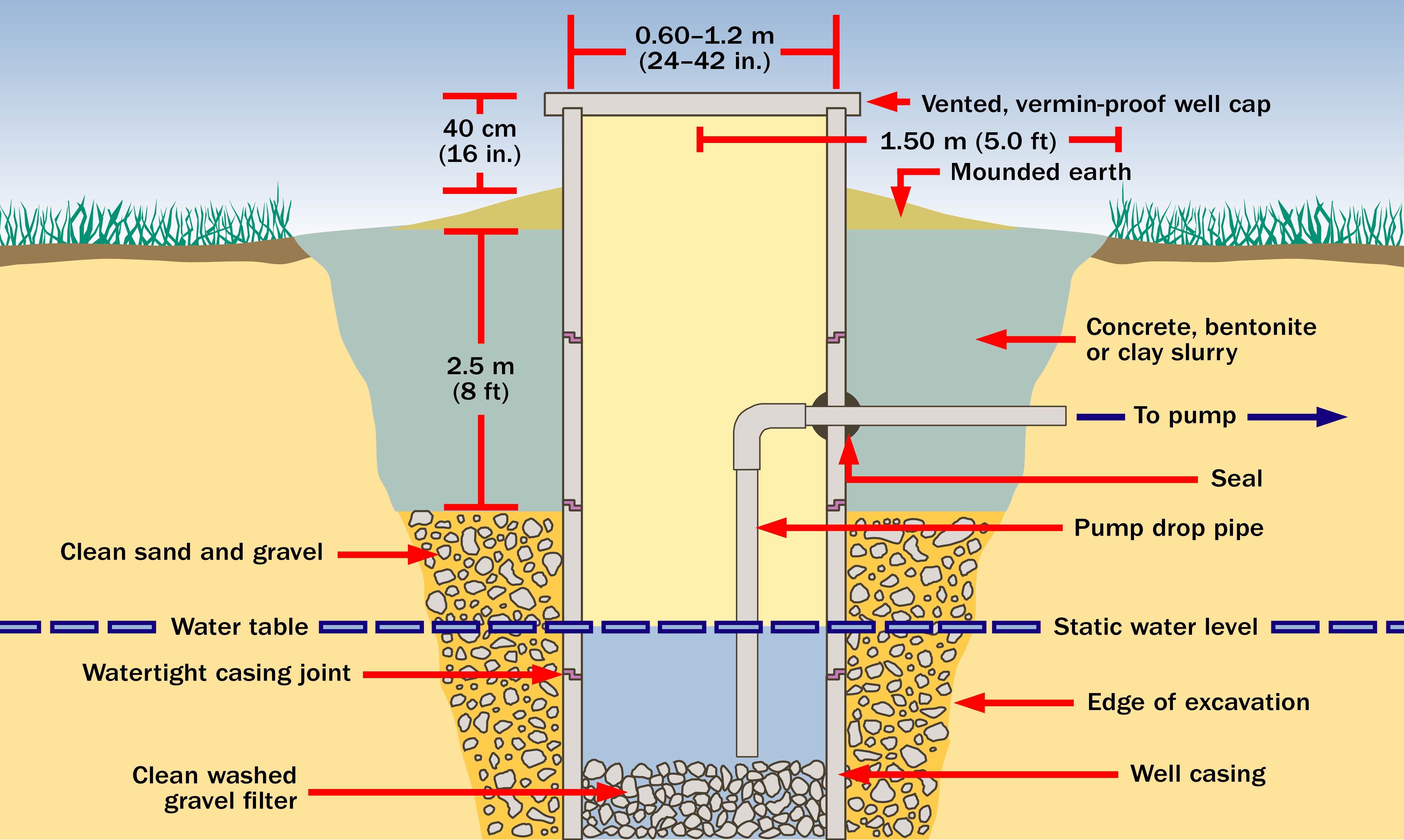 Groundwater Well And Pump
Another trick? Look at your neighbors. If their well runs dry every August, you probably don’t need to match them. If they have a pond-sized pool and a lush lawn, they’ve either got deep pockets or a secret deal with the rain gods. Either way, don’t compete. Just aim for “enough to take a guilt-free shower and fill the dog’s bowl.”
The Hidden Cost: Patience
Nobody talks about the emotional toll. You stand at the edge of your well, bucket in hand, and you wonder, “Is this water going to taste like rocks? Will my wife divorce me if the water pressure is weak?” That’s normal. You are not alone in your well-induced anxiety.
In the end, the answer is simple: put in what you need, plus a tiny bit extra for life’s surprises—a guest staying over, a new plant, a sudden urge to wash the car in June. But don’t go crazy. The earth is generous but not infinite, and your wallet has limits too. Think of your well as a friend, not a gold mine.
So, next time someone asks “How much to put in a well?” smile and say, “Enough to keep the magic flowing, but not so much that it floods your Saturdays.” Then toss them a copy of this article. They’ll nod, laugh, and probably call a professional. Or they’ll just grab a shovel and a prayer, which is honestly how most great stories start anyway.
