What Does A Ro System Do

Let’s talk about water. Not just any water, but the superhero version that comes out of a reverse osmosis system. Ever wonder what that mysterious box under your sink actually...
Let’s talk about water. Not just any water, but the superhero version that comes out of a reverse osmosis system. Ever wonder what that mysterious box under your sink actually does? Buckle up, because we’re about to dive into the wild world of RO—and it’s way more fun than you think.
What Even IS an RO System?
RO stands for reverse osmosis. Sounds like a scientific spell from a wizard, right? In simple terms, it’s a water filter on steroids. It pushes water through a super-fancy membrane that acts like a bouncer at an exclusive club—only water molecules get in.
Everything else? Kicked out. Dirt, lead, chlorine, tiny plastic bits—they’re all left crying at the door. Your glass of water ends up pure and crisp, like it just came from a mountain spring.
Must Read
Why Should You Care? (Spoiler: Your Taste Buds Will Thank You)
Imagine drinking water that tastes like nothing. Wait, that sounds boring. But no—it’s amazing! Bad flavors come from chlorine, minerals, and weird sediment. RO strips all that away, leaving neutral, clean perfection.
Think of it as the silent chef that makes your coffee, tea, and even ice cubes taste 10 times better. One friend described it as “water that finally took off its costume.” I’m not sure what that means, but I agree.
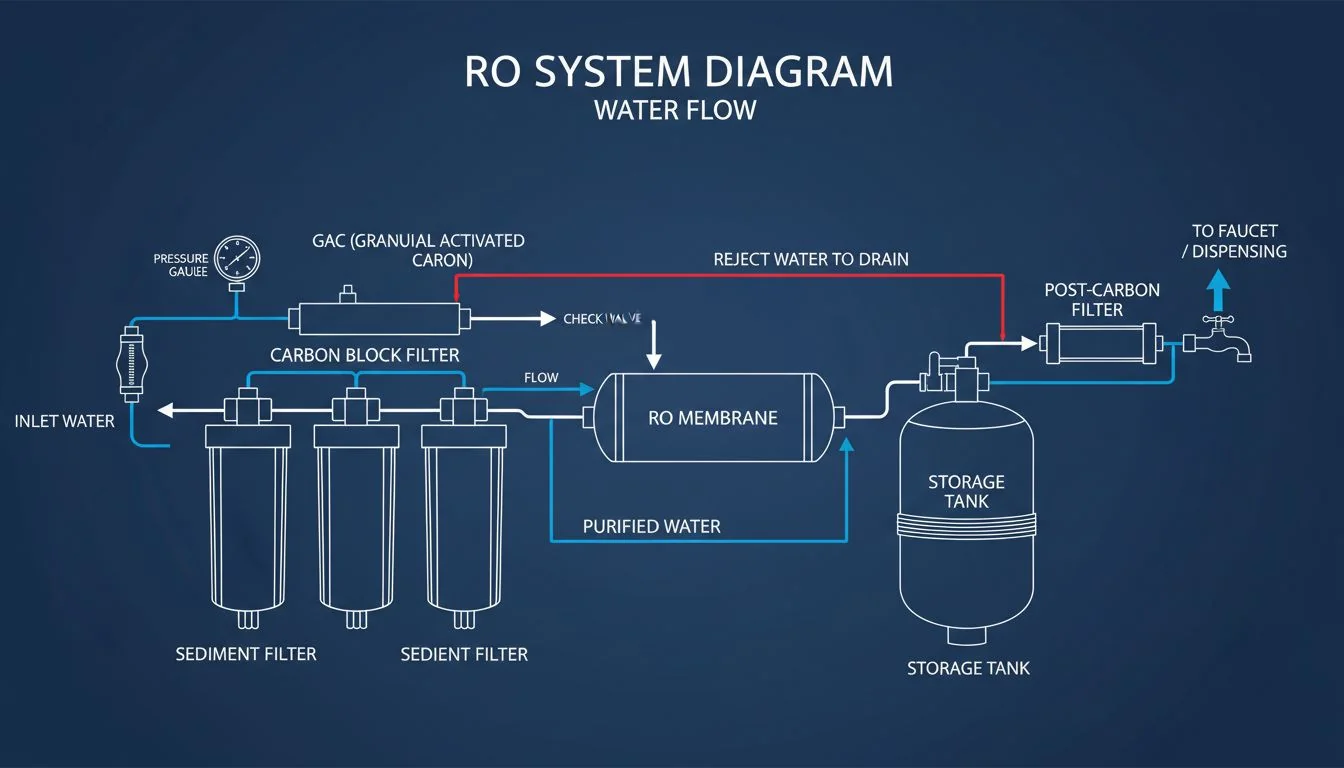
And here’s a quirky fact: RO systems actually reject some water to make the good stuff. You end up with a small stream of “bad water” that flushes away the junk. It’s like the system is saying, “This water isn’t worthy. Next!”
The Secret Superpowers of an RO System
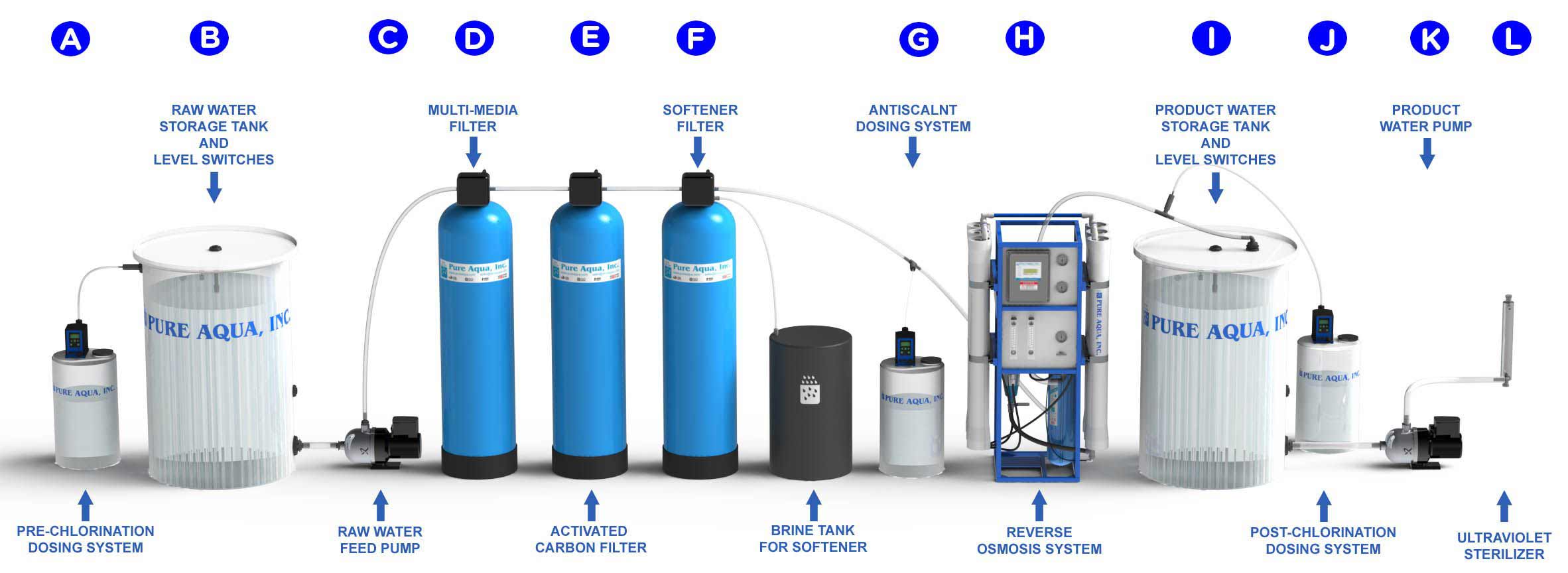
An RO system doesn’t just filter. It multitasks like a ninja. Inside that sleek unit, you’ll find multiple stages. There’s a sediment filter (catches dirt), a carbon filter (grabs chlorine), and then the main event—the reverse osmosis membrane.
That membrane has pores so tiny—0.0001 microns—that it blocks bacteria, viruses, and even salt ions. For perspective, a human hair is about 80,000 microns wide. We’re talking astronomically tiny.
 Process of ro water filter system – Artofit
Fun detail: Some systems even have a “polishing” stage, where a carbon filter gives the water a final shine, like buffing a diamond. Your water becomes fancy, and you didn’t even have to put on a suit.
But Wait, It’s Also a Little Wasteful… and That’s Cool
Okay, real talk: old-school RO systems waste about 3 to 4 gallons of water for every 1 gallon they produce. Sounds bad, right? But modern systems are way smarter. They use permeate pumps or zero-waste tech that cuts waste to nearly nothing.
Some folks get creative—they collect the “reject water” for watering plants or cleaning. Your spider plant doesn’t need ultra-pure water. So you’re basically giving it a spa day. You’re welcome, plant.
And here’s a mind-bender: RO is the same tech used to make astronaut urine drinkable in space. That’s right—the same process that purifies your tap water also helps astronauts recycle their own… well, you get it. Suddenly your kitchen feels very high-tech.
The Fun Part: What RO Doesn’t Do
RO is powerful, but it’s not a magician. It doesn’t remove all contaminants. For instance, it struggles with volatile organic compounds (think gasoline-like molecules) and some pesticides. That’s why many systems add a carbon filter before the membrane.
Also, RO strips out healthy minerals like calcium and magnesium. Some people call this “dead water,” but it’s not that serious. You can always add a remineralization filter to put good stuff back in. It’s like the system says, “Oops, sorry—here’s your calcium back.”
 RO Waste Water: Unveiling the Sustainability Truth
But honestly? If you’re eating a balanced diet, you won’t miss those minerals. Your water is now a blank canvas. Drink it, cook with it, or just stare at it and marvel at science.
Why This Is Just Plain Fun to Talk About
Let’s face it: we’re all a little obsessed with water. It’s the only drink we can’t stop drinking. And an RO system turns that obsession into a science experiment in your sink. You can watch the faucet dribble, hear the tiny gurgles, and imagine the membrane working like a bouncer at a very exclusive chemical party.
Quirky fact: Some RO systems come with a Wi-Fi app. Yes, you can check your water quality from your phone. It’s 2025, and you’re out here monitoring your H2O like it’s a stock portfolio. “Hmm, my TDS just dropped 5 points. Bullish.”
And if you have hard water (that nasty white scale on your faucets), RO fixes that too. No more scrubbing. No more vinegar smells. Just clear, smooth water that doesn’t judge your coffee choices.
The Bottom Line? Your Water Deserves an Upgrade
An RO system doesn’t just make water cleaner. It makes life easier and tastier. You’ll never buy bottled water again—good for your wallet and the planet. Plus, you get to say “reverse osmosis” at dinner parties and sound like a genius.
So, next time you see that mysterious box under the sink, give it a nod. It’s working hard, kicking out impurities, and turning your tap water into liquid luxury. And honestly? That’s pretty rad.
