Does Uv Go Through Water

Okay, let’s get real for a second. You’re floating in a pool, snorkeling in the ocean, or maybe just washing your hands after a sunny walk. And a thought drifts into your head...
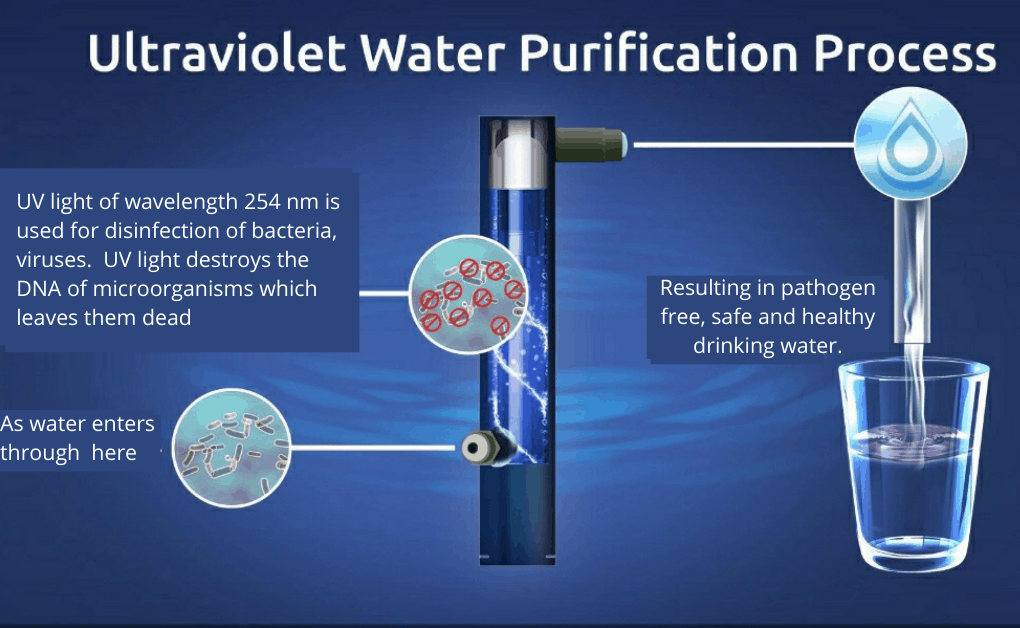
Okay, let’s get real for a second. You’re floating in a pool, snorkeling in the ocean, or maybe just washing your hands after a sunny walk. And a thought drifts into your head: Does UV actually go through water? I mean, we wear sunscreen to block it, but isn't water kind of... see-through?
Let’s start with the short, beach-friendly answer: Yes, UV light absolutely goes through water. But—and this is the cool part—it doesn’t go through all water equally. Think of water like a pair of funky sunglasses: it blocks some rays better than others, and it gets picky depending on how deep you go.
Here’s the science bit, but keep it chill. Sunlight (including UV) is made of different wavelengths. UV-A has the longest wavelength, and it’s the sneakiest. It can travel through water pretty deep—like tens of meters deep. Meanwhile, UV-B (the one that gives you sunburns) is shorter and gets absorbed much faster.
Must Read
So if you’re snorkeling in clear tropical water, guess what? You are still getting UV exposure, even a few feet down. That’s why surfers and divers can get crazy tans (or burns) on their backs and shoulders, even while their faces are wet. The water is not a force field.
Why don’t fish get sunburned?
Great question. And this is where it gets fascinating. Fish don’t sunbathe. Most fish live deep enough that UV barely reaches them. But the creatures that do hang near the surface—like coral, baby fish, and plankton—have evolved some wild tricks. Some produce natural sunscreen compounds called mycosporine-like amino acids (MAA). Sounds fancy, right? It’s basically nature’s SPF 50, built right into their skin.
Meanwhile, you and I have to slather on the stuff from a bottle. The ocean is pretty metal when you think about it: it lets light through, but only if you can handle the heat—or the UV.
 Ultraviolet Icon
What about cloudy water or swimming pools?
Here’s where it gets real-world useful. Clear water lets UV through like a window. But murky water—think rivers, lakes, or that pond with algae—has particles and dissolved stuff that scatter and absorb UV much faster. If you’re swimming in a brown river, you’re getting way less UV than in a crystal-clear sea. Same goes for swimming pools: chlorine doesn’t block UV, but if the water is a little cloudy, you get a tiny bit of protection. Not enough to skip sunscreen, though.
And let’s talk about snow and ice. This is a fun curveball. Snow and ice are actually terrible at blocking UV. In fact, fresh snow reflects up to 80–90% of UV rays right back at you. So if you’re skiing or hiking on a glacier, you’re getting UV from above and below. That’s why mountaineers sometimes get sunburned under their chin.
The coolest part: UV in your glass of water
Now, let’s get personal. You’re sipping a glass of water on your porch. Does UV go through it? Yes, but barely. A thin glass of tap water might block some UV, but not all. A few centimeters of water absorbs most UV-B, but UV-A can slip right through. So if you’re holding a glass of water over your skin on a sunny day, you’re still getting a little UV. It’s not a magic shield—it’s just wet glass.
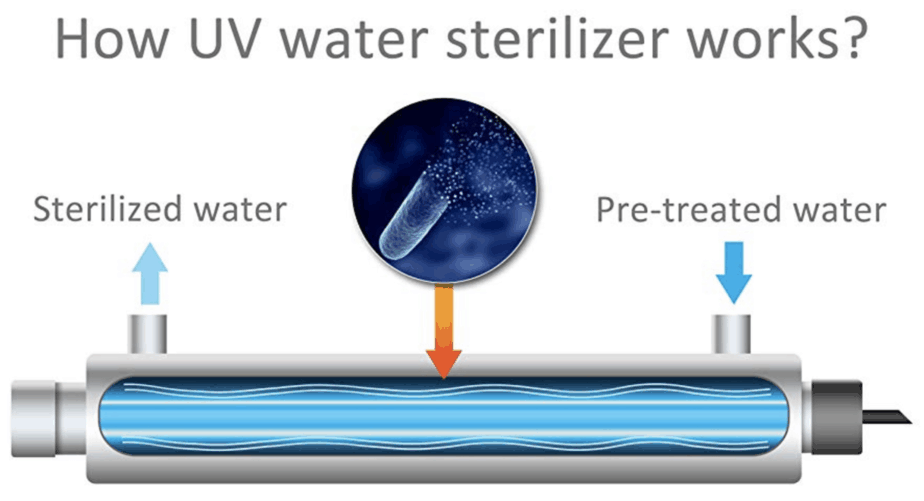 How Does Uv Light Work On Water at Jack Radcliffe blog
This is actually why some water purifiers use UV light to kill bacteria. They shine a specific wavelength (UV-C) through water, and the water is transparent enough for that light to zap germs. But don’t worry—the sun doesn’t make UV-C, so your drinking glass is safe from that.
So what’s the takeaway?
Here’s the one-sentence summary you can tell your friend at the beach: Water is like a weak pair of sunglasses for UV—it helps a little, but don’t bet your skin on it. If you’re in clear water, you’re still getting exposed. If you’re in murky water, you’re safer, but not safe.
Next time you’re floating in the ocean, look down at your own pale legs. That sunlight you see? It’s bringing UV along for the ride. The fish know it, the coral knows it, and now you know it. Wear your sunscreen, even if you’re wet. And remember: water is awesome, but it’s not a superhero. It’s just a very pretty, very sneaky filter.
