How Does Water Well Work

You turn the tap and water comes out, like magic. It’s almost as reliable as that one friend who always shows up with pizza. But have you ever thought about where it actually...

You turn the tap and water comes out, like magic. It’s almost as reliable as that one friend who always shows up with pizza. But have you ever thought about where it actually comes from? Not from a magical pipe to a unicorn’s castle, but from a water well.
Think of a well as a really, really deep cup you left on the nightstand. Except that cup is underground, and instead of leaving it empty, you’re borrowing from a giant, hidden lake. We call that lake an aquifer, which sounds like a fancy brand of bottled water, but it’s just a layer of wet rock and sand.
The whole show starts with rain. Rain falls, runs off your driveway, and eventually seeps down through the soil like a slow-motion sponge. This journey is like your grandma’s secret recipe—slow, patient, and it filters out all the junk along the way.
Must Read
How the Well Actually Gets Built
Somebody has to drill a hole. Usually, a big truck shows up with a giant rotating drill bit that looks like a mix between a hungry mole and a medieval weapon. They drill straight down until they hit that underground lake, sometimes hundreds of feet deep.
Then they drop in a pipe called a casing. This isn’t just any pipe—it’s a straw for the Earth. It keeps dirt and creepy-crawlies from falling into your drinking water. Imagine drinking a glass of water with a worm in it—no thanks.
At the very bottom of the pipe, they add something called a well screen. It’s like a tiny colander that lets only the water in, but keeps the sand and gravel out. Think of it as a bouncer at a club, but for wet sand particles.
The Pump: Your Water’s Personal Assistant
Water won’t just jump up to your faucet on its own. Gravity likes to keep it cozy underground. That’s where the pump comes in, sitting at the bottom of the well like a sleepy submarine driver.
When you turn on the tap, the pump wakes up with a grumble and starts pushing water up the pipe. It’s like your buddy passing you a cold soda from the back of the fridge—except the fridge is 200 feet deep.
Most homes use a submersible pump, which lives entirely underwater. It’s basically a waterproof electric motor. And yes, it’s as wild as it sounds: a motor running underwater, like a toaster in a bathtub, but way safer.
 How Does a Well Work? | Angi
The Pressure Tank: The Secret Stabilizer
If the pump just ran every time you flushed, it would wear out faster than your treadmill after New Year’s. So there’s a pressure tank in your basement or garage that acts like a water battery.
It stores a bit of water under pressure, so when you wash your hands, the tank gives you water first. Only when it gets low does the pump kick on. It’s like having a little coffee stash in your desk drawer before you have to walk to the break room.
If you’ve ever heard your pipes make a sound like a piglet sneezing, that’s your pressure tank doing its job. It’s a friendly noise, like a dog snoring from the next room.
Where the Magic Happens: The Water Table
Not all wells are the same. The water table is the top of the underground lake. In rainy seasons, the water table rises; in droughts, it sinks. It’s like a mood ring for the Earth’s thirst.
If you dig a shallow well, you’re at the mercy of the weather. Your well might run dry during a hot summer, like when you realize you have no ice cubes for lemonade. That’s a bummer.
Deep wells, however, tap into confined aquifers. These are water pockets trapped between layers of rock, like a secret stash between two mattresses. They’re more reliable, but cost more to drill—like buying the deluxe nachos instead of the small bag of chips.
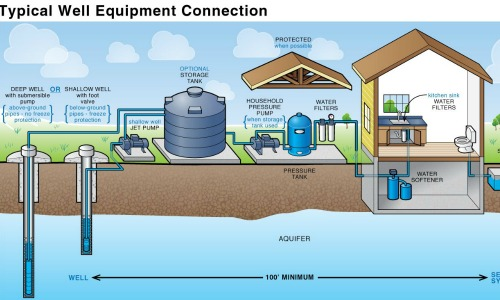 Shallow Water Well Diagram
What Can Go Wrong? (Because Life Loves Drama)
Sometimes your well might “gasp” for air after a long shower. That’s the pump sucking up air because the water level dropped. It sounds a lot like your stomach growling during a boring meeting.
If the power goes out, your well goes on strike. No pump, no water. You suddenly realize how much you take that magic pipe for granted. It’s like when your Wi-Fi goes down and you have to talk to your family.
And then there’s sediment. If the well screen gets clogged, your water might come out looking like tea. You don’t want to brush your teeth with mud, trust me.
Why It’s Kind of Magical
Think about it: you’re drinking water that fell as rain maybe 20 years ago. It has been chilling underground, filtering through sand, having slow conversations with rocks. That’s a long time to wait for a shower.
Your well is like a tiny, silent factory beneath your backyard. It works 24/7 without asking for a pay raise. It doesn’t complain, it doesn’t take vacations, and it only makes noise when something’s wrong.
So next time you drink a glass of water from the tap, raise it in salute. To the rain, the rock, the drill, and the pump. And to that quiet, deep cup in the ground that’s got your back, even when you’re not thinking about it.
