What Is Ph In Water Mean

You’ve probably seen the word pH on a water bottle label or heard someone mention alkaline water at the gym. It sounds scientific, maybe even a little intimidating. But honest...

You’ve probably seen the word pH on a water bottle label or heard someone mention alkaline water at the gym. It sounds scientific, maybe even a little intimidating. But honestly? It’s just a simple measure of how acidic or basic your water is, and understanding it is easier than you think.
Think of pH as a scale from 0 to 14, where 7 is perfectly neutral. Pure water sits right at that 7 mark. Anything below 7 is acidic (think lemon juice at a 2), and anything above 7 is alkaline or basic (like baking soda around 9). Your drinking water usually falls somewhere in the 6.5 to 8.5 range, depending on where it comes from.
Why Should You Care?
You don’t need to obsess over pH to live a healthy life, but it’s fun to know what’s in your glass. Your body is a brilliant machine that keeps its own pH tightly regulated around 7.4, no matter what you drink. That expensive alkaline water won’t magically “balance” you—your lungs and kidneys do that job automatically.
Must Read
Still, pH can affect your experience of water. Water that’s too acidic (below 6.5) might taste metallic or sour, and it can slowly corrode pipes. On the flip side, very alkaline water can feel slippery or taste bitter, like club soda without the bubbles. Most bottled waters are engineered to taste “clean” by hitting that neutral sweet spot.
A Little Science, Made Sexy
Here’s a fun fact: pH stands for “potential of hydrogen.” It measures the concentration of hydrogen ions in a liquid. More hydrogen ions? More acidic. Fewer? More alkaline. Think of it like a party—if ions are guests, a crowd makes things sour, while a mellow room feels basic and calm.
You can even test your tap water at home with a simple kit from a hardware store or online. It costs about ten bucks and feels oddly satisfying—like a CSI moment in your kitchen. Just dip a strip, watch the color change, and compare it to the chart. Instant water detective.
Cultural Sips and Global Trends
In Japan, many people swear by “kangen water” (electrolyzed alkaline water) for better hydration and health. In Europe, sparkling mineral waters with a naturally low pH, like Perrier (around 5.5), are celebrated for their crisp tang. Meanwhile, the alkaline water trend in Hollywood has celebrities sipping from pH 9+ bottles, hoping for anti-aging magic.
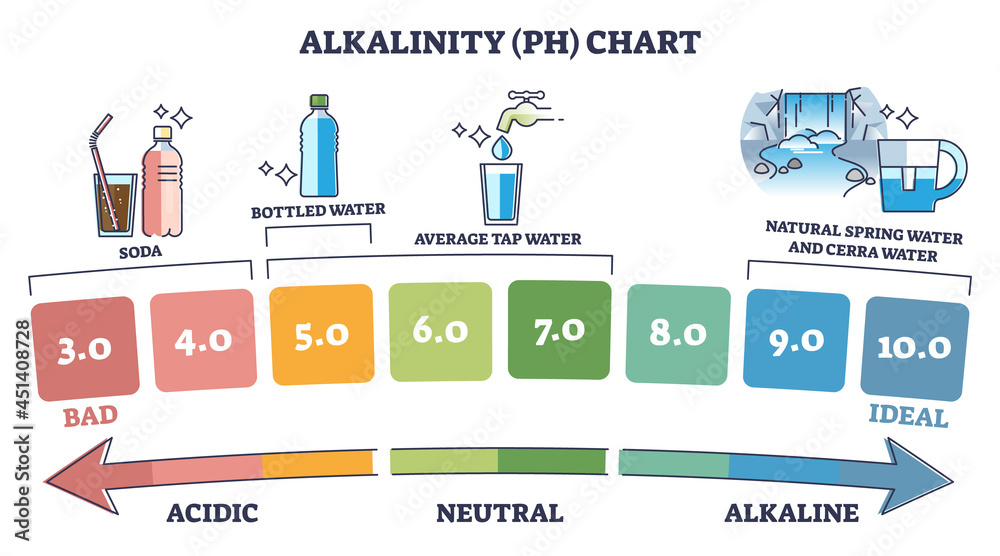 Decoding The PH Chart For Water: Understanding Acidity, Alkalinity, And
The truth? Both ends of the spectrum have their place. Lemon water (acidic) is great for digestion, while a pinch of baking soda (alkaline) can soothe heartburn. Your body handles both just fine. The real focus should be on drinking enough water, period—whatever its pH number.
Practical Tips for Your Daily Glass
If you’re curious about your tap water’s pH, call your local water utility. They publish annual reports for free. For bottled water, check the label or the brand’s website—many proudly list their pH on the bottle. A good rule of thumb: clear, neutral, and consistent is usually best.
Want to nudge your water’s pH at home? Add a slice of lemon or lime to drop the pH slightly (making it more acidic and tangy). Or add a pinch of mineral drops like Trace Minerals to raise pH towards alkaline. Just don’t do this for health miracles—do it because you enjoy the taste or the ritual.
Also, remember that pH alone doesn’t measure water quality. Lead, chlorine, and bacteria are way more important. A high pH won’t save you from dirty pipes. Spend your worry budget on a good filter instead of chasing a number.
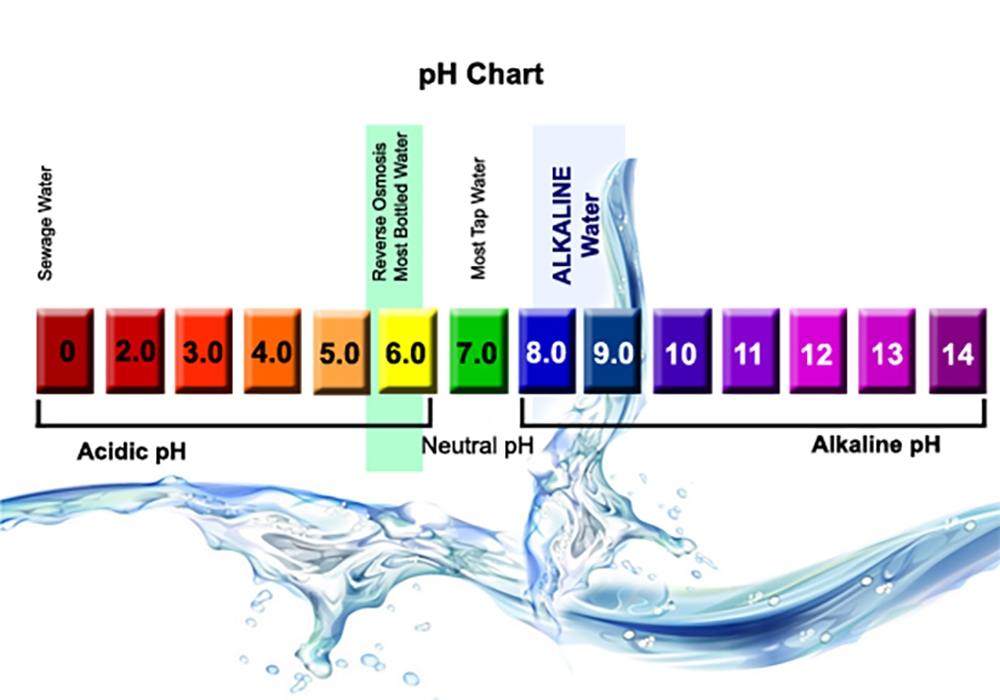 What Is PH In Water? How Much PH Is Good For Drinking Water?
Fun Little Facts to Impress Your Friends
Did you know that rainwater is naturally slightly acidic, around 5.6, because it picks up carbon dioxide from the air? And that the human stomach is one of the most acidic environments on Earth, with a pH of 1.5 to 3.5? That’s why it can dissolve food and kill bacteria. Your water has no idea what’s waiting for it down there.
Another gem: pH is logarithmic. That means a difference of one number (say from 7 to 6) is actually a tenfold change in acidity. So water at pH 5 is ten times more acidic than water at pH 6. Mind-blowing, right? Scale matters a lot more than you’d think.
And for the trivia lovers: the word “alkaline” comes from the Arabic al-qaliy, meaning “the calcined ashes” of plants—early people used ash to make soap. So when you sip alkaline water, you’re tapping into ancient chemistry. Kind of poetic.
A Short Reflection on Daily Life
In the end, pH is a quiet reminder that even the simplest things in life—like a glass of water—have hidden layers. We don’t need to master every detail to enjoy the experience. Just knowing that every sip carries a tiny, invisible dance of molecules can make your routine feel a little more magical.
So next time you fill your glass, take a second to appreciate that liquid in front of you. It’s not just water—it’s a story of balance, chemistry, and your own body’s quiet wisdom. Drink up, stay curious, and let your internal pH do its thing. You’ve got this.
