What Is Tds Water Tester

Picture this: I’m in my kitchen, filled with the smug confidence of a man who just bought a fancy water filter. I pour myself a glass, hold it up to the light, and take a long...
Picture this: I’m in my kitchen, filled with the smug confidence of a man who just bought a fancy water filter. I pour myself a glass, hold it up to the light, and take a long, proud sip. Then my friend, the insufferable gadget guy, whips out a small plastic pen, dips it in my "perfect" water, and watches the screen light up with a number. He just shakes his head and mutters, “You’re drinking from a puddle, my friend.” That, right there, was my first introduction to the TDS water tester—a device that humbled me in two seconds flat.
So, What the Heck Is TDS?
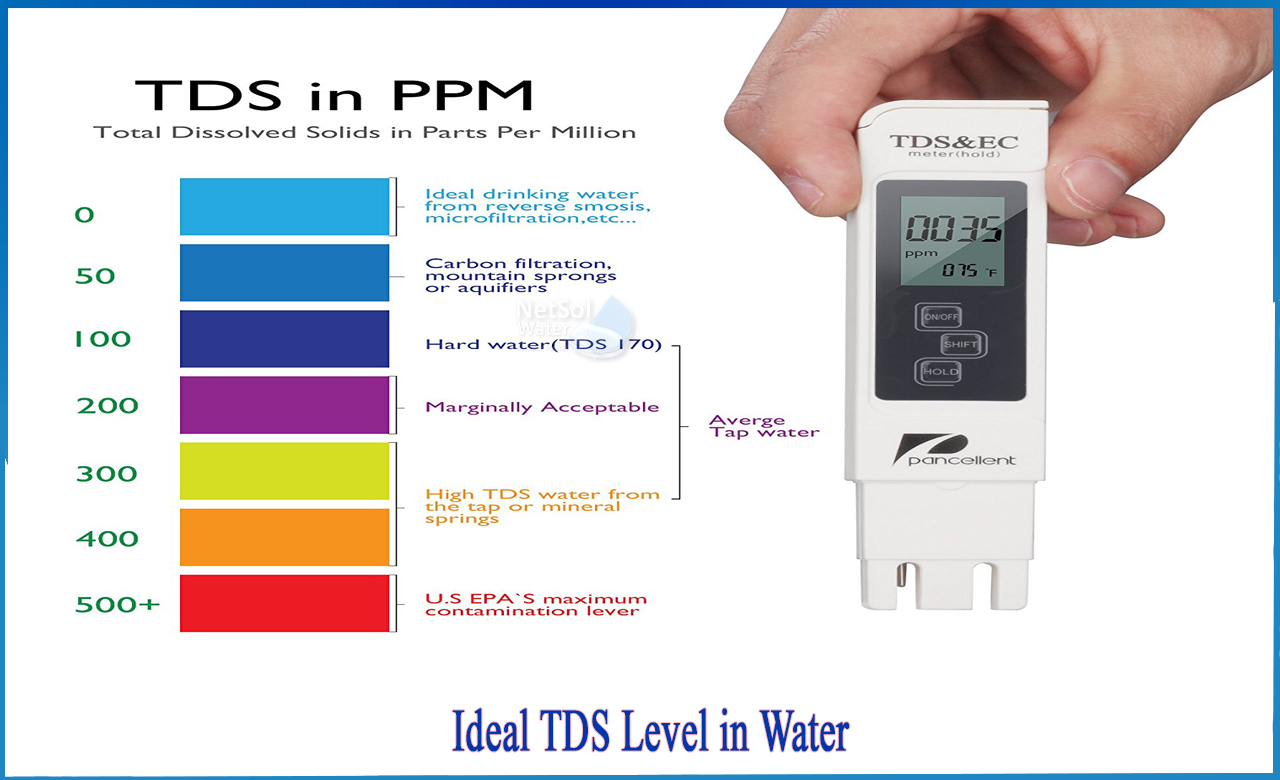
TDS stands for Total Dissolved Solids. It’s a fancy way of saying “everything that’s in your water that isn’t H2O.” Think minerals, salts, metals, and the occasional trace of whatever that weird pipe in your basement is made of. A TDS water tester is essentially a little digital stick that measures the electrical conductivity of your water. The more crud floating around, the higher the number it spits out. And yes, before you ask, it does work on tap water, well water, and even that bottled stuff you paid $3 for at the airport.
Why Should You Care? (Spoiler: It’s Not Just for Nerds)
Look, I’m not saying you need to become a water sommelier overnight, but ignorance is not bliss when it comes to hydration. A high TDS reading often means hard water, which leaves chalky scale on your coffee maker and dries out your skin in the shower. On the flip side, a very low TDS reading might mean your water is too “pure,” stripping out healthy minerals your body actually wants. (Yeah, I know—you can’t win either way, can you?)
Must Read
For the paranoid among us, a TDS tester is a cheap lie detector. Did your expensive reverse osmosis filter actually work? Test it. Is your landlord promising “filtered” water? Test it. Just dip, press the button, and let the cold, hard numbers settle the argument. It’s like a polygraph for your faucet.
The Magical Number: What’s "Good" Water, Anyway?
Here’s where it gets messy, and I love that. Water quality snobs argue about this constantly. Generally, a reading of 0–50 PPM (parts per million) is considered “purified” water—think distilled or RO. Land water, from a tap, usually sits between 100–300 PPM in a decent area. When that number creeps past 500 PPM, you’re starting to drink something that tastes a little… minerally. And above 1000 PPM? That’s legally questionable in some places. (Don’t drink it. Just don’t.)
But here’s the kicker: low TDS does not equal safe water. A glass of cyanide solution might read 50 PPM, and a glass of healthy spring water might read 200 PPM. The tester measures quantity, not quality. It won’t tell you if you’ve got bacteria, lead, or microplastics. (So keep that Brita filter, just know it’s not a magic wand.)
 How to Reduce TDS in Water for a Cleaner, Tastier Drink
How to Use One Without Looking Like a Fool
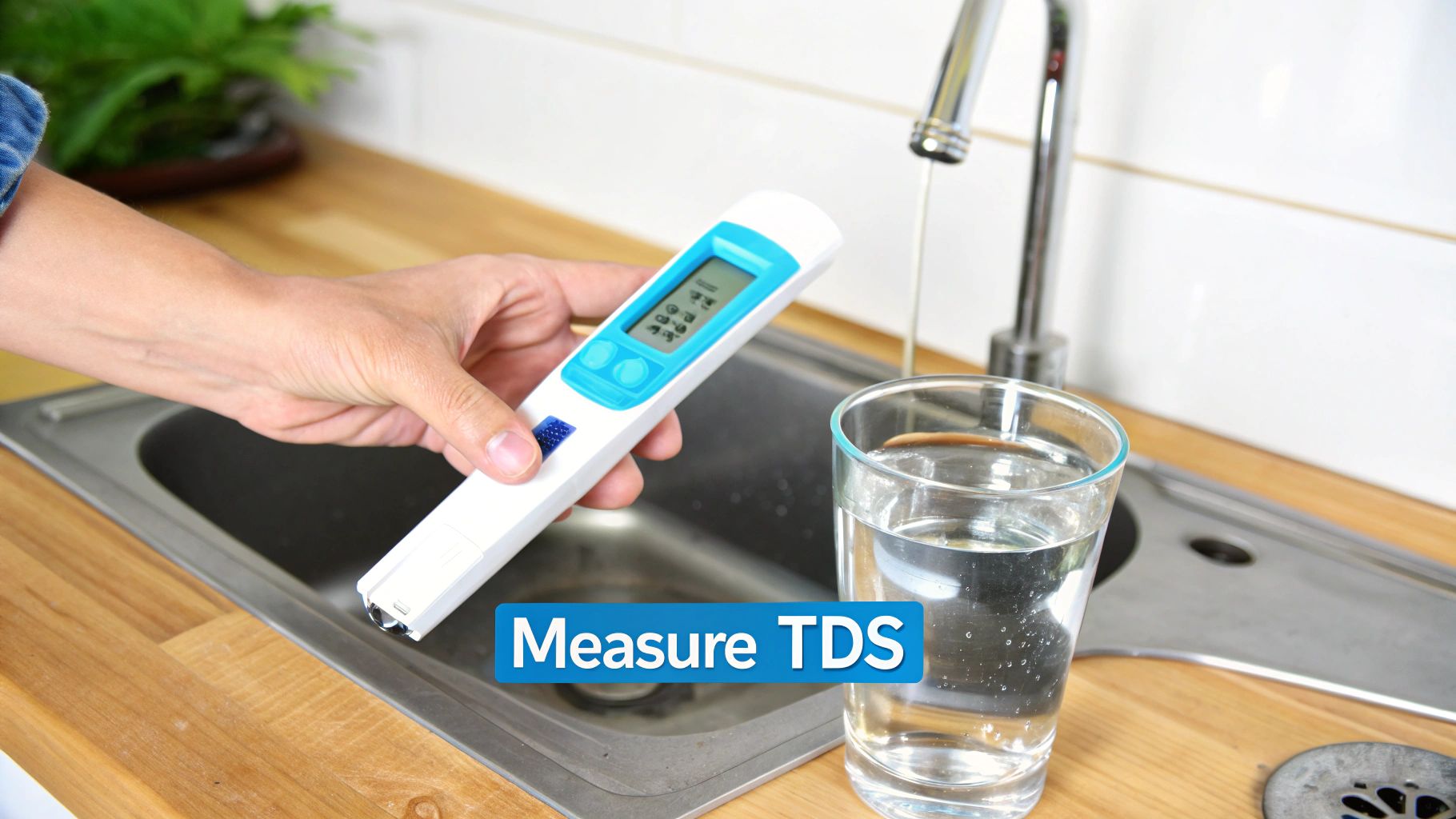
Buy a digital TDS meter for about $10–15 online. They’re tiny, battery-operated, and look like chunky thermometers. Remove the cap (important step, I’ve seen people skip it), dip the metal probes into a glass of water, and wait a few seconds. The screen flickers, then stabilizes on a number. That’s it. You are now a citizen scientist. You can even test your aquarium, your fish tank, or—if you’re feeling adventurous—the water in your neighbor’s pool at 2 a.m. (Don’t ask.)
A quick tip: rinse the probes with distilled water between tests. Otherwise, you’ll contaminate your samples. And please, don’t test hot water. Heat ruins the sensors, and you’ll buy a new one faster than you can say "mineral deposits."
The Irony of the "Pure Water" Obsession
Here’s the funny part. Some people buy a TDS tester, get a reading of 10 PPM from their reverse osmosis system, and celebrate like they just won the lottery. Meanwhile, they’re drinking water so stripped that it tastes flat and actually leaches minerals from your body. You are not a chemistry lab. You are a human. You need some calcium and magnesium. The "purest" water isn’t the best water; it’s just the emptiest. Ironic, right?
 Total Dissolved Solids: Understanding Water Quality Indicators – Water
I now keep my TDS tester in the kitchen drawer next to the garlic press. It surfaces every time I change a filter or when a guest brags about their "spring water." I let them test it. Nine times out of ten, it’s just glorified tap water. And I nod silently, like a wise water witch.
Final Gawp: Is This Thing Even Worth It?
Honest answer? Yes, if you’re curious or a bit OCD about your filters. No, if you’re expecting a complete water safety report. It’s a quick reality check—a $10 truth serum for your pipes. It won’t save your life, but it will save you from paying for expensive “purified” water that’s basically the same as your tap. The best use? Knowing when to descale your kettle before the white flakes invade your morning tea.
So grab one. Dip it. Let the number start a new kind of kitchen argument. And remember: that little plastic stick doesn’t judge. It just measures. But you will judge yourself when you realize you’ve been drinking from a garden hose for the last four years.
