How To Change A Co2 Tank

So there I was, on a Tuesday that had no business being this chaotic, staring at my suddenly-dead soda stream like it had personally betrayed me. The hiss that usually promise...

So there I was, on a Tuesday that had no business being this chaotic, staring at my suddenly-dead soda stream like it had personally betrayed me. The hiss that usually promised fizzy glory was just a sad, wet whisper. My roommate, bless his chaos-magnet heart, had unscrewed the thing while I was at work, leaving a half-empty tank to gasp its last breath. I honestly considered just drinking flat water and mourning my lost carbonation. But then I remembered: I’m an adult, and adults change their own CO2 tanks. (Or at least, they panic-watch a YouTube tutorial and then do it.)
If that sounds familiar, welcome to the club. Changing a CO2 tank—whether for a kegerator, a seltzer maker, or a planted aquarium—is stupidly easy, but only if you don’t overthink it. The moment you treat it like rocket science, you’ll strip a thread or lose the contents of a full tank in a spectacular, foggy hiss. Trust me, I’ve been that guy. Let’s skip that part.
The Golden Rule: Shut It Down First
Before you even look at the old tank, close the main valve. You know, the big wheel on top? Turn it clockwise until it stops. This is non-negotiable. Do not skip this step, unless you enjoy the sound of pressurised gas escaping at the speed of sound and the cold burn of frostbite on your fingers.
Must Read
I’m serious—I once forgot to close the valve on a 20-pound tank, and the resulting mist cloud looked like a magical entrance to Narnia, but cold. And loud. And expensive. Close the valve. Your wallet will thank you.
Bleed the Line (Yes, It Sounds Scary)
Now, crack the line open. This means turning on the regulator or the disconnect lever for just a second to release any leftover pressure. You’ll hear a short hiss—that’s normal. That’s the gas that was trapped in the hose. If you skip this, you’ll fight the pressure when you try to unscrew the old tank, and you’ll probably end up wrenching the threads. Nobody wants cross-threaded hardware. That’s how appliance marriages end in divorce.
Pro tip: do this in a well-ventilated area. CO2 is heavy and can pool in low spots. You don’t need to be dizzy because you were too lazy to open a window. (Hi, I’m the reason that warning exists.)
The Great Unscrewing
Here’s where people get anxious. Use your hands first. Most connections are hand-tightened. If it’s too tight, grab a crescent wrench—but gently. The fittings are brass, and brass is soft. You are not the Hulk. I watched a buddy try to “show the tank who’s boss” and he rounded the nut off completely. That ended our brew day early.
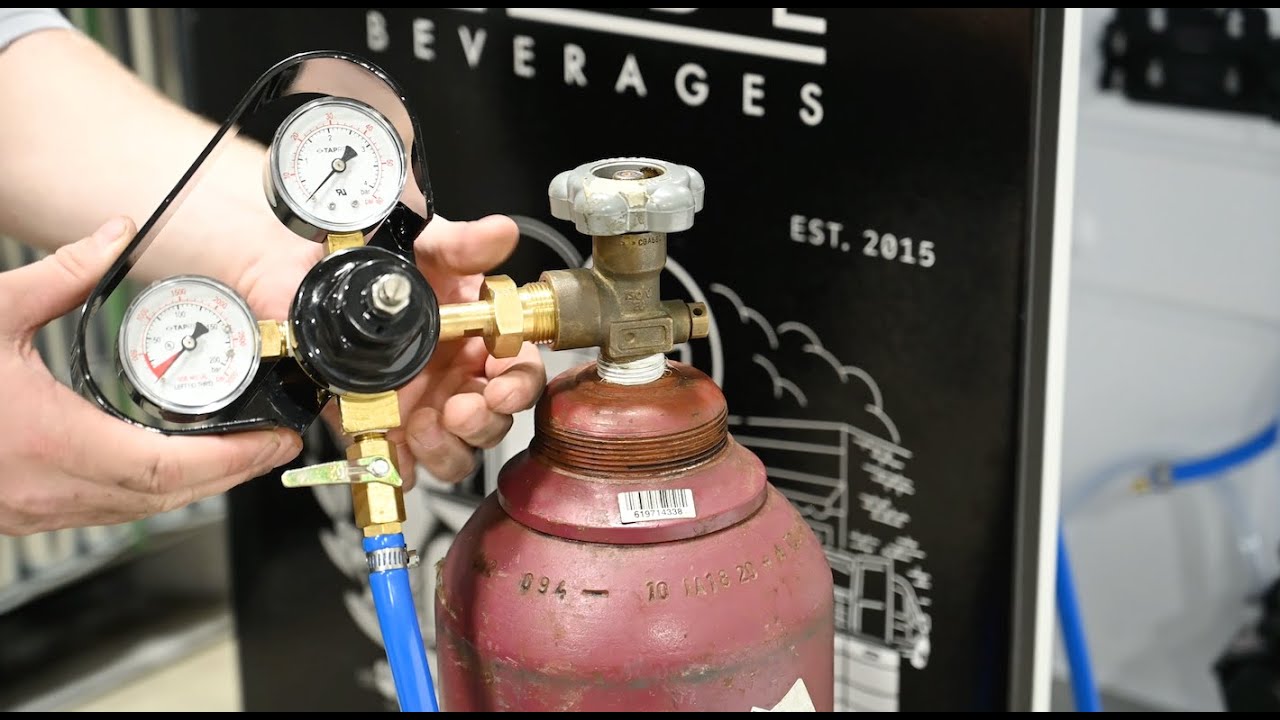 How to Change Nitrogen and CO2 Tanks - YouTube
Unscrew counter-clockwise. The whole tank might spin with the fitting. That’s fine—grab the tank body with one hand and the nut with the other. It’s like waltzing with a metal cylinder. Awkward, but effective.
When the Old Tank is Free
Set it aside. Do not throw it away, you monster. CO2 tanks are refillable. Many hardware stores, paintball shops, or homebrew supply shops offer swaps. You pay for the gas, not the metal. Treat that empty tank like a library book you returned late—just hand it over gracefully.
The New Tank: Check the Seal First
Look at the top of the new tank. See that little plastic cap? Take it off. Now look inside the brass fitting—the one you just unscrewed. There should be a white nylon or rubber O-ring. If it’s cracked, dried out, or missing, do not connect the tank. A $0.50 O-ring failure will waste $30 worth of CO2 in ten seconds. Speakers, I carry spares in my junk drawer. That level of preparedness is what separates the fizzy from the flaccid.
If it’s damaged, run to the hardware store for a replacement. Part number BS-160 or similar; bring your old one to match. This is not a time for guessing games.
 🔴 How to Take Off Co2 Regulator and Replace Co2 Tank - YouTube
The Connection (Finally)
Screw the regulator or line onto the new tank by hand, clockwise. Hand-tight is tight enough. Use a wrench for the last quarter turn at most. Any more, and you risk cracking the body of the regulator. I know you want to feel that satisfying “click” of finality, but resist. Snug is perfect.
Now—very slowly—open the main valve on the new tank. A quick burst of gas can hammer your regulator and damage it. Go slow, like you’re petting a cat that might bite. Once the valve is open, take a moment to sniff around the connection. If you smell rotten eggs, you have a leak. (CO2 is odorless; the smell is added as a safety warning.) Tighten a hair more and re-sniff.
The Victory Sip
Crack the line open again to pressurize the system. Listen for hissing. If it’s silent, you won. Pour yourself that carbonated whatever-you-wanted. I drank a seltzer so fizzy it made my eyes water, and I owned that burn. You’ve earned it.
And next time your roommate touches your tank unannounced? Hide the allen wrenches. Or better, teach them this same spiel. Sharing is caring, but only when you both know how to not create a fog machine indoors.
