How To Find A Water Leak

Let’s be honest—nobody wakes up thinking, “I sure hope I find a water leak today!” It sounds about as fun as finding a hole in your favorite jeans. But here’s the thing: a sma...
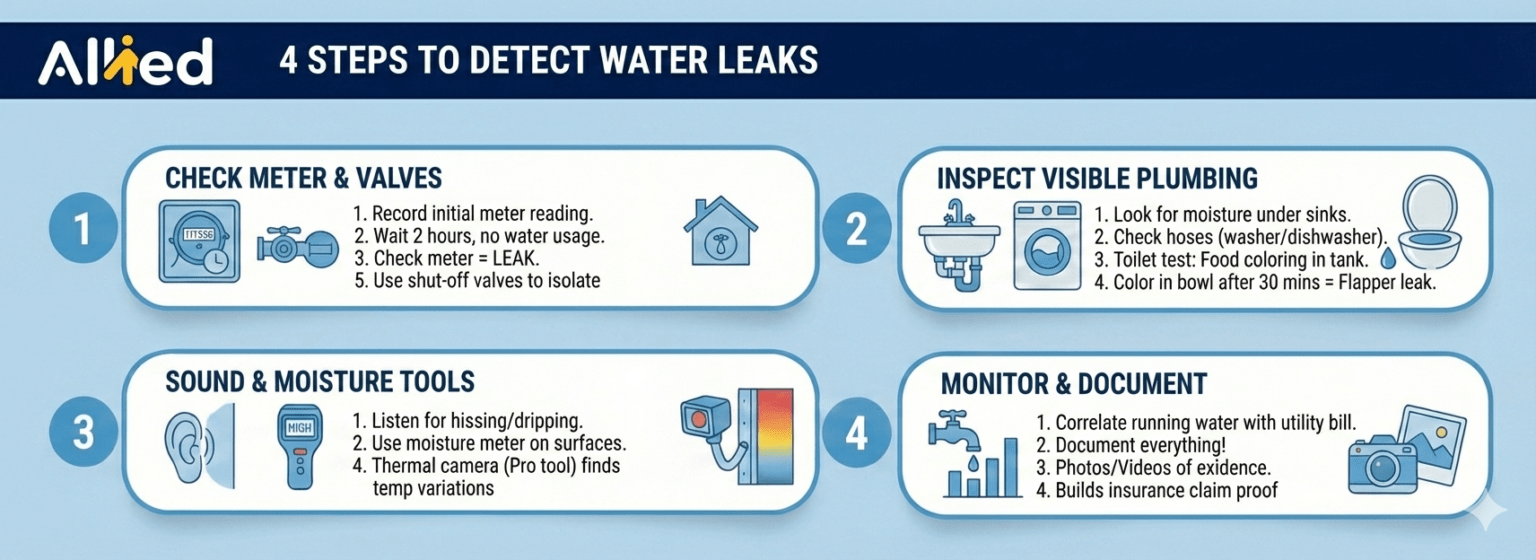
Let’s be honest—nobody wakes up thinking, “I sure hope I find a water leak today!” It sounds about as fun as finding a hole in your favorite jeans. But here’s the thing: a small leak can turn into a soggy disaster faster than you can say “plumber’s bill.” Think of it like a tiny drip in the middle of the night—it’s annoying, but if you ignore it, that drip becomes a waterfall in your living room.
Why should you care?
Imagine your water bill suddenly looking like you’re filling a swimming pool every month. That’s what a sneaky leak can do—it costs you money you’d rather spend on pizza or a new book. Plus, excess moisture can lead to mold, which is about as welcome as a surprise visit from your in-laws during a Netflix binge. Finding a leak early saves your wallet, your walls, and your sanity.
The good news? You don’t need a detective badge or a plumbing degree. Most leaks leave clues, like a breadcrumb trail, but for water. Let’s walk through the simple, everyday ways to spot one before it becomes a crisis. You’ve got this.
Must Read
Start with your ears and eyes
Have you ever heard a faint drip-drip-drip when the house is quiet? Don’t shrug it off—that’s your water system whispering, “Hey, I’m broken!” Pause the TV, listen near sinks, toilets, and radiators. Sometimes a leak sounds like a gentle hiss from a pipe, like a snake that’s not scary, just annoying.
Look for water stains on ceilings or walls—they often look like yellowish-brown coffee rings. If you see a bubble in the paint or wallpaper, that’s water hiding behind it, like a shy ghost waiting to say “Boo!” to your home decor.
The toilet test (it’s easier than you think)
Toilets are secret water wasters. Drop a few drops of food coloring (or a dye tablet) into the tank, and don’t flush for 15 minutes. If color seeps into the bowl without flushing, you have a silent leak—and it’s wasting gallons a day. Your toilet is basically crying in slow motion.
This trick is so simple, you can do it while brushing your teeth. It’s like a magic trick, but the result is savings, not rabbits. If you see color, replace the flapper—it’s cheap and takes five minutes.
 Water Softener Maintenance: Ultimate Guide to Longevity & Performance
Check the obvious spots: under sinks and around appliances
Grab a flashlight and peek under your kitchen and bathroom sinks. Look for dampness, small puddles, or rust on the pipes. Even a tiny puddle is a clue—water doesn’t just hang out for fun. It’s like finding a wet sock under your bed; you know something’s off.
Also, check behind your washing machine, dishwasher, and fridge (if it has an ice maker). These appliances are leak magnets. Run a cycle and watch for drips—it’s like a spy mission, but with soap and water. A slow drip here can warp your floorboards over time.
The meter method: your superpower
This one feels like a secret weapon. First, turn off all water in your house—no taps, no flushing, no ice makers. Then, go outside to your water meter (usually a little metal box near the street). Look at the dial; if it’s still spinning, water is moving somewhere. It’s proof you have a leak, even if you can’t hear it.
If the dial moves slowly, you might have a tiny leak. If it spins like a carnival wheel, call a plumber fast. This trick works even if you’re not handy—it’s just reading a weird little clock. You’ll feel like a detective with a badge.
What about that weird green grass?
Outdoor leaks are sneaky, too. If one patch of your lawn is unusually lush and green while the rest is brown, you’ve got a water leak underground. It’s like your yard is giving you a thumbs-up for a problem you didn’t know you had. The grass is literally drinking your money.
 How to Find a Water Leak Inside a Wall - Trojan Plumbing
Also, check for soggy spots along the path from your house to the street. Walk barefoot—if you feel squishy ground where it should be dry, you’ve found a sneaky underground drip. That’s a job for a pro, but now you know.
When to call in backup
If you’ve done all this and still hear dripping, or if water appears in a wall, don’t play tough. Call a plumber—they have fancy tools like listening disks and cameras. It’s like calling in a superhero, but with a van and a toolbelt. Save yourself the headache of a burst pipe at 3 a.m. in your pajamas.
Remember, finding a leak early saves you from the drama of ruining a floor or a family photo album. You already have enough problems—like deciding what to watch on TV. A leak shouldn’t be one of them.
You’ve got the tools—go find it!
Think of this as a little adventure, not a chore. You’re the hero of your own home, saving water and cash one drip at a time. Plus, you’ll feel amazingly smart when you catch a leak before it does damage. Share your detective story with a friend—you’ll be the cool, leak-aware person they call for advice.
So next time you hear a drip, smile. Now you know exactly what to do. Grab a flashlight, check the toilet, and listen. Your home—and your wallet—will thank you. And hey, you might save a few gallons for a rainy day (the good kind).
