How Does Well Get Water

You wake up, stumble to the sink, and twist the handle. Water flows, clear and cold—a modern miracle we barely register. But for millions of people, that same glass of water s...
You wake up, stumble to the sink, and twist the handle. Water flows, clear and cold—a modern miracle we barely register. But for millions of people, that same glass of water starts its journey not from a pipe, but from deep underground, pulled up through the centuries-old magic of a well.
Forget the fairy-tale image of a wooden bucket dropping into a dark hole. Today’s wells are engineering marvels that tap into hidden rivers called aquifers—the Earth’s natural underground sponges. It’s a system that’s been quietly quenching human thirst for over 8,000 years.
The Hidden River Beneath Your Feet
Right now, under the park, the parking lot, and your neighbor’s lawn, there’s a vast, slow-moving body of water. It’s not a lake down there; it’s water filling the tiny spaces between rocks, sand, and gravel—this is the aquifer.
Must Read
Think of it as a giant, underground reservoir that’s been recharged by rain for centuries. To get that water, you need a well, which is basically a straw sunk into the earth.
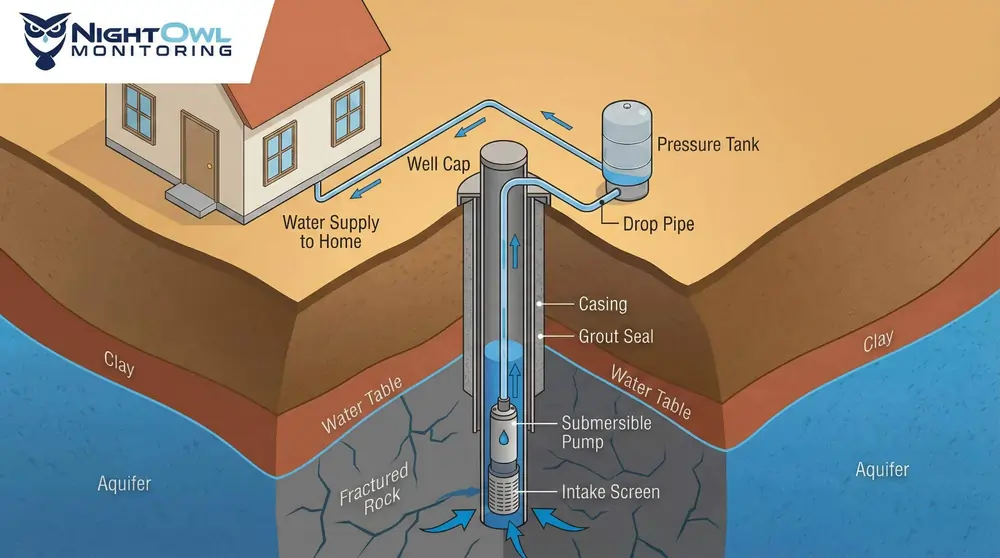
Here’s the simple breakdown: a well is a hole dug or drilled deep enough to reach below the water table—the top of the aquifer. Then, a pump (manual or electric) creates suction to pull the water up into your home.
Step 1: Drilling into the Dark
Modern wells aren’t dug with shovels; they’re drilled using massive rigs that can punch through rock and soil. It’s loud, dusty, and surprisingly fast—often done in a single day.
The drill creates a hole about six to eight inches wide, lined with a steel casing to prevent dirt and surface contaminants from getting in. A screen at the bottom keeps out the sand and gravel while letting water flow freely.
Fun fact: the deepest well ever drilled wasn’t for water but for science—the Kola Superdeep Borehole in Russia goes down 7.5 miles. That’s deeper than the Mariana Trench.
Step 2: The Pump That Never Sleeps
Once the hole is ready, a submersible pump is lowered down, the kind you’d see in a sci-fi movie. This pump sits at the bottom, pushing water up through a pipe to your house.
For shallow wells (under 25 feet), a simpler jet pump at the surface does the trick using suction. Either way, the system runs silently until you turn on a tap—then it springs to life with a faint hum.
Practical tip: if your power goes out, hand pumps or backup generators are your best friends. Otherwise, it’s bucket time—just like your great-grandparents did it.
 How Does a Water Well Work? From Aquifer to Faucet Explained
Is Well Water Better Than Tap?
Well water has a reputation for being “natural” and mineral-rich, and it’s true: it often contains calcium, magnesium, and potassium. That can make it taste crisp and slightly sweet.
But here’s the catch: Mother Nature doesn’t filter out bacteria, nitrates, or heavy metals. That’s why well owners must test their water annually and install whole-house filters if needed.
Cultural reference alert: In rural Ireland, wells are considered holy sites, visited for blessings and cures. The famous St. Brigid’s Well is still a pilgrimage spot where people leave ribbons and prayers.
The Secret Life of Aquifers
Aquifers don’t refill instantly. A heavy rain might take years to centuries to percolate down to the deep water you’re drinking. The Ogallala Aquifer in the U.S., which waters half of America’s wheat and corn, is being drained faster than it can recharge.
That’s why modern wells come with “safe yield” limits—a fancy term for not sucking more than the Earth can give back. Smart well owners monitor their water level with a simple dip tape.
Fun little fact: some wells in the Sahara Desert draw from water that fell as rain 20,000 years ago. You’re literally sipping the last Ice Age.
Practical Tips for the Curious Homeowner
Thinking of buying a property with a well? First, get a water quality report from a certified lab. Check for coliform bacteria, nitrates, and pH levels—it’s cheaper than a surprise stomach ache.
Second, listen to your well. Gurgling sounds or air in the lines mean the pump might be struggling. Strange smells (rotten eggs = sulfur, metallic = iron) are your well talking to you.
 Sanitary Well Labelled Diagram
Finally, protect your wellhead. Keep it at least 50 feet from septic tanks, fertilizer piles, and pet waste. Rainwater running into the casing is a recipe for trouble.
The Romance of the Well
There’s an undeniable poetry to having your own water source. It’s a quiet rebellion against the municipal system—a direct connection to ancient rain and deep rock.
In literature, the well is always a symbol: of life, of secrets, of the depths we can’t see. From the well where the demon hides in Japanese folktales to the wishing well that grants coins—it’s a threshold between worlds.
Practical reflection: next time you fill a glass from your tap, imagine the journey. The water you drink may have started as a drop on a dinosaur’s nose, filtered through a mile of stone, then hoisted by a pump you never see. That’s not just hydration; that’s a history lesson.
What This Means for Your Morning Coffee
When you brew a pot of coffee with well water, the minerals affect the flavor. Hard water (high calcium) can make coffee taste flat; soft water lets the notes shine. Fancy coffee shops obsess over this.
So, if your morning java tastes a bit off, it might not be the beans—it’s the well. Consider a water softener for your kitchen tap, and you’ll suddenly taste the difference.
Final fun fact: the world’s oldest known well is in Cyprus, dating to 9,000 BC. It was dug using deer antlers and stones. Humans have been chasing water for a very, very long time.
A well isn’t just plumbing. It’s a pact with the planet—a reminder that beneath the concrete and the noise, there’s a slow, patient river waiting. And every time you drink, you’re tapping into that ancient conversation.
So go ahead. Pour yourself a glass. Notice the clarity. That’s not just water—it’s a story that’s been rewriting itself for millennia.
