Does Ro Remove Nitrates

So the other day, my friend Dave, a self-proclaimed “water snob,” calls me up in a panic. He just spent a small fortune on a Reverse Osmosis system for his kitchen, convinced...

So the other day, my friend Dave, a self-proclaimed “water snob,” calls me up in a panic. He just spent a small fortune on a Reverse Osmosis system for his kitchen, convinced it would turn his tap water into liquid gold. He took a triumphant sip, then squinted at the box: “Does it… remove nitrates?” he whispered. I could almost hear him googling furiously on his phone.
And that, my fellow hydration enthusiasts, is the million-dollar question: Does RO actually remove nitrates? Or did Dave just buy a very expensive paperweight? Let’s dive into the science, but I promise to keep the chemistry puns to a minimum. (Okay, maybe one or two).
The Short Answer: Yes, It Does—and Here’s the Kick in the Teeth
Spoiler alert: Yes, RO does remove nitrates. Very effectively, in fact. We’re talking about a 90% to 97% removal rate, which is pretty darn impressive for a machine that mostly just pushes water through a fancy filter. But—and this is the ironic part—it only works if you have the right setup.
Must Read
You see, nitrates are tiny molecules. They’re not like the big, chunky sediment that gets caught by a coffee filter. They slip right through standard carbon filters. That’s why RO uses a semi-permeable membrane, a microscopic sieve that forces even those sneaky nitrate ions to tap out and go down the drain. (Spoiler: they literally go down the drain as brine).
But Wait—Hold Your Tap Water
Here’s where Dave almost threw his RO unit out the window. If you buy a cheap “RO system” from a shady website, it might only come with a sediment filter and a carbon block. That will not touch nitrates. You need the actual RO membrane—the heart of the system—to be present and accounted for. Check the box, people. Don’t be a Dave.
Also, water pressure matters. If your water pressure is low (below 40 psi), the RO membrane gets lazy. It might only remove 70% of nitrates instead of 95%. That’s like having a bouncer who only checks IDs every third person. Not ideal. A booster pump can fix that, but it’s an extra cost.
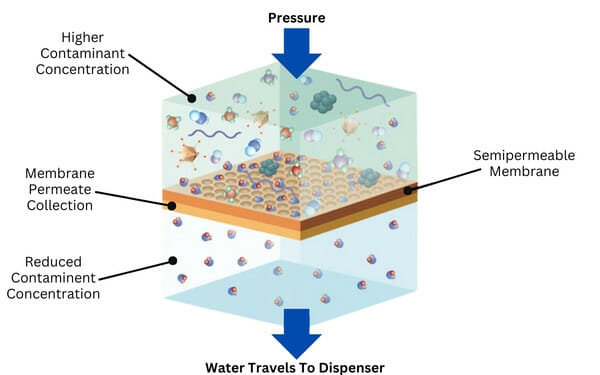 Does Reverse Osmosis Remove Nitrates From Water?
Wait, Why Should I Even Care About Nitrates?
Let’s get real for a sec. Nitrates aren’t the scariest poison in your tap water. They’re not radioactive, and they don’t make your skin glow green. But in high concentrations (usually from agricultural runoff or old septic systems), they can mess with your body’s oxygen transport. For adults, it’s mostly annoying. For infants under six months, it can cause “blue baby syndrome”—no joke.
So if you live in a farming area or have a private well, RO is your best friend. Boiling water? That actually concentrates nitrates. Crazy, right? You’d be boiling them into a nasty nitrate soup. Only RO physically pushes them out.
One More Thing: The “Waste” Factor
Let’s address the elephant in the kitchen: RO systems are water hogs. For every gallon of purified water you get, they dump about three to four gallons down the drain as “reject water.” That’s a lot of H2O to waste just to kick out some nitrates. It feels a bit like using a fire hose to water a single orchid.
But here’s the counterpoint: you can collect that reject water and use it for watering plants, washing dishes, or flushing toilets. Is it ironic that the “waste” water is still cleaner than most tap water? Yes. But don’t drink it—the nitrates are still in there. Just give it to your ficus. It won’t complain.
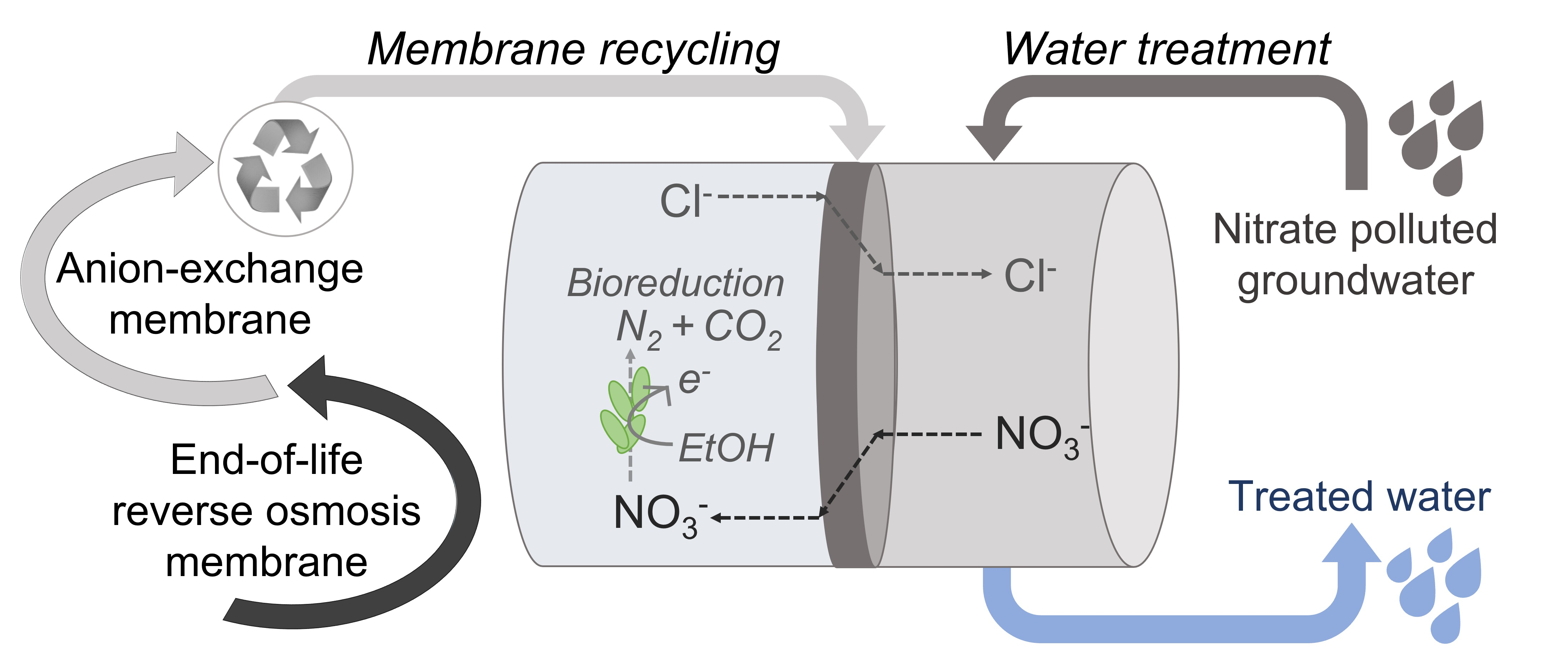 Nitrate Removal by Donnan Dialysis and Anion-Exchange Membrane
The Verdict: Should You Buy an RO System for Nitrates?
If you’re worried about nitrates, yes, RO is the gold standard. Not carbon filters. Not pitchers. Not “ion exchange” gadgets from Instagram ads. RO is the science-backed, home-version solution that actually works. But it’s not a magic bullet—it requires maintenance, a bit of space under your sink, and a willingness to accept you’ll use extra water.
“But what about my water softening system?” you ask. Good question. Water softeners remove calcium and magnesium, but they do absolutely nothing to nitrates. Zero. Zilch. So don’t let that shiny salt tank fool you. RO and softeners often work together, but only one of them is the nitrate ninja.
So, Dave? He was finally convinced after I sent him a photo of a nitrate test strip showing his tap water at 45 parts per million (bad) and his RO water at 0.6 ppm (perfect). He is now the proud, smug owner of a functioning system. Don’t be Dave. Be the person who knows that RO kills nitrates—but only if you let it.
Now go test your water, check your filters, and maybe give your RO membrane a little wink of appreciation. It’s doing the work you don’t see. Cheers.
