How Much Should I Drink

Let’s be real: figuring out how much to drink each day feels like one of those adult tasks that should be simple, but somehow isn’t. Between fitness influencers chugging gallo...

Let’s be real: figuring out how much to drink each day feels like one of those adult tasks that should be simple, but somehow isn’t. Between fitness influencers chugging gallon jugs and your aunt swearing by her single morning coffee, the noise is deafening. The good news? You don’t need a hydration degree to get it right—just a little curiosity and a dash of self-awareness.
Your body is basically a high-maintenance houseplant, and water is its sunlight. Every cell, from your brain to your toes, relies on fluid to function, flush toxins, and keep your mood from souring. But here’s the kicker: there is no magic number that fits everyone, despite what that big reusable bottle label claims.
The Great Eight-Glass Myth (and Why It’s Still Useful)
Remember the “eight glasses a day” rule? It’s actually a misinterpretation of a 1945 recommendation that said we need about 2.5 liters of water daily. What that old study forgot to mention is that we get about 20% of our fluid from food—think juicy watermelon, crunchy cucumbers, or even your morning oatmeal.
Must Read
So yes, eight glasses is a fine starting point, but it’s not a law. If you’re smaller, live in a cool climate, or barely move off the couch, your needs drop. Conversely, if you’re sweating through a hot yoga class or chasing toddlers, you’ll need to double down on hydration.
Listen to Your Thirst—It’s Smarter Than You Think
Your brain has a built-in hydration sensor called the hypothalamus. It triggers thirst when your fluid level dips by as little as 1-2%. That’s more precise than any app or fancy bottle with time markers. Thirst is your body’s polite reminder, not a desperate cry for help—so don’t ignore it.
That said, there’s one exception: older adults often lose their thirst sensitivity. If you’re over 60, you might need to sip on a schedule, even when you don’t feel parched. For the rest of us, drink when you’re thirsty, stop when you’re not, and you’re probably fine.
Fun fact: your urine color is a more reliable guide than any math formula. Aim for a pale, straw-like shade—think lemonade, not apple juice or dark tea. If it’s clear as tap water, you might actually be overhydrating, which can dilute essential electrolytes.
The Science of Sweat, Coffee, and That Third Glass of Wine
Let’s tackle the caffeine controversy first. Good news for latte lovers: coffee and tea do count toward your daily fluid intake. A 2014 study found that moderate caffeine doesn’t dehydrate you significantly—your body quickly adapts. So enjoy that morning espresso without guilt, but don’t rely on it for your entire hydration strategy.
 Water intake calculator how much water should you drink – Artofit
Alcohol is a different beast. It’s a diuretic, meaning it tells your kidneys to dump more water than you’re taking in. For every standard drink, you lose about 1.5 times that volume. The hack? Match each alcoholic drink with a glass of water, and your tomorrow-self will thank you. Hydration is about balance, not perfection.
And please, don’t fall for the “eight glasses of plain water or bust” trap. Herbal teas, sparkling water, soups, and even that smoothie you made all count. The only drinks to watch are sugary sodas and energy drinks—they add calories without satisfying your hydration needs.
Your Personal Hydration Cheat Sheet
Here’s a practical tip: aim for about 30 to 35 milliliters per kilogram of body weight. That’s roughly 2 liters (8 cups) for a 68 kg (150 lb) person. But adjust up if you exercise, live in a hot climate, or are pregnant or breastfeeding.
Another quick check: pinch the skin on the back of your hand. If it snaps back instantly, you’re well-hydrated. If it stays tented for a second, drink up. This is called skin turgor, and it’s a low-tech, high-reliability test your doctor would approve of.
Pro tip from endurance athletes: add a pinch of salt and a squeeze of lemon to your water on active days. Sodium helps you retain fluid and prevents that bloated, sloshing feeling. It’s basically a DIY electrolyte drink, minus the neon colors.
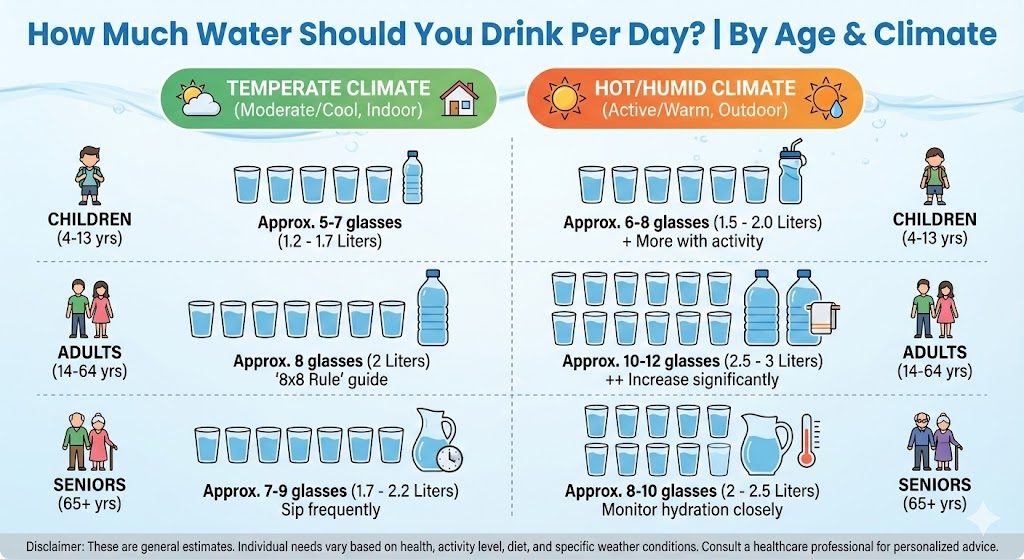 How Much Water Should You Drink Per Day?
Cultural Quirks and Modern Obsessions
Did you know that in Japan, people often drink warm water with meals, believing it aids digestion? Or that in many European countries, tap water is served without ice, at room temperature? The right amount to drink is deeply personal—and culturally influenced.
Meanwhile, we’ve turned hydration into a lifestyle aesthetic. TikTok is full of “watertok” videos featuring gigantic bottles with motivational time stamps. While these can be helpful reminders, don’t let them turn drinking into a race. Your body isn’t a competition—it’s a conversation.
A fun little fact: the longest recorded time someone went without water is 18 days, but that’s a survival extreme. For daily life, you’ll feel thirsty after just a few hours, and your mood, focus, and energy will thank you for a steady, gentle flow.
The Evening Reflection: What’s Right for You
As the day winds down, take a moment to consider your hydration rhythm. Did you drink because you were thirsty, or because a bottle in your hand made you feel “healthy”? The healthiest approach is to drink mindfully, not obsessively.
Think of water like a good conversation—it’s not about the amount, but the quality and timing. Sip when you’re active, sip when you eat, and sip when you feel dry. Trust your body’s signals, and allow yourself grace if you forget a glass now and then.
Because at the end of the day, the best drink for you is the one that leaves you feeling refreshed, not ruled. So raise your glass—whether it’s water, tea, or a crisp sparkling water—and toast to doing exactly enough.
