What Is A Water Quality

Let’s talk about water. Not the boring, clear stuff you ignore. The wild, invisible, chemical cocktail flowing through your life. What is water quality? It’s a scorecard. A he...
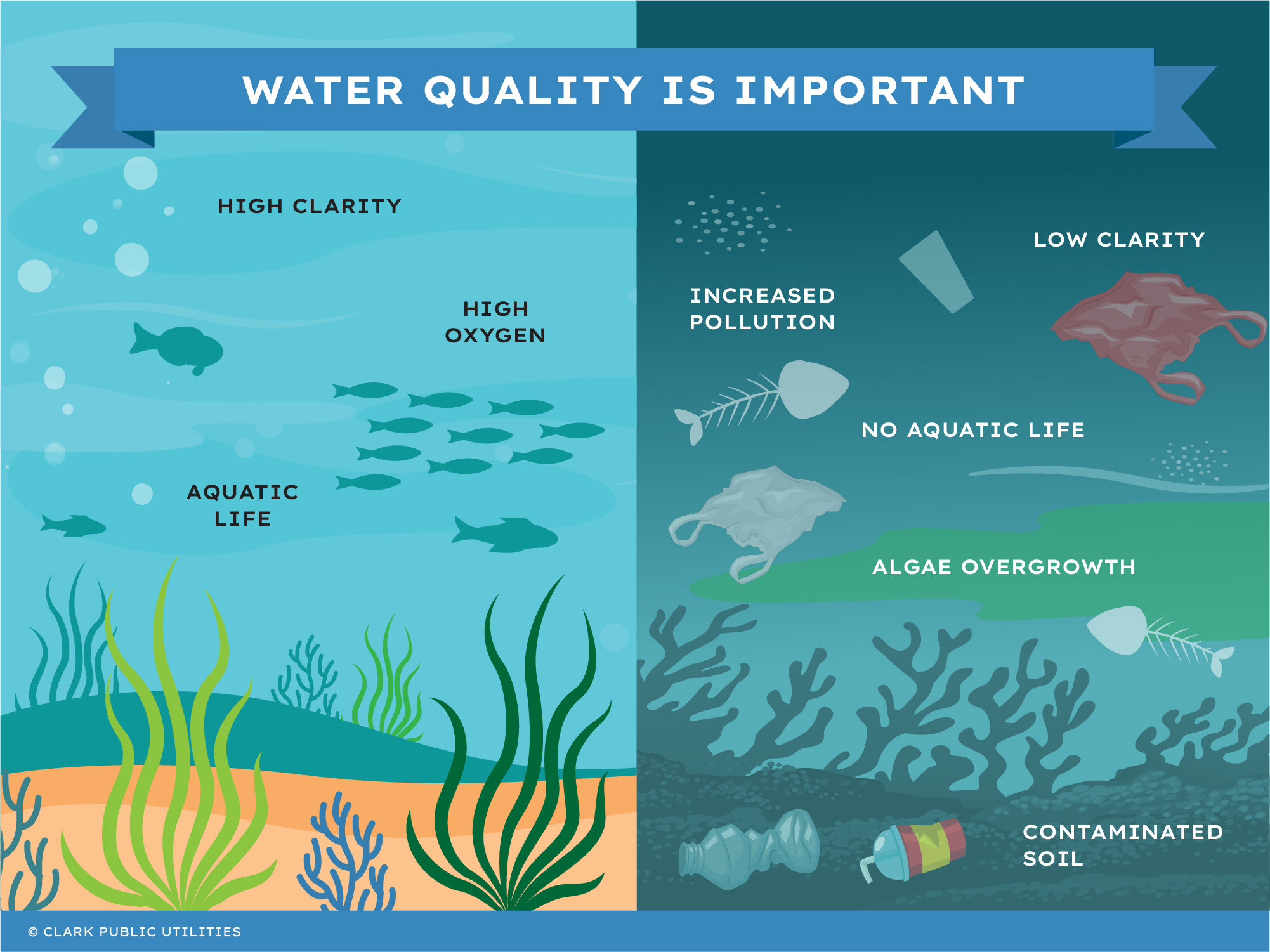
Let’s talk about water. Not the boring, clear stuff you ignore. The wild, invisible, chemical cocktail flowing through your life.
What is water quality? It’s a scorecard. A health report for H2O. It tells you if your water is friend or foe.
Imagine drinking a glass of yesterday’s dishwater. Gross, right? That’s bad quality water. Now imagine a crisp, cool mountain stream. That’s the gold medal winner.
Must Read
Here’s the kicker: you can’t judge water by looks alone. Crystal-clear water can be a toxic nightmare. Murky, brown water might be perfectly safe. It’s a shape-shifter.
Water quality is measured by what’s inside each drop. Think of it as a tiny, liquid apartment complex. Tenants include dissolved minerals, tiny bugs, invisible gases, and weird leftovers.
The fun starts with the pH scale. It measures how acidic or basic water is. It runs from 0 to 14. Pure water sits right at 7—perfectly balanced, like a zen master.
Acidic water (below 7) tastes sour and can eat away your pipes. Basic water (above 7) feels slippery and tastes a bit like baking soda. Your tap water? Probably dancing between 6.5 and 8.5.
Then there are dissolved solids. These are invisible minerals like calcium and magnesium. They give water its “mouthfeel.” Hard water is packed with them. It makes your soap turn into lame bubbles.
Ever see a weird white crust on your faucet? That’s calcium from hard water. It’s like mineral graffiti. It’s harmless to drink, but a pain to scrub off your shower door.
But wait—water also hosts microbes. Tiny, wiggly, living things. Some are your friends. Others, like E. coli, are party crashers. They can ruin your whole weekend (and your stomach).
That’s why cities add chlorine. It’s like a bouncer that kicks out bad bacteria. It leaves a faint pool-party smell, but it keeps you safe. Trade-off accepted.
Why Water Quality Is Like a Wild Science Experiment
Water is a universal solvent. It dissolves almost everything. That’s why it’s so good at picking up stories from the ground.
Rain falls through air. It grabs dust and pollution. It hits soil, stealing bits of rock, fertilizer, and old dinosaur bones (yes, really—but dissolved into minerals).
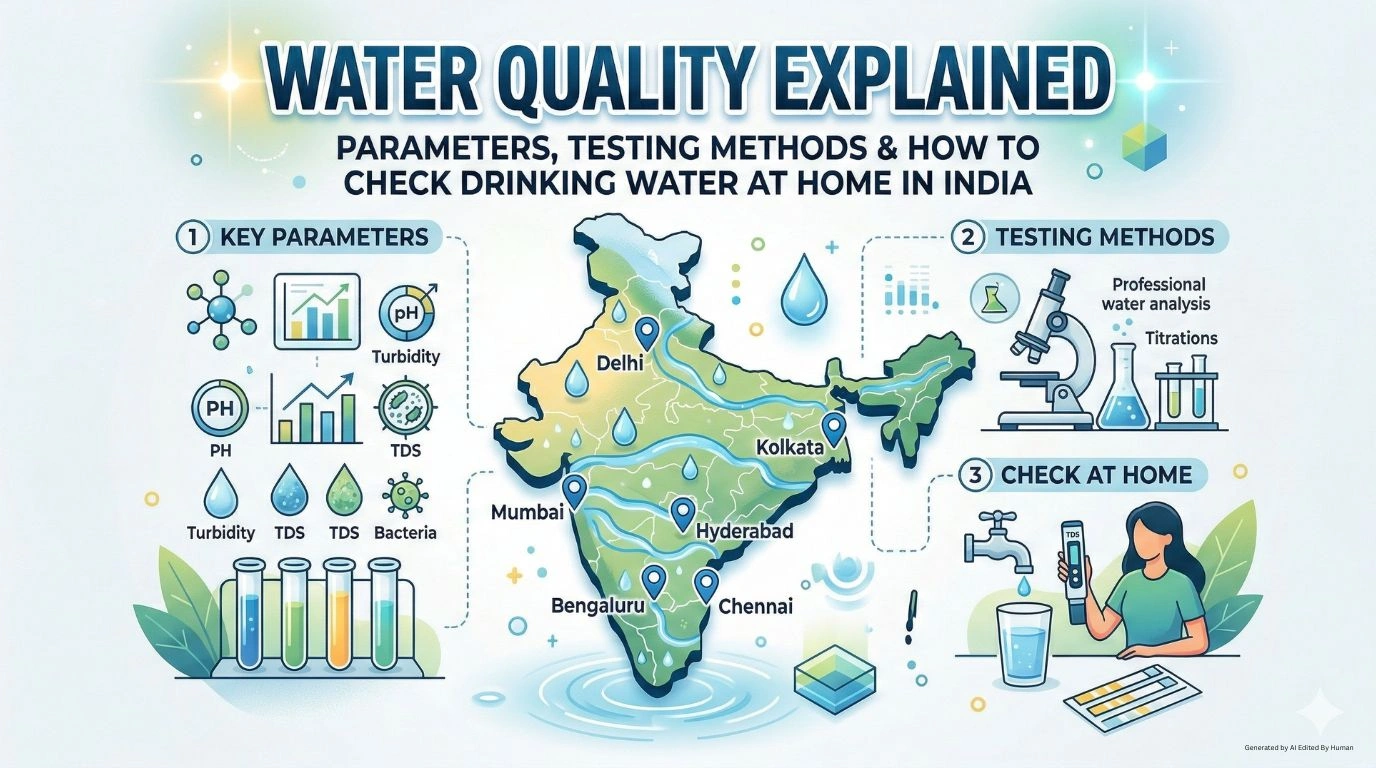 Water Quality Explained: Parameters, Testing Methods & Home Testing
A single raindrop might contain microplastics from your fleece jacket. It could carry traces of caffeine from someone’s morning coffee. Your water is basically a recycled biography of the planet.
Here’s a quirky fact: pure water doesn’t exist in nature. True H2O? That’s a lab experiment. Real water always has fringe benefits—like trace amounts of gold or even uranium. Don’t panic. It’s microscopic.
Fancy water drinkers love total dissolved solids (TDS). Bottled water companies brag about their low TDS. But guess what? Zero TDS water tastes flat. Lifeless. Like kissing a robot.
Your tongue actually prefers a little mineral grit. That’s why we crave spring water. It has personality. It’s water with swagger.
Funky Stuff That Slips In
Let’s talk about turbidity. That’s a fancy word for muddy water. It happens when tiny particles float around. Think of it as a blizzard in a glass.
High turbidity is bad for fish. It blocks sunlight. It also hides bacteria. Clear water is cool, but too clear might mean it’s stripped of life.
Then there are volatile organic compounds (VOCs). They smell like nail polish remover or gasoline. They evaporate quickly. But they stick around in your glass long enough to freak you out.
Ever smell gasoline near a river? That’s a red flag. But a weird, earthy smell? That’s just geosmin—a natural compound from dirt. Like the smell after rain. Totally harmless.
Dissolved oxygen keeps fish alive. Cold water holds more oxygen than warm water. That’s why fish gasp in hot, stagnant ponds. They’re basically underwater marathoners running out of breath.
Why You Should Care (Without Being a Nerd)
Water quality affects your coffee. Bad water makes your morning brew taste like regret. Good water makes it taste like a hug.
 Quality Water Group at Kenneth Kane blog
It also messes with your laundry. Hard water turns white socks gray. It makes soap curdle into weird, sticky scum. Your washing machine hates it.
You can test your own water at home. Buy a simple kit. Or just pay attention: Does your tea look clear? Does the fridge water taste like copper? That’s your detective skills in action.
Some people boil water to “improve” it. That kills bacteria, yes. But it also concentrates minerals. You’re just making harder water. Oops.
Filters can help. Carbon filters remove bad tastes and chlorine. Reverse osmosis turns water into a blank slate. But remember: blank water is boring. Don’t strip all the fun out.
The Weirdest Water Facts
There are lakes where the water is so salty you float on top without trying. The Dead Sea is basically a giant brine monster. The water quality there? Terrible for drinking. Awesome for a goofy photo.
Water can be supercritical. At extreme heat and pressure, it’s neither liquid nor gas. It becomes a ghost that dissolves anything. Scientists use it to clean toxic waste. Cool, right?
You can freeze water to see its quality. Pure water freezes clear. Impure water freezes cloudy or weirdly colored. It’s like snowflake forensics.
And here’s the wildest part: your body is 60% water. So when you check water quality, you’re basically checking yourself. You’re a walking, talking cloud of dissolved minerals.
Next time you take a sip, think about the journey. That drop fell as rain, soaked through dirt, traveled through pipes, and ended up in your mouth. It’s a time traveler with a backstory.
Water quality isn’t boring. It’s a personality test for our planet. Every drop has a tale to tell. You just have to ask the right questions.
