What Is Water Tds Level

You’ve probably seen it on your water filter’s display or heard it tossed around in bottled-water ads: TDS. It stands for Total Dissolved Solids, but let’s be real—that sounds...
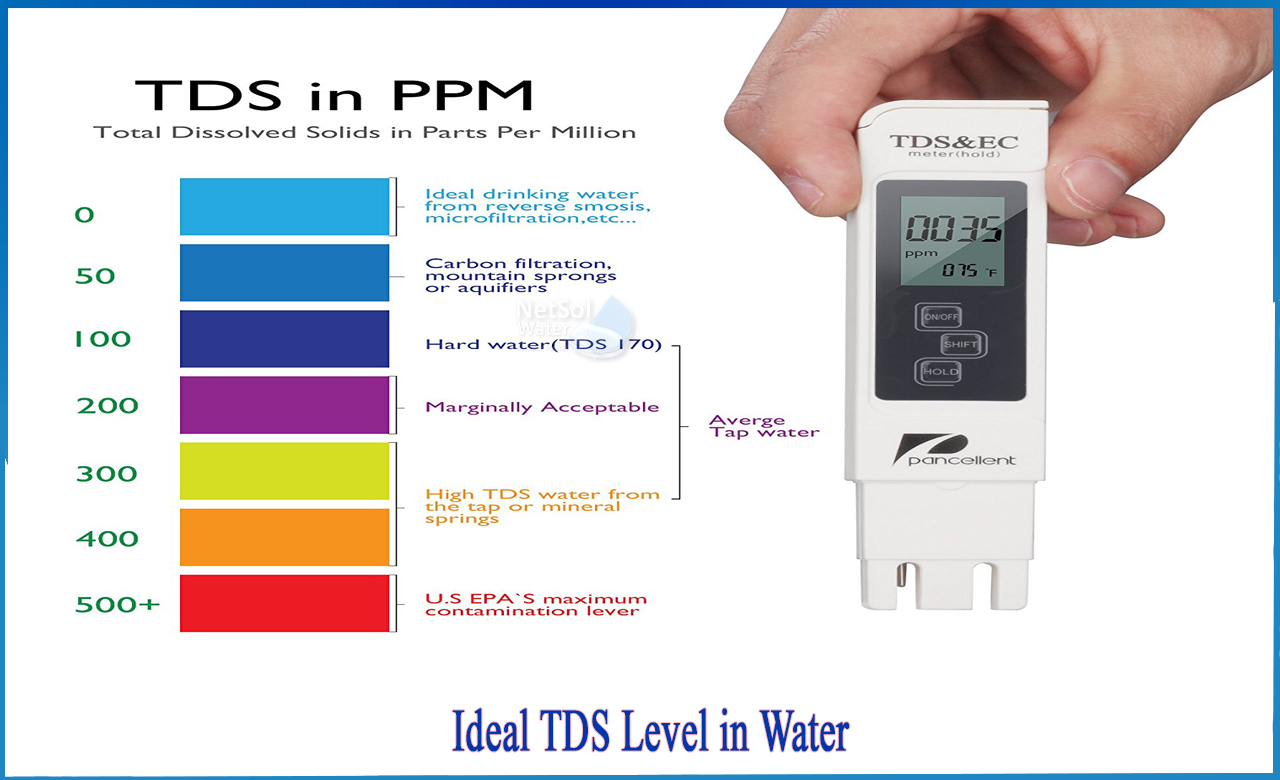
You’ve probably seen it on your water filter’s display or heard it tossed around in bottled-water ads: TDS. It stands for Total Dissolved Solids, but let’s be real—that sounds like a chemistry exam, not something you sip. In plain English, TDS measures the combined content of all inorganic and organic substances in your water. Think of it as the water’s “personality score,” telling you how much stuff—minerals, salts, metals—is floating around in that glass.
The measurement is simple: parts per million (ppm). Zero ppm is essentially pure H₂O, like distilled water. But here’s the twist: completely pure water tastes flat and boring, almost like drinking a ghost. A little TDS gives water its character—that crisp bite from calcium or the smoothness from magnesium. It’s the difference between a blank canvas and a well-mixed cocktail.
The Sweet Spot: Where Taste Lives
Most tap water in the U.S. falls between 100 and 400 ppm. That’s the Goldilocks zone for everyday drinking. Spring waters often hover around 150–250 ppm, which explains why they feel so satisfying. Go below 50 ppm, and you’re in “neutral” territory—fine for coffee or tea, but not for sipping straight. Above 500 ppm, water starts tasting mineral-heavy, sometimes even salty or metallic. It’s like chewing on a stone, which is honestly not the vibe.
Must Read
Here’s a fun cultural check: Evian, the fancy French brand, clocks in around 300 ppm. That’s higher than many tap waters, yet people pay a premium for it. Why? Because those dissolved solids—calcium, magnesium, bicarbonates—create a mouthfeel that feels “clean” and “balanced.” Meanwhile, New York City’s tap water, famously prized by bagel bakers and pizza makers, sits around 50–70 ppm. It’s low-TDS water, which makes it soft and neutral—perfect for dough but not so much for a complex drinking experience.
Your personal sweet spot depends on you. Some people crave a high-mineral kick (hello, San Pellegrino at 1,100 ppm), while others prefer whisper-soft water. The key is to know your own taste, not just follow a number on a meter.
Practical Tips: Testing and Tweaking Your Water
You don’t need a lab coat to measure TDS. A handheld TDS meter costs about $10 online and gives you an instant reading. Dip it in your tap, your filtered jug, or even your morning latte (yes, coffee has its own TDS!). It’s like a Fitbit for your glass—fun, fast, and surprisingly addictive. Test different sources: bottled water, rain water, your office cooler. You’ll be shocked how much variance there is.
 Drinkable Water Tds Range
If your tap reads over 500 ppm, consider a reverse osmosis (RO) system or a simple carbon filter. RO can drop TDS to below 20 ppm, which is great for appliances but might need a mineral cartridge added back for taste. If your readings are under 100 ppm and you want more flavor, drop a pinch of sea salt or a slice of lemon into your glass. You’re essentially becoming a water sommelier—and that’s a chic thing to be.
Don’t obsess over every single point. A reading of 150 vs. 200 ppm is not a crisis. Instead, watch for sudden jumps. If your tap jumps from 120 to 400 ppm overnight, that might mean a pipe leak or mineral buildup. It’s your water’s way of waving a little red flag—your cue to call a plumber, not panic.
The Secret Life of Water: Facts to Impress Your Friends
Did you know that distilled water (0 ppm) can actually pull minerals from your body if you drink it exclusively? That’s why astronauts don’t drink pure H₂O—they add minerals back. Also, high-TDS water is not automatically bad. Some of the world’s healthiest springs have TDS over 1,500 ppm, packed with calcium and magnesium. It’s all about balance and source, not fear.
In Japan, there’s a cultural practice called koi-koi water, where people seek out specific TDS levels for different meals. Low-TDS for delicate sashimi, higher for ramen broth. That’s next-level attention to detail. Meanwhile, in parts of India, TDS above 2,000 ppm is common in groundwater, so locals use clay pots to naturally filter and soften it. Water adaptation is a global art form.
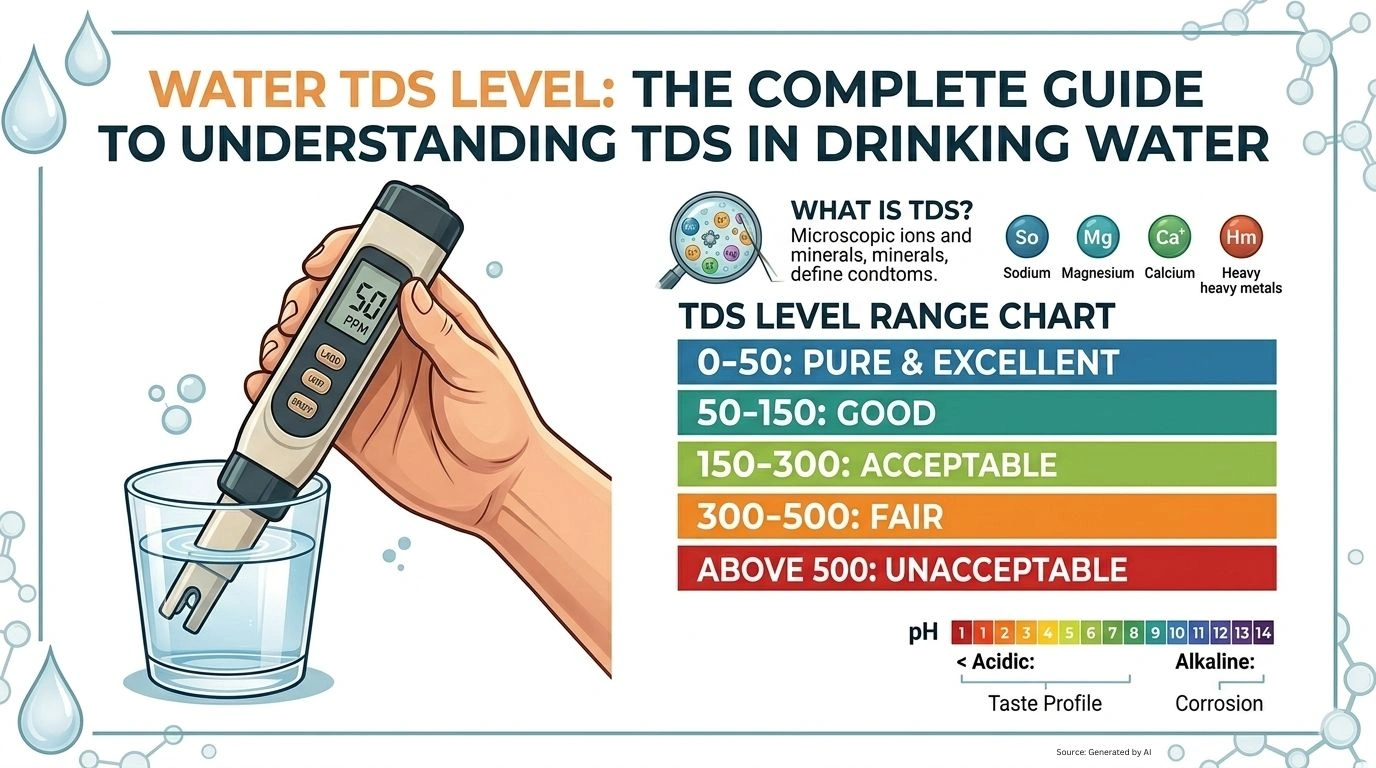 Water TDS Level: The Detailed Guide For Drinking Water TDS | ZeroB
One more mind-bender: iceberg water has almost zero TDS because it’s ancient frozen precipitation. Drink it straight and you’re tasting the atmosphere from thousands of years ago. That’s a luxury only time and geology can bottle.
The Daily Pour: Wrapping It All Up
So should you buy a TDS meter and become a water inspector? Maybe—if you like gadgets and data. But more importantly, treat TDS as a conversation starter, not a rulebook. Your body already knows what it likes. When water tastes heavy, you stop drinking. When it feels light, you guzzle. That’s your internal meter working just fine.
The real takeaway is that every glass of water tells a story—of rain, rock, pipe, and filter. That tiny number is just a footnote. What matters more is that you stay hydrated, stay curious, and maybe add a lemon slice if the spirit moves you. Water is life, but TDS is just a number. And numbers are boring if they don’t help you enjoy the sip.
Next time you fill your glass, pause for a second. Feel the weight, taste the hint of mineral, and smile at the hidden journey it took to reach you. That’s the lifestyle—easy, aware, and just slightly geeky. Cheers to your perfect ppm.
